
From a Classroom in Northern California to a Rice Farm in Kyushu
From a Classroom in Northern California to a Rice Farm in Kyushu
Stanford Education Partnership for Internationalizing Curriculum (EPIC) Fellow Dr. Jacob Vazquez shares reflections on his EPIC Fellowship and Fulbright experience in Japan.

The following is a guest article written by Dr. Jacob Vazquez, Interim Associate Dean of Instruction and Agribusiness Faculty member, and past Fellow of Stanford’s EPIC Community College Faculty Fellowship, one of several teacher professional development programs offered by SPICE.
My interest in agriculture started in high school, through my involvement in Future Farmers of America (FFA). That interest deepened later on, working in agriculture finance at Farm Credit, and eventually leading to my current role teaching Agribusiness at Butte College, where I get to share my passion for agriculture and agribusiness with our students.
My involvement with SPICE began through Stanford Global Studies’ EPIC Community College Leadership Program, where fellows were charged with developing global curricula for use in community college classrooms. Butte College is a rural community college in Northern California, where rice is one of the region’s most valuable commodities. I teach Agricultural Economics, a general education class taken by both agriculture majors and non-majors, and I wanted the curriculum modules to connect the agriculture we grow here in Northern California to something produced elsewhere in the world.
I built the modules around rice, comparing the industry in Butte and Glenn Counties to the industry in Japan. The two differ significantly in scale and farming method, but the crop carries economic and cultural weight in both places. With SPICE’s support and connections with the U.S. Consulate Fukuoka, part of the modules included Zoom interviews that connected students with Japanese rice farmers, including the owner of an organic farm in Saga Prefecture and a former musician who now farms rice and is developing a rice-based ice cream.
Those connections, particularly with the U.S. Consulate Fukuoka, led me to the Fulbright Specialist Program in collaboration with Kyushu Sangyo University (KSU), where SPICE has an existing program through their Stanford e-KyuSan-U Program. This past June, I traveled to Fukuoka as a Fulbright Specialist for a project titled “Seeds of Change: Empowering Community with Food Education.” Over two weeks, the itinerary included close collaboration with KSU students, faculty, and administration, a tour of a rice cracker manufacturing facility, and a public lecture on agribusiness and sustainability, among other events.
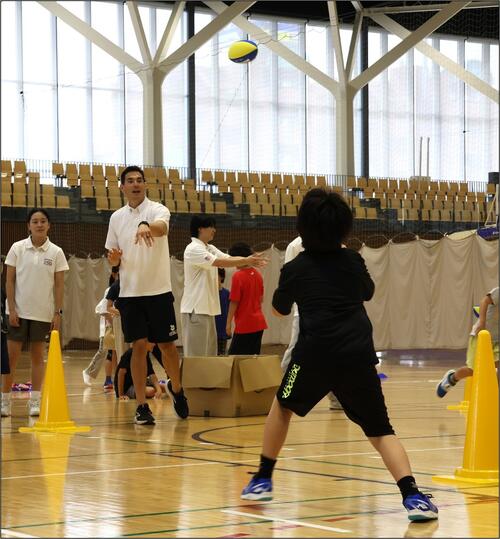
One experience drew on a different part of my background: running a flag football clinic at KSU for local children, drawing on my own experience playing football at Fresno State and coaching at Butte College.
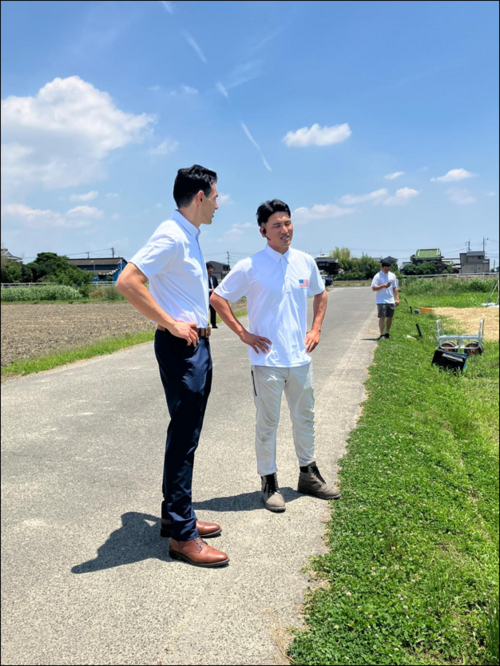
One of the most meaningful moments of the visit was touring Meisho Farm in person, the same farm my students and I had previously engaged with only virtually. Seeing the operation firsthand with and reconnecting with its owner, Akira Shojima, gave me a much fuller picture of how Kyushu’s organic farming model works, something I never thought I would be able to experience when I started the fellowship.
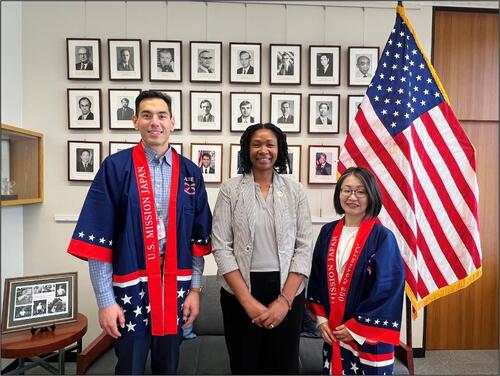
I also had the chance to visit U.S. Consulate Fukuoka with Principal Officer Virsa Perkins and KSU Professor Kaori Miura; photo below. What began as a simple curriculum project grew into an incredible experience. I feel so grateful to SPICE, the Fulbright Program, and Kyushu Sangyo University for these opportunities, and I look forward to future collaborations connecting agriculture on both sides of the Pacific.
To stay updated on SPICE news, join our email list and follow us on Facebook, X, and Instagram.


