History
News Type
News
Date
Paragraphs


The National Consortium for Teaching about Asia (NCTA) and the Stanford Program on International and Cross-Cultural Education (SPICE) present a unique professional development opportunity for middle and high school teachers of world geography, world history, world languages, religion, economics, and language arts/literature.

Seminar topics cover East Asian geography, culture, religion, politics, history, literature, and art. The seminar series includes (1) lectures by Stanford scholars, (2) curriculum presentations by SPICE, (3) talks by authors of literature, (4) curricular applications for the classroom, (5) discussions of the Common Core State Standards. SPICE‘s teacher-centered professional development offers new perspectives, collaborative discussions, and the best scholarship and pedagogy available for promoting globally-minded classrooms.


Applications now available (priority given to early applicants).

NCTA Middle School (postmark by December 16, 2016)

NCTA High School (postmark by January 27, 2017)


2017 Seminar Schedule:

Breakfast and lunch are provided.

  • Middle School Sessions: January 18, February 8, March 8, March 29
    Full-day Wednesday sessions at Stanford University (January–April 2017), and one follow-up morning session on April 26.
     
  • High School Sessions: February 10, March 3, March 24, April 14
    Full-day Friday sessions at Stanford University (February-April 2017)


Benefits of Participation:

  • Content lectures on East Asia from Stanford faculty and other leading experts in the field
  • $250 professional stipend upon completion of all five sessions and seminar requirements
  • Optional three units of credit through Stanford University Continuing Studies
  • Excellent selection of free materials for classroom use
  • Discount on future curriculum purchases


For more information on the seminars offered to middle school or high school teachers through the Stanford Program on International and Cross-Cultural Education contact:

Naomi Funahashi                                                                        
High School Seminar Coordinator
P: 650.724.4396
F: 650.723.6784
nfunahashi@stanford.edu
 

Jonas Edman
Middle School Seminar Coordinator
P: 650.725.1480
F: 650.723.6784
jcedman@stanford.edu

Hero Image
cc foodsec engaged
All News button
1
Authors
News Type
News
Date
Paragraphs

From atomic bombs to harsh military occupations in the World War II period, the past is very much the present in the Asia Pacific region.

Stanford scholars are striving to help heal these wounds from yesteryear. Helping old enemies better understand each other today is the aim of the Divided Memories and Reconciliation project, a multi-year comparative study of the formation of historical memory regarding the wartime period in countries such as China, Japan, South Korea, Taiwan and the United States.

Left unattended, misguided wartime narratives may exacerbate current disputes to the point of armed conflict, said Daniel Sneider, associate director of research at Stanford's Shorenstein Asia-Pacific Research Center. He leads the Divided Memories project along with Gi-Wook Shin, a Stanford sociology professor and the Shorenstein center director.

Sneider points out the critical importance of textbooks and what is taught in schools – especially given the rise of nationalism among youth in China, Japan, Taiwan and South Korea.

"Dialogue among youth of the different nations is needed, along with an appreciation for the diversity of views and the complexity of history," he said.

Shin said, "Each nation in northeast Asia and even the U.S. has selective or divided memories of the past, and does not really understand the views of the other side."

Education and history

Launched in 2006, the Divided Memories project has published research findings, issued recommendations and convened conferences. In the early days, the researchers examined high school history textbooks in China, Japan, Korea, Taiwan and America.

Image
divided memories 1
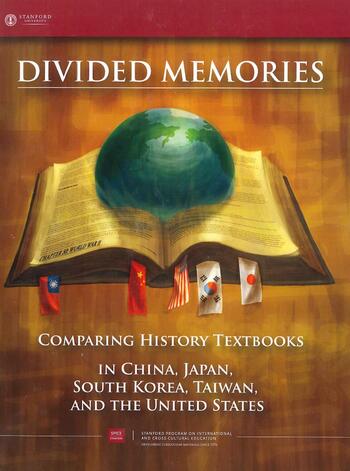
The outcome was the project's first book in 2011, History Textbooks and the Wars in Asia: Divided Memories, which suggests that an "introspective effort" to understand national narratives about WWII has the potential to bring about historical reconciliation in the region. Sneider describes it as the first comparative study of textbooks in the countries involved; it soon evolved into a classroom supplemental textbook published by the Stanford Program on International and Cross-Cultural Education.

"Formal education is a powerful force in shaping our historical understandings," Sneider noted. "We wanted to look at the textbooks that have the most impact and usage."

A 2014 book, Confronting Memories of World War II: European and Asian Legacies, which was co-edited by Shin, Sneider and Daniel Chirot, a sociologist with the University of Washington, compared successful European WWII reconciliations with lagging Asian efforts. Another book, Divided Lenses, published earlier this year, examined the impact of dramatic film and other forms of popular culture on wartime memory. A new book is due out this summer, Divergent Memories: Opinion Leaders and the Asia-Pacific War, which focuses on leaders in politics, the media and academia in Japan, China, South Korea and the U.S.

The Divided Memories project aims to generate discussions and collaborations among those who create "historical memories" – educators, policymakers and government leaders. One report that grew out of such dialogues included suggestions for reconciliation:

  • Create supplementary teaching materials on the issue. 
  • Launch dialogues among Asian, American and European historians. 
  • Offer educational forums for journalists, policymakers and students. 
  • Conduct museum exchanges and create new museums, such as one wholly dedicated to WWII reconciliation in Asia. 
  • Increase student exchanges among all the countries involved. 

History is reflected in today's geopolitics, as noted in the revived disputes by these nations over rival claims to islands in the South China Sea and elsewhere. Without resolution, these disagreements can flare up into military conflicts, Sneider wrote.

"The question of history taps into sensitive and deeply rooted issues of national identity," he noted.

Whether recounting Japanese atrocities in China, China's exaggerated account of its Communist fighters' role in World War II, or the U.S. decision to drop atomic bombs on Japan, no nation is immune to re-creating the past to further its own interests today, Sneider wrote.

For example, Divided Memories research on Chinese textbooks shows how the Chinese government in recent decades embarked on a "patriotic education" campaign to indoctrinate young people by exaggerating its role in Japan's WWII defeat. This narrative suits the nationalistic desires of a Chinese government no longer exclusively motivated by communist ideology, Sneider said.

One project of APARC and its Japan Program that was also an outgrowth of Divided Memories involved Stanford scholars urging Japanese Prime Minister Shinzo Abe to show "clear, heartfelt remorse" in a 2015 speech on the 70th anniversary of the end of WWII. A 15-page report featured hypothetical statements suggesting what Abe might say to make amends for Japanese actions in China and Korea.

"While we cannot claim to have directly influenced the prime minister, his statement did go further in the direction of an expression of remorse over the war and the need to continue to look clearly and honestly at the past than many expected," said Sneider.


Image
divided memories 2

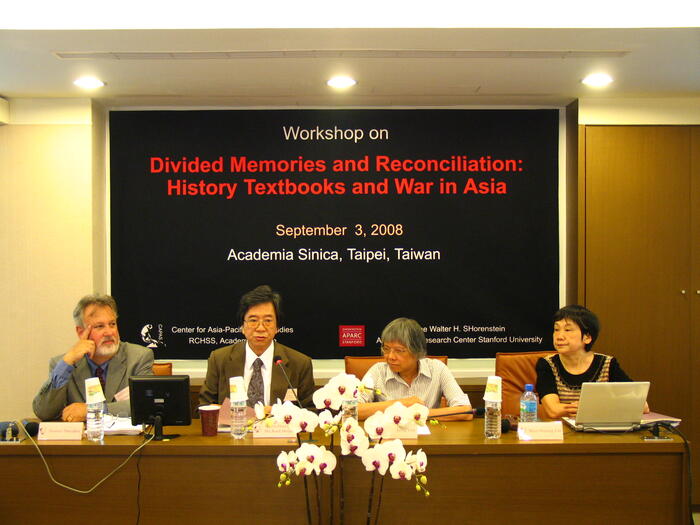
A workshop on history textbooks co-hosted by Shorenstein APARC and Academia Sinica's Center for Asia-Pacific Area Studies takes places in Taipei, Sept. 3, 2008.


Generations and grievances

Consciousness-raising on other fronts, however, is getting results, thanks to Stanford's Divided Memories project. A 2015 landmark agreement between Japan and South Korea over the WWII "comfort women" dispute was reached due to extensive U.S. involvement. Comfort women were women and girls who were forced into sexual slavery by the Imperial Japanese Army in occupied territories before and during World War II.

In an article, Sneider explained how the U.S. perceived that the dysfunctional relationship between South Korea and Japan over this issue, among others, threatened to undermine American strategic interests in Asia. 

Shin highlights the importance of U.S. involvement. "The U.S. is not just an outsider to historical and territorial disputes in the region," he said. "From a geopolitical perspective, the U.S. has done a wonderful job in reviving the devastated region into a prosperous one after 1945, but from a historical reconciliation perspective, the U.S. has done a poor job."

He suggests that America should "play a constructive role in promoting historical reconciliation" among the countries involved. And so, the Divided Memories project has included the United States in its efforts.

According to Sneider, Divided Memories is unique among all reconciliation projects for its emphasis on the inclusion of the U.S.; comparative analyses across countries; and real-world policy impacts. As part of the Shorenstein research center, it is housed within Stanford's Freeman Spogli Institute for International Studies.

"This project reflects what Stanford, our center and the Freeman Spogli Institute are all about – true interdisciplinary research and engagement," Sneider said.

Clifton Parker is a writer for the Stanford News Service.

Hero Image
divided memories reconciliation headline
Japanese soldiers in Shanghai, March 23, 1927 | A Stanford project encourages World War II reconciliation and historical accuracy about the conflict and its consequences in Japan, China, Korea, Taiwan and the United States. Progress has been made on classroom textbooks and scholarly discussions and exchanges.
Getty Images
All News button
1
Authors
Gary Mukai
News Type
News
Date
Paragraphs

On February 12, 2016, the Stanford Program on International and Cross-Cultural Education (SPICE) and Stanford Live (in collaboration with the National Consortium for Teaching about Asia) co-hosted a teacher professional development seminar that focused on the Silk Road. The seminar was held just prior to a Stanford Live performance by the Silk Road Ensemble at Stanford Bing Concert Hall on February 24, 2016 and a student matinee on February 25, 2016. Made up of performers and composers from more than 20 countries, the Silk Road Ensemble was formed under the artistic direction of Yo-Yo Ma in 2000.


Image
Jonas Edman introducing the Silk Road Ensemble. © Joel Simon

Jonas Edman (SPICE) and Ben Frandzel (Stanford Live) organized the day-long seminar. The morning featured a two-part lecture by Professor Emeritus Albert E. Dien, Stanford University. Part one focused on a general overview of the history and geography of the Silk Road and part two focused on a specific introduction to the religions along the Silk Road. Dr. Dien highlighted religion as an example of the many ways that the Silk Road helped to facilitate cultural exchange for millennia, resulting in the tremendous diversity one witnesses today in the region.


The afternoon featured a presentation and performance by composer and santur player Faraz Minooei, and a curriculum demonstration by SPICE staff. Minooei gave an overview of how the Silk Road played a role in the transmission of musical tradition, and also shared his personal story from his birth and childhood in Tehran, his immigrant experience in the United States, and his musical discoveries along the way. In particular, he shared his reflections on his deep spiritual desire to study music, seeing music as an “unexplainable souvenir from the eternal truth.”

Reflecting on Minooei’s presentation, Frandzel commented, “Faraz’s presentation really embodied the ways in which the Silk Road’s tradition of cultural exchange is a living story that continues to this day. His performances of Persian classical music and of his own compositions were entrancing, ear-opening experiences. As Faraz discussed his background and the musical forms that feed into his current work, his personal history and music seemed to encapsulate, in a fast-moving way, the kinds of cultural mixing that would have happened along the historic Silk Road. In our teacher workshops, we aim to provide teachers with arts-based teaching tools, and also to provide a larger social and cultural context for the art forms under discussion. The wonderful opportunity to partner with SPICE on the workshop, and the presence of this fascinating and brilliant musician, made this so much more possible.”

The curriculum demonstration was led by Rylan SekiguchiNaomi Funahashi, and Johanna Wee, who introduced both print- and web-based materials from the curriculum unit, Along the Silk Road, which were developed in collaboration with the Silk Road Ensemble and Dr. Dien. The 20 teachers in attendance interactively engaged with the materials and each received a complimentary copy of the curriculum unit as well as a large wall map of the Silk Road. The development of such materials has been a hallmark of SPICE for 40 years. The materials help to make content from teacher professional development seminars accessible to students.

Following the seminar, Edman reflected, “It is always such a pleasure to share with teachers the curriculum we produce here at SPICE. And to be able to collaborate with Stanford Live on a professional development workshop in conjunction with the Silk Road Ensemble’s visit to Stanford was a wonderful opportunity and experience. The Silk Road—with its themes of cross-cultural communication, exchange, and understanding—seems like an ideal topic for middle school students trying to understand today’s globalized world. We hope the speakers and pedagogical strategies and materials shared at the workshop will help teachers bring the topic to life in the classroom!”

 
Hero Image
Kinan Azmeh and Kojiro Umezaki, The Silk Road Ensemble. © Joel Simon Joel Simon
All News button
1
Subscribe to History