Culture
-

—Made possible through the Freeman Foundation’s support of the National Consortium for Teaching about Asia

With communities across the United States now reflecting even greater diversity and complexity, our classrooms are also rapidly changing, and schools are faced with both opportunities and challenges in providing instruction that is rich and meaningful. Diverse student populations offer valuable opportunities for classroom and community enrichment.

Like many other communities, Asian and Asian American students come from many different parts of Asia and represent a wide spectrum of ethnicities, languages, histories, generations, cultures, and religions. Providing culturally and experientially responsive instruction to these students can be daunting.

In this webinar, SPICE welcomes Dr. Khatharya Um to discuss the diversity of our Asian and Asian American students, and share some pedagogical tools and approaches to support more effective teaching in culturally diverse classroom environments.

Join us via Zoom video webinar for a one-hour presentation, followed by 30 minutes of Q&A with Dr. Um.


Featured Speaker:

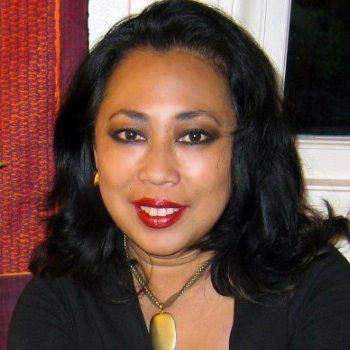
woman's headshot in black dress

Dr. Khatharya Um

Professor Khatharya Um is Associate Professor of Ethnic Studies at the University of California at Berkeley, and Program Coordinator of Asian American and Asian Diaspora Studies. She is also affiliated faculty of Global Studies, the Center for Southeast Asian Studies, the Center for Race and Gender, and the Berkeley Human Rights Center, and serves on the UC system-wide Faculty Advisory Board on Southeast Asia. She was a Chancellor Public Scholar.

Professor Um’s research and teaching center on Southeast Asian politics and societies, Southeast Asian diaspora, refugee communities, educational access, genocide, and the politics of memory. Her publications include recent books From the Land of Shadows: War, Revolution and the Making of the Cambodian Diaspora (NYU Press, 2015) and Southeast Asian Migration: People on the Move in Search of Work, Refuge and Belonging (Sussex Academic Press, 2015).

Professor Um is also actively involved in community advocacy, principally on issues of refugees and educational equity. She has served on numerous boards of directors, including as Board Chair of the leading Washington DC-based Southeast Asian Resource Action Center, and as President of the National Association for the Education and Advancement of Cambodian, Laotian and Vietnamese Americans. She has received numerous awards and congressional recognitions for her community leadership and service. 


Online via Zoom, at https://stanford.zoom.us/j/346369124. Please pre-register at https://forms.gle/RmPzv3oiBb6YrqJQ6.

Dr. Khatharya Um Associate Professor of Ethnic Studies University of California at Berkeley
Workshops
Authors
Rylan Sekiguchi
News Type
News
Date
Paragraphs

Last week, 23 educators from across North America gathered at Stanford University for the 2019 East Asia Summer Institute for High School Teachers, a teacher professional development seminar offered by SPICE in partnership with the National Consortium for Teaching about Asia. Over three days of rich content lectures, discussion, and experiential learning, institute participants deepened their background knowledge on Asia and began to rethink and revamp their curriculum plans for the coming school year.

This year’s participants came from as far away as Concord, New Hampshire and Vancouver, Canada, although most attendees were high school teachers in the San Francisco Bay Area. They represented a wide range of teaching subjects, from history and language arts to statistics and genocide studies, but all sought to strengthen their teaching through a clearer, more nuanced understanding of Asia, U.S.–Asia relations, and the Asian American experience—the three main areas explored in this year’s summer institute.

Participant Hellie Mateo at the 2019 East Asia Summer Institute for High School Teachers Participant Hellie Mateo poses with a book she made by hand using traditional Japanese book-binding methods.
The institute’s guest speakers came from similarly diverse backgrounds, being scholars, artists, authors, and Stanford University professors with expertise on a specific aspect of Asia, U.S.–Asia relations, or the Asian American experience. Interwoven between their captivating content lectures were classroom-focused lesson demonstrations, hands-on activities, and pedagogy discussions facilitated by SPICE curriculum designers. “We make sure we balance subject-matter content with practical application in all of our teacher professional development seminars,” notes SPICE Director Dr. Gary Mukai. “That’s why we focus so much time and energy on pedagogy and lesson demonstrations. We want to help high school teachers translate their newfound knowledge directly into the classroom.”

To that end, summer institute participants each receive several free books, films, and SPICE lesson plans to help them bring Asia alive for their students. They also receive a stipend and become eligible for three optional units of credit from Stanford Continuing Studies.

“Being in the Bay Area—and particularly at Stanford University—we have access to such incredible experts on these subjects,” says institute coordinator and facilitator Naomi Funahashi. “Our job is to connect those experts with teachers in a way that supports teacher needs. That’s our goal for this summer institute.”

Although the high school teachers have now returned home from Stanford campus, their work is not done. They will now use the content they learned at the summer institute to create original lesson plans to incorporate into their own practice. When they reconvene for a final online session in late July / early August, they will share their lesson plans with each other, and each teacher will walk away with 22 brand new lesson plans designed by their colleagues. “We can’t wait to see what kinds of innovative lessons our teachers will come up with!” says Funahashi. “And we can’t wait to see how they incorporate these new lessons into their plans for the next school year.”

To view photos from the summer institute and read a more comprehensive recap what happened, please see the SPICE Facebook page.


In addition to our high school institute, in most years SPICE also offers the East Asia Summer Institute for Middle School Teachers. To be notified when the next middle school and/or high school institute application period opens, join our email list or follow us on Facebook and Twitter.


Related articles:


Hero Image
Participants at Stanford University for the 2019 East Asia Summer Institute for High School Teachers
Participants Omar Munoz and Ryan Chapman at the 2019 East Asia Summer Institute for High School Teachers
Rylan Sekiguchi
All News button
1
Authors
HyoJung Jang
News Type
News
Date
Paragraphs

This year, the Sejong Korean Scholars Program (SKSP) concluded its sixth year with its largest cohort of 22 students from across the United States. The SKSP is an intensive online course offered by the Stanford Program on International and Cross-Cultural Education (SPICE) at Stanford University for exceptional U.S. high school students who want to engage in an in-depth study of Korea, exploring its history, religion, culture, and relationship with the United States. Students who successfully complete the course earn credit from the Stanford Continuing Studies Program and a Certificate of Completion from SPICE, Stanford University.

Each year from March to June, students in the SKSP online course carry out rigorous coursework that consists of weekly readings, online lectures, assignments, discussion posts, and “virtual classroom” video conferencing sessions, where students engage in live discussion with each other and a guest speaker who is an expert-scholar on the topic of the week. As their culminating final project, students write independent research papers which are printed in journal format at the conclusion of the course.

The SKSP online course offers a unique opportunity for high school students to study Korea and U.S.–Korean relations in a college-level-type course that draws on the wealth of expertise and scholarship on Korean Studies at Stanford University. Top scholars, experts, and former diplomats at Stanford University as well as other universities in the United States provide thematically organized online lectures. The themes for each week include traditional Korean culture, religion, colonial history, the Korean War, post-war recovery, North Korea, modern South Korean society and its educational system, and Korea’s transnationalism. In addition to the recorded online lectures, the guest speakers for the weekly virtual classroom sessions engage in discussions with students and provide answers to their questions.

The co-instructors for the course, as well as guest speakers, often note the quality and maturity of students’ thoughtful insights and questions. Co-instructor HyoJung Jang has noted that “the talented and engaged high school students who participate in the SKSP online course bring their intellectual curiosity, critical thinking skills, and enthusiasm for learning about Korea and its popular culture. On top of their full academic load at their respective high schools across the country, these students go above and beyond to commit to SKSP’s demanding coursework and participate fully in the course as Korea scholars-in-training.”

“Over the past four months, our students have formed a community where they actively engage in intellectual discussions with each other—exchanging their ideas, thoughts, reflections, experiences, and perspectives on various topics,” commented co-instructor Jonas Edman. “For instance, some students contributed their own interpretations and explanations for the stark difference between the Taiwanese colonial experience and memory of Japanese rule and that of Korea. When discussing the issue of ‘comfort women’ during Japanese colonial rule in Korea, one student shared a personal story about his great-great-grandmother’s similarly painful experience under foreign rule in Eastern Europe and powerfully advocated for the importance of justice. Other students shared about their assessments of the roles of the U.S. and South Korean leaders—in addition to the roles played by North Korea, China, and Russia—on the outbreak of the Korean War and its aftermath.”

Alongside their academic engagement with each other, students have also bonded over their shared interests in Korean food and popular culture, namely “K-pop, K-dramas, and K-movies.” Some students chose to write their final research papers on analyzing Korean popular culture. Other discussions on the modern Korean education system have even incorporated students’ personal observations of the education issues portrayed in a popular Korean drama. These interests are encouraged, as students are urged to creatively explore the topics most interesting to them for their final research paper.

One of the strengths of the SKSP online course is that it encourages high school students to consider different perspectives on various issues, think critically about those different perspectives, and develop their own informed opinions. Reflecting on her participation in the course, Chloee Robison, a high school student from Indiana, said, “SKSP was a unique opportunity to explore my interest in Korean history. Even though I am not of Korean heritage, I felt deeply connected to the course material, and I found the lectures to be quite informative and engaging. Coming from a region that is largely homogeneous, hearing the perspectives of diverse-minded students opened my eyes to issues and ideas that I would have otherwise been blind to. I am so grateful to everyone involved in the course, and I would recommend it to all students who wish to challenge themselves and expand their knowledge of Korean history and culture.” Chloee’s research project on Korea’s March First Movement earned first place in Indiana’s National History Day competition.

The popularity and demand for Stanford’s SKSP online course on Korea grows each year. Interested high school students are encouraged to apply early for the program. The application period is between late August and early October each year for enrollment in the online course the following year. The online application can be found on the SPICE website at sejongscholars.org.


To be notified when the next Sejong Korean Scholars Program application period opens, join our email list or follow us on Facebook and Twitter.

The Sejong Korean Scholars Program is one of several online courses for high school students offered by SPICE, Stanford University, including the China Scholars Program, the Reischauer Scholars Program (on Japan), and the Stanford e-Japan Program.


Related article:


Hero Image
Students in Stanford’s SKSP online course learn about Korea from many angles, including both traditional and contemporary Korean culture.
All News button
1
Authors
Naomi Funahashi
News Type
Blogs
Date
Paragraphs

Since joining SPICE in 2005, my annual calendar has revolved around not spring flowers, caterpillars dangling from trees, and falling leaves around the beautiful Stanford campus, but the schedule of the Reischauer Scholars Program (RSP), Stanford’s online course on Japan and U.S.–Japan relations for U.S. high school students. As the manager and instructor of the RSP, I have had the pleasure (and truly, the honor) of teaching this online course for 14 years. We accept applications beginning in August, outreach efforts ramp up in September and October, and new cohorts of talented U.S. high school students are selected every November. With January comes the updating of the syllabus with new readings, topics, and video lectures, and identifying and inviting guest speakers for the virtual classes. And the highlight of my year—every year—is on February 1, when the new cohort signs into our online learning platform ready to engage in this new community, connect over shared interests, learn from their differences, and to embark upon the RSP journey together.

It is now early June, and the 2019 Reischauer Scholars Program is, unbelievably, soon coming to an end. This year’s RSP journey has led us through explorations of tales of samurai, the modernization of Meiji Japan through the lens of filmmaker Ozu Yasujiro, comparative perspectives on colonial and wartime legacies through textbooks, and lessons on civil liberties as told by someone who was sent to a Japanese American internment camp with his family as a 9-year-old boy.

While this online course has always approached the study of Japan and U.S.–Japan relations with an intense academic rigor befitting Stanford University, I also wanted to offer students access to the personal stories of practitioners who play an active role in Japanese society and the U.S.–Japan relationship that we study. One of the wonderful aspects of teaching online is that for our weekly virtual classroom sessions—where all students meet synchronously using Zoom video conferencing software—we are able to welcome guest speakers to join us from anywhere in the world.

As we explored the U.S.–Japan security relationship this year and the controversies surrounding the presence of U.S. military bases in Okinawa, for example, students met with an Okinawan native who works on the U.S. Air Force Base in Kadena. Learning about how her experiences and perspectives inform her own efforts to enhance U.S.–Japan relations gave the students new insight into the impact of international policy upon individuals and the communities in which they live.

For our module on U.S.–Japan diplomacy we were joined by the Principal Officer of the U.S. Consulate in Sapporo, Rachel Brunette-Chen, who talked about how her interests in connecting the U.S. and Japan have informed her career in the U.S. State Department. RSP students often cite international relations and diplomacy as two high-interest fields for their future undergraduate studies and career aspirations, so they made the most of this opportunity to ask thoughtful questions about careers in Foreign Service. Given the diverse career tracks available in the State Department, students were inspired to learn that they could take their multidisciplinary interests and apply them in an international context for years to come.

As we grappled with the various challenges facing modern Japanese society during the last few weeks of class—including students mired in a test-centric system, the demographic realities of an aging population and declining birth rates, pervasive issues of gender inequality, and minority rights, among others—it was important to gain an understanding of how these issues are being addressed and experienced by real people. Our final guest speaker for the 2019 RSP, a Japanese American entrepreneur and educator living and working in Tokyo, shared his first-hand perspectives on the state of entrepreneurship and innovation in contemporary Japan.

Perhaps the most memorable of the online video conferencing sessions this year were the two joint virtual classes with the students of the Stanford e-Japan Program. Stanford e-Japan is an online course that engages Japanese high school students in the study of U.S. society and U.S.–Japan relations, and is comprised of students from across Japan. The rich, open discussions and friendly international camaraderie fostered during these joint sessions are always a delight to observe. I know that many of my RSP students—and many of the Stanford e-Japan students, as well—will treasure these experiences and relationships for years to come.

In our virtual class on diplomacy, one student asked, “How can we, as high school students, make a real impact on the U.S.–Japan relationship?” “By taking the initiative to be active participants in courses like the Reischauer Scholars Program,” replied Ms. Brunette-Chen, “you are already on your way. In sharing what you learn about Japan, you are also raising awareness about the importance of the U.S.–Japan relationship among your peers and school communities.” Indeed, these 2019 Reischauer Scholars are already on their way. As the spring flowers, dangling caterpillars, and fall leaves continue to come and go in the years ahead, I am eager to see the different ways in which their impact upon U.S.–Japan relations will continue to take shape. Who knows? Perhaps a few will return to the RSP years from now—this time not as students, but as guest speakers who coach and inspire the Reischauer Scholars of the future.


To be notified when the next Reischauer Scholars Program application period opens, join our email list or follow us on Facebook and Twitter.

The Reischauer Scholars Program is one of several online courses for high school students offered by SPICE, Stanford University, including the China Scholars Program, the Sejong Scholars Program (on Korea), and the Stanford e-Japan Program.


Related articles:


Hero Image
High school student honorees of SPICE's online course on Japan
Student honorees of the 2018 Reischauer Scholars Program with Consul General Tomochika Uyama and RSP Instructor Naomi Funahashi.
Rylan Sekiguchi
All News button
1
News Type
News
Date
Paragraphs

We are thrilled to welcome Dr. HyoJung Jang back to the SPICE team! Jang holds a Ph.D. in Educational Theory and Policy as well as in Comparative and International Education from Penn State University, and an M.A. in East Asian Studies from Stanford University. She has returned to SPICE as an instructor for the Sejong Korean Scholars Program, an intensive online course on Korea for high school students across the United States.

Prior to pursuing her doctoral studies, Jang worked at SPICE developing extensive lesson plans for high school and college classrooms. She is co-author of several East Asia-focused curriculum units, including Inter-Korean Relations: Rivalry, Reconciliation, and Reunification, China in Transition: Economic Development, Migration, and Education, and Colonial Korea in Historical Perspective.

“It’s so wonderful to be back at SPICE, where my passion for education issues was sparked,” reflects Jang. “And it’s always inspiring to work with our young Sejong Scholars. Their sharp, inquisitive minds and sincere interest in Korea make me feel optimistic about the future of U.S.–Korean relations.”

Stay informed of SPICE news by joining our email list or following us on Facebook and Twitter.


Hero Image
Dr. HyoJung Jang
Dr. HyoJung Jang
All News button
1
News Type
News
Date
Paragraphs

SPICE is now accepting applications for the 2019 East Asia Summer Institute for High School Teachers. This free three-day institute is SPICE’s premier professional development opportunity for teachers, combining Stanford’s deep content expertise with SPICE’s award-winning lesson plans.

SPICE/NCTA East Asia Summer Institute for High School Teachers
July 8–10, 2019
Stanford University
Application deadline: May 6, 2019

High school teachers of social studies and language arts are especially encouraged to apply.

Participants will learn from Stanford faculty and other experts about the geography, cultures, politics, economics, history, and literature of East Asia, including a special focus on U.S.–Asia relations and the Asian diaspora in the United States. Teachers will also engage in pedagogy-focused discussions and receive training on several SPICE lesson plans on East Asia, in order to help them translate their new content knowledge to the classroom. Teachers who complete the professional development seminar will be eligible for a $250 stipend and three units of credit from Stanford Continuing Studies, and they will leave Stanford with several extensive SPICE curriculum units in hand.

This professional development opportunity will focus largely on China, Japan, and Korea. For example, last year’s speakers included Kathleen Stephens (former U.S. Ambassador to the Republic of Korea), Peter Duus (renowned Stanford scholar of modern Japan), and Clayton Dube (Director of the USC U.S.-China Institute). The institute also featured speakers like author Chun Yu (who grew up in China’s Cultural Revolution) and Joseph Yasutake (who grew up in a Japanese American internment camp), whose rich personal stories brought history to life. SPICE staff led complementary interactive curriculum training sessions on China’s economic development, the atomic bombing of Hiroshima, South Korean pop culture, and East Asia’s “history wars.”

“Every speaker added a new perspective to historical and contemporary events,” remarked participant Kimberly Gavin. “[The] lectures enriched my knowledge base of topics, curriculum demonstrations gave me ideas for effective lessons in the classroom, small group discussions led to rich conversations about primary and secondary sources, and teacher sharing introduced me to new websites. There wasn’t anything that was done that wasn’t valuable to me… I told my administrator yesterday that this was the best conference I have been to as a teacher.”

More information is available at https://spice.fsi.stanford.edu/fellowships/ncta_for_high_school_teachers. Interested high school teachers can apply directly at https://forms.gle/Jd3PP8EowXyPkAyX9. The application deadline is May 6.

The 2019 East Asia Summer Institute for High School Teachers at Stanford University is made possible by the National Consortium for Teaching about Asia.

Stay informed of SPICE news by joining our email list or following us on Facebook and Twitter.


Please note: Due to unexpected funding reductions this year, we are only able to offer our high school institute in 2019. We hope to bring back our middle school institute next year.


Related articles:


Hero Image
Stanford high school teacher professional development
Participants collaborate at the 2018 East Asia Summer Institute for High School Teachers.
Rylan Sekiguchi
All News button
1
News Type
News
Date
Paragraphs

During the 2017–18 academic year, SPICE’s Jonas Edman worked with six community college instructors from Las Positas College and Foothill College on their plans for integrating global issues into their classrooms. These six instructors were among ten Education Partnership for Internationalizing Curriculum (EPIC) Fellows to work collaboratively with colleagues at Stanford on projects aimed at internationalizing course curricula and producing innovative curricular materials for use in community college classrooms.

On May 19, 2018, an EPIC Symposium, “Integrating Global Issues into Community College Curricula,” was held at Stanford University that featured presentations by the EPIC Fellows as well as presentations from Stanford faculty. Community college faculty and administrators from across California gathered at Stanford University to discuss ways to prepare students for a world that is increasingly interconnected.

The six EPIC Fellows, with whom Edman worked, and their presentation topics are:

  • Brian Evans, Foothill College: The Latin American Lost Decade
  • Ann Hight, Las Positas College: Using Global Lifestyles as a Platform to Teach Gene Expression and Longevity
  • Natasha Mancuso, Foothill College: Using Online Games to Teach Business and Marketing from a Global Perspective
  • Kali Rippel, Las Positas College: Internationalizing the Research Project Using Wikipedia
  • Colin Schatz, Las Positas College: Globalized and Inclusive: Redesigning a Community College Honors Program
  • Antonella Vitale, Las Positas College: Global Voices in American History

Since 2010, Stanford Global Studies (SGS) has partnered with community colleges through innovative projects such as the Stanford Human Rights Education Initiative (SHREI) and EPIC to bring together faculty and administrators committed to developing global and international studies. Fellows join a growing network of EPIC alumni from across the state who are developing innovative programs to internationalize curricula. SPICE as well as Stanford’s Lacuna Stories have been working with SGS National Resource Centers—Center for East Asian Studies, Center for Latin American Studies, Center for Russian, East European and Eurasian Studies—on these efforts.


Hero Image
2017–18 EPIC Fellows Colin Schatz, Antonella Vitale, and Kali Rippel (Las Positas College) with SPICE Director Gary Mukai
All News button
1
Authors
Gary Mukai
News Type
News
Date
Paragraphs

Since the mid-19th century, the United States has had strong—albeit sometimes tense—historic ties with Kanagawa Prefecture. In 1853, U.S. Commodore Matthew C. Perry entered Edo Bay (now Tokyo Bay) just south of Yokohama with the mission of pressuring Japan to open its ports to the United States. This resulted in the signing of the Convention of Kanagawa in 1854, which opened the ports of Shimoda and Hakodate to trade and established the first U.S. consulate office. During World War II, the Yokosuka Naval Arsenal in Kanagawa was attacked by the United States, and since the end of the war in 1945, its facilities have been used by the U.S. Navy. Today, United States Fleet Activities Yokosuka is home port for the U.S. Seventh Fleet.

Students in Kanagawa Prefecture are taught about these historic episodes between their prefecture and the United States. They also live alongside a significant number of American residents today. Following Tokyo and excluding U.S. military personnel in Japan, Kanagawa has the second largest number of American residents in Japan. Because of these historical and contemporary ties with the United States, some of Kanagawa’s teachers have reached out to the Stanford Program on International and Cross-Cultural Education (SPICE) with hopes to more fully introduce their students to U.S. society and culture and U.S.–Japan relations and also to encourage their students to study abroad in the United States. This encouragement was inspired in large part by the Japanese government.

On May 1, 2015, Japanese Prime Minister Shinzo Abe visited Stanford University—a first by a Japanese prime minister—and said that he wants “the best and brightest Japanese talent” to study at places like Stanford and to learn about Silicon Valley. Shortly after Prime Minister Abe’s visit to Stanford, SPICE launched an online course called Stanford e-Japan for high school students in Japan with funding from the United States-Japan Foundation, New York City. Stanford e-Japan, which is taught by Waka Takahashi Brown, introduces topics like Commodore Perry, World War II, and Silicon Valley to students with hopes that they will come to better understand the bilateral relationship and also consider someday studying in the United States.

[[{"fid":"230275","view_mode":"crop_870xauto","fields":{"format":"crop_870xauto","field_file_image_description[und][0][value]":"Rylan Sekiguchi and Naomi Funahashi at Yokosuka Senior High School, Kanagawa Prefecture","field_file_image_alt_text[und][0][value]":"Rylan Sekiguchi and Naomi Funahashi at Yokosuka Senior High School, Kanagawa Prefecture","field_file_image_title_text[und][0][value]":"Rylan Sekiguchi and Naomi Funahashi at Yokosuka Senior High School, Kanagawa Prefecture","field_credit[und][0][value]":"Gentaro Tatsumi","field_caption[und][0][value]":"Rylan Sekiguchi and Naomi Funahashi at Yokosuka Senior High School, Kanagawa Prefecture","thumbnails":"crop_870xauto","alt":"Rylan Sekiguchi and Naomi Funahashi at Yokosuka Senior High School, Kanagawa Prefecture","title":"Rylan Sekiguchi and Naomi Funahashi at Yokosuka Senior High School, Kanagawa Prefecture"},"type":"media","field_deltas":{"2":{"format":"crop_870xauto","field_file_image_description[und][0][value]":"Rylan Sekiguchi and Naomi Funahashi at Yokosuka Senior High School, Kanagawa Prefecture","field_file_image_alt_text[und][0][value]":"Rylan Sekiguchi and Naomi Funahashi at Yokosuka Senior High School, Kanagawa Prefecture","field_file_image_title_text[und][0][value]":"Rylan Sekiguchi and Naomi Funahashi at Yokosuka Senior High School, Kanagawa Prefecture","field_credit[und][0][value]":"Gentaro Tatsumi","field_caption[und][0][value]":"Rylan Sekiguchi and Naomi Funahashi at Yokosuka Senior High School, Kanagawa Prefecture","thumbnails":"crop_870xauto","alt":"Rylan Sekiguchi and Naomi Funahashi at Yokosuka Senior High School, Kanagawa Prefecture","title":"Rylan Sekiguchi and Naomi Funahashi at Yokosuka Senior High School, Kanagawa Prefecture"}},"link_text":null,"attributes":{"alt":"Rylan Sekiguchi and Naomi Funahashi at Yokosuka Senior High School, Kanagawa Prefecture","title":"Rylan Sekiguchi and Naomi Funahashi at Yokosuka Senior High School, Kanagawa Prefecture","style":"height: 244px; width: 349px; border-width: 0px; border-style: solid; margin: 5px; float: right;","class":"media-element file-crop-870xauto","data-delta":"2"}}]]

One of the high schools that has enthusiastically supported and enrolled students in Stanford e-Japan is Yokohama Science Frontier High School (YSFH). Thanks to the initiative of teachers Nobuyo Uchimura and Yukimasa Uekusa, Naomi Funahashi and Rylan Sekiguchi traveled to Kanagawa Prefecture to visit YSFH and a partner school, Yokosuka Senior High School. They met with faculty, chatted with students, and led several classes and after-school sessions to encourage students’ global thinking. Following their school visit, English teacher Gentaro Tatsumi, noted, “Sekiguchi-sensei and Funahashi-sensei gave very impressive lessons to my students. I believe many of them surely had moments to think deeply about war and peace with different perspectives or viewpoints. Also, I was so happy to see that there were several students who showed a big interest in studying abroad following their after-school presentation.”

Four of these students had the occasion to see Funahashi and Sekiguchi again but this time at Stanford University. Three students (Ayaka Nakaminami, Daiichi Soma, and Rin Suzuki) from YFSH and one student (Keisuke Hara) from Yokosuka Senior High School participated in a SPICE-led seminar on January 24, 2018. After engaging in a series of globally themed lessons led by Funahashi and Sekiguchi, the students toured Stanford campus and experienced lunch in a student dining hall. The afternoon portion of the seminar featured a presentation by Tatsumi-sensei on English education in Japan, remarks by Uchimura-sensei and Uekusa-sensei, and four science research-focused presentations that were given by the students to Stanford community members.

One of the audience members was Stanford law student, Yuta Mizuno, an attorney with Nagashima Ohno & Tsunematsu in Tokyo. “I was truly impressed by the students’ preparation and performance with the presentations,” he reflected. “I’m sure that they gained inspiration and confidence from the seminar here at Stanford, and there’s no doubt that they have a promising future on the global stage. I wish I could’ve had such a priceless experience when I was in high school.” In between the student presentations, Mizuno also had the chance to talk with Hara, who aspires to be an attorney.

After their return to Kanagawa Prefecture, Uchimura-sensei commented, “Our visit to Stanford was a precious opportunity. The seminar we had at SPICE was focused on ‘globalization’ and ‘interdependence,’ which are especially important themes today. The four selected students, who are potential global leaders, were lucky enough to have been given the chance to experience studying at a U.S. university early in life. We are convinced that this experience at SPICE has given them a guide into their future.”

SPICE expects that many students from Kanagawa Prefecture will apply to future offerings of Stanford e-Japan, due in large part to the enthusiasm of the teachers and the students who represented their prefecture so well. SPICE’s hope is that the four students will someday return to Stanford or other U.S. universities as students. It is remarkable how the once tense relationship between Kanagawa (and Japan broadly) and the United States has evolved into a close interdependent friendship. We entrust the future of this friendship to students like Nakaminami, Soma, Suzuki, and Hara.


Hero Image
Students and teachers from Kanagawa Prefecture at Stanford University, January 2018
Rylan Sekiguchi
All News button
1
News Type
News
Date
Paragraphs


—SPICE: Offering teacher institutes since 1973—


In 1973, the roots of the Stanford Program on International and Cross-Cultural Education (SPICE) were established with the creation of the Bay Area China Education Program, which focused on the development of K–12 curriculum materials and teacher professional development. Only a year prior, President Richard Nixon had made his historic trip to China and many American students were able to view contemporary images of China on television for the first time in their lifetimes. Teachers who attended SPICE institutes on China in the 1970s often commented that they were at a loss about how to teach about China.

Forty-four years later, a new generation of educators expressed similar sentiments at a SPICE institute. However, the challenge wasn’t so much about the teaching of China but rather the teaching of North Korea. Thus, when Pulitzer Prize-winning author Adam Johnson spoke about his book, The Orphan Master’s Son, a New York Times bestselling novel about North Korea, teachers were riveted by his comments. Teachers were interested not only in ways that his novel could help them better understand contemporary North Korea but also in ways they could use the book to help their students gain a more balanced view of North Korea. The 22 teacher participants received copies of The Orphan Master’s Son to use in their teaching and were offered two SPICE curriculum units titled Inter-Korean Relations: Rivalry, Reconciliation, and Reunification and Uncovering North Korea.  

Co-sponsored by the National Consortium for Teaching about Asia (NCTA), the SPICE summer institute, July 24–26, 2017, had the objectives of (1) deepening teachers’ understanding of Asia, U.S.–Asian relations, and the Asian-American experience; (2) providing teachers with teaching resources; and (3) creating a community of learners. The institute featured lectures by Stanford faculty (like Johnson), U.C. Berkeley faculty, and other experts on a range of Asia- and Asian-American-related topics closely aligned with the History-Social Science Framework for California Public Schools standards, which were recently revised. Interactive curriculum demonstrations by SPICE staff were also offered.

One such standard focuses on recent economic growth in China. Following a lecture by Thomas Fingar, Shorenstein Asia Pacific Research Center Fellow, on “Recurring Themes in U.S.–China Relations,” a curriculum demonstration on the SPICE curriculum unit, China in Transition: Economic Development, Migration, and Education, was offered by its author, Rylan Sekiguchi of SPICE. One teacher remarked, “I teach about China, and it was so helpful to hear someone with such deep expertise [Fingar] speak about U.S.–Chinese history in a way that enriches my knowledge and understanding to bring back some bigger themes to my teaching. I can’t wait to bring this content back to my students [through the SPICE curriculum].” Other scholarly lectures on Japan and Korea were also followed by curriculum demonstrations by SPICE staff. This coupling of lectures and curriculum demonstrations has been a hallmark of SPICE since its inception.

Updated History-Social Science Framework standards on the Asian-American experience were also addressed at the institute. Dr. Khatharya Um, Associate Professor of Ethnic Studies at the University of California at Berkeley, introduced the diverse cultural and historical backgrounds of the Asian-American student population which often comprises a significant percentage of students in schools in areas like the San Francisco Bay Area and Los Angeles. She emphasized the importance of acknowledging individual circumstances in minority student populations and breaking down commonly cited stereotypes of Asian Americans as being a critical element of effective teaching. One of the topics that she addressed was stereotypes of Japanese Americans that arose following the Japanese attack of Pearl Harbor. Her lecture was coupled with the sharing of first-hand experiences by Dr. Joseph Yasutake, who was interned at the age of nine. Dr. Yasutake’s talk stimulated discussions on civil liberties, race relations, discrimination, and American identity among the teachers. “Hearing history from one who has experienced it as well as studied and taught the history is really wonderful,” said one institute participant. “This combination brings a great amount of authority and well as authenticity to the narrative he [Yasutake] provides.” The SPICE curriculum unit, Civil Rights and Japanese-American Internment, was recommended as a resource for teachers.

The institute brought together both experienced mentor teachers and those new to the field. Naomi Funahashi, who organized and facilitated the institute, remains in communication with many of the teachers and has noticed that a community of learners, who are committed to a long-term exploration of Asian and Asian-American studies, has grown from the institute. She reflected, “One of the unexpected outcomes of the institute was the recommendations that many of the teachers have written in support of their students’ applications to my online class on Japan called the Reischauer Scholar Program. My hope is that some of my students will someday attend SPICE institutes as teachers and that SPICE institutes will continue to serve teachers as they have since 1973 for many decades to come.”

SPICE is currently recruiting teachers to attend its 2018 summer institute for middle school teachers (June 20–22, 2018) and summer institute for high school teachers (July 23–25, 2018).

To stay informed of SPICE-related news, follow SPICE on Facebook and Twitter.

Hero Image
Teacher participants in the 2017 East Asia Summer Institute examine propaganda posters from China's Cultural Revolution.
All News button
1
News Type
News
Date
Paragraphs

Last night, SPICE Director Gary Mukai was formally conferred the Order of the Rising Sun, Gold and Silver Rays, for his lifelong contributions to the promotion of friendship and mutual understanding between Japan and the United States.

The Order of the Rising Sun is a decoration in the Japanese honors system that dates back to 1875. It was established as the first national decoration awarded by the Japanese government, and it recognizes individuals who have made significant contributions to Japan or its culture. It is one of the highest decorations conferred by the government.

Dr. Mukai accepted the decoration in a ceremony at the residence of the Honorable Jun Yamada, Consul General of Japan in San Francisco. Also in attendance were Dr. Mukai’s family, present and former colleagues at Stanford, key supporters of SPICE, and many other friends in the U.S.–Japan field.

Before presenting the decoration, Consul General Yamada recognized Dr. Mukai for his steadfast commitment to U.S.–Japan relations, praising both his career in cross-cultural education at SPICE as well as his decades-long support of the Japan Exchange and Teaching (JET) Program, a program supported by the Japanese government.

Dr. Daniel Okimoto, Stanford Professor Emeritus of Political Science and Dr. Mukai’s longtime friend and mentor, also addressed the evening’s guests. He commended Dr. Mukai’s trailblazing educational work in U.S.–Japan relations, including his development of numerous SPICE curriculum guides on Japan for K–12 classrooms and his creation of the Reischauer Scholars Program and the Stanford e-Japan Program—a pair of nation-wide online courses that teach American and Japanese high school students about each others’ countries.

During the ceremony, Mukai informed Consul General Yamada that the award is the greatest honor of his life and thanked him for his unwavering support of SPICE’s efforts to educate students in Japan and in the United States, and also thanked Dr. Okimoto for his 30 years of mentorship.

To read the Consulate’s announcement of the recipients of the Order of the Rising Sun, visit http://www.sf.us.emb-japan.go.jp/itpr_en/17_1103.html.

To stay informed of SPICE-related news, follow SPICE on Facebook and Twitter.


Hero Image
Dr. Gary Mukai receives the Order of the Rising Sun, Gold and Silver Rays. February 8, 2018.
Dr. Gary Mukai with his Stanford friends and colleagues, after receives the Order of the Rising Sun, Gold and Silver Rays. February 8, 2018.
Rylan Sekiguchi
All News button
1
Subscribe to Culture