Authors
Gary Mukai
News Type
News
Date
Paragraphs

I vividly remember the first time I met Houghton “Buck” Freeman (former Chairman of the Freeman Foundation) in New York City nearly 20 years ago. A short time after this meeting, he and his wife, Doreen (former Trustee of the Freeman Foundation), kindly took the time to visit me at Stanford University. I never imagined then that SPICE would have remained a grantee of the Freeman Foundation for so many years. I am now in touch with their son Graeme Freeman (President), grandson Alec Freeman (Senior Program Officer), and Shereen Goto (Director of Operations and Programs) of the Freeman Foundation. The Freeman Foundation has funded the National Consortium for Teaching about Asia (NCTA) since its inception in 1998, so this year marks its 20th anniversary. SPICE has been honored to contribute to the mission of the NCTA, which is “to encourage and facilitate teaching and learning about East Asia in elementary and secondary schools nationwide.” SPICE recently hosted NCTA summer institutes for middle school teachers (June 20–22, 2018) and high school teachers (July 23–25, 2018).

Rylan Sekiguchi, Gary Mukai, Shereen Goto, Jonas Edman Rylan Sekiguchi, Gary Mukai, Shereen Goto, Jonas Edman
The NCTA summer institute for middle school teachers—organized by Jonas Edman and Sabrina Ishimatsu—featured scholarly lectures, including one on ancient China by Professor Emeritus Albert Dien, who has been supporting SPICE teacher seminars since the 1970s. As has long been the tradition of SPICE, his lectures were followed by curricular demonstrations. Waka Brown engaged the teachers in “decoding” ancient Chinese characters that were found on oracle bones from the Shang Dynasty, 1600 BCE to 1046 BCE, which is one of the many lessons in SPICE’s two-part series on Chinese dynasties. Teachers found that Brown’s lessons made the subject matter content from Dien’s lecture accessible to their students. One of the participants, Eunjee Kang of San Lorenzo Unified School District, California, commented, “I am glad I participated in the program. I really enjoy any programs for Asian culture and history not only for my students but also for myself. The different pedagogical approaches to Asian culture and history that SPICE introduced to us were truly inspiring and very easy to bring to classrooms.” Representing the Freeman Foundation, Goto attended SPICE’s middle school seminar and had the chance to observe a lecture on feudal Japan and hear from teachers directly. To her surprise, she discovered that she had attended the same middle school in Honolulu as Rylan Sekiguchi.

The NCTA summer institute for high school teachers—organized by Naomi Funahashi and Sabrina Ishimatsu—also featured scholarly lectures, including one on U.S.–Korean relations by the Honorable Kathleen Stephens, former U.S. ambassador to the Republic of Korea from 2008 to 2011. Her lecture and the recent 2018 North Korea–United States Summit in Singapore stimulated enthusiastic questions from the teachers and fascinating discussions. Sekiguchi, who authored a three-part curricular series on U.S.–South Korean relations, North Korea, and inter-Korean relations, engaged the teachers in the lessons while referencing key points that were made by Ambassador Stephens. Commenting on the institute, Kimberly Gavin, University Preparatory Academy, San Jose, California, noted, “I realized that when it came to East Asian history, there were gaps in my knowledge, and I wanted to have a better understanding of it to be a more effective teacher. Between the readings and the conference itself, I filled up an entire notebook full of information!”

In a post-institute memo, Yoko Sase, The Nueva School, Hillsborough, California, stated, “I want to express my deepest gratitude to the Freeman Foundation for generously supporting us at the East Asia summer institute for middle and high school teachers at SPICE. I was immersed in such a depth of learning from the experts in their fields of East Asia throughout the program. I really appreciate that I not only deepened and expanded my knowledge on East Asia but also actually had the opportunities to practice thoughtfully designed SPICE curriculum lessons. Now I have a toolbox with amazing resources and materials that I have received from the institute, and I’m ready to use it in my classroom! This has been the best professional development I have ever attended!” The NCTA seminars are truly highlights of the year for the SPICE staff and Stanford scholars because it is a key channel through which SPICE curriculum on Asia and U.S.–Asian relations and Stanford scholarship are disseminated to students. Importantly, what an honor it has been to have worked with three generations of the Freeman family.

Hero Image
Houghton and Doreen Freeman. Courtesy: Graeme Freeman
All News button
1
-

This webinar will take place on the Zoom (video conferencing) platform. Please click on the link at least 5 minutes in advance to allow ample time for setting up your computer or mobile device for Zoom: https://stanford.zoom.us/j/613472625


This webinar will introduce three Stanford-designed online courses for high school students in the United States that leverage digital learning to develop global competence and diverse perspectives. The focus will be driven by the following essential question: how do we cultivate global citizens through digital learning? Our objectives are to introduce teachers and students to innovative online courses—the Reischauer Scholars Program, Sejong Korean Scholars Program, and China Scholars Program—that connect high school students in the United States to content on Japan, Korea, and China, respectively. 

Participants will learn about how the Stanford Program on International and Cross-Cultural Education (SPICE) engages students using synchronous and asynchronous online technologies to enhance the development of cross-cultural knowledge, empathy, and understanding. We will explore the importance of leveraging technology to build an inclusive environment for sharing diverse perspectives and ideas within an online learning community, and teach strategies for actively engaging students in an online classroom. Participants will also learn about building global networks of students with an interest in developing mutual understanding and connections across borders through digital learning.

616 Jane Stanford Way
Encina Hall, E007
Stanford, CA 94305-6060

(650) 724-4396 (650) 723-6784
0
naomi_funahashi.jpg

Naomi Funahashi is the Manager of the Reischauer Scholars Program (RSP) and Teacher Professional Development for the Stanford Program on International and Cross-Cultural Education (SPICE). In addition to her work as the instructor of the RSP, she also develops curricula at SPICE. Prior to joining SPICE in 2005, she was a project coordinator at the Japanese Cultural and Community Center of Northern California and worked in technology publishing in San Francisco.

Naomi's academic interests lie in global education, online education pedagogy, teacher professional development, and curriculum design. She attended high school at the American School in Japan, received her Bachelor of Arts in international relations from Brown University, her teaching credential in social science from San Francisco State University, and her Ed.M. in Global Studies in Education at the University of Illinois, Urbana-Champaign.

She has authored or co-authored the following curriculum units for SPICE: Storytelling of Indigenous Peoples in the United States, Immigration to the United States, Along the Silk Road, Central Asia: Between Peril and Promise, and Sadako's Paper Cranes and Lessons of Peace.

Naomi has presented teacher seminars nationally at Teachers College, Columbia University, the annual Asia Society Partnership for Global Learning Conference, the National Council for Social Studies and California Council for Social Studies annual conferences, and other venues. She has also presented teacher seminars internationally for the East Asia Regional Council of Overseas Schools in Thailand, the Philippines, and Malaysia, and for the European Council of International Schools in France, Portugal, and the Netherlands.

In 2008, the Asia Society in New York awarded the 2007 Goldman Sachs Foundation Media and Technology Prize to the Reischauer Scholars Program. In 2017, the United States–Japan Foundation presented Naomi with the Elgin Heinz Teacher Award, an honor that recognizes pre-college teachers who have made significant contributions to promoting mutual understanding between Americans and Japanese. Naomi has taught over 300 students in the RSP from 35 U.S. states.

Manager, Reischauer Scholars Program and Teacher Professional Development

616 Jane Stanford Way
Encina Hall, C332
Stanford, CA 94305-6060

(650) 725-1480 (650) 723-6784
0
jonas_edman.jpg

Jonas Edman is a Curriculum Writer for the Stanford Program on International and Cross-Cultural Education (SPICE). In addition to writing curriculum, Jonas coordinates SPICE’s National Consortium for Teaching About Asia (NCTA) professional development seminars on East Asia for middle school teachers, and collaborates with FSI and other Stanford colleagues on developing curricula for community college instructors as part of Stanford Human Rights Education Initiative (SHREI). Prior to joining SPICE in 2010, Jonas taught history and geography in Elk Grove, California, and taught Theory of Knowledge at Stockholm International School in Stockholm, Sweden.

Jonas' professional interests lie in curriculum and instruction and teacher professional development, with a special interest in online education development. He received his Single Subject Teaching Credential in Social Science from California State University, Sacramento in 2010, and a bachelor degree in History from Stockholm University in 2008. He graduated high school from the American School in Japan in 1996.

Jonas has presented teacher seminars nationally for the National Consortium for Teaching about Asia in Omaha, Nebraska; the California Council for Social Studies in Anaheim and Burlingame, California; the National Council for the Social Studies in Washington D.C.; the Midwest Conference on Asian Affairs in East Lansing, Michigan; and the National Association for Multicultural Education in Oakland, California. He has also presented teacher seminars internationally for the East Asia Regional Council of Overseas Schools in Kota Kinabalu, Malaysia, and Bangkok, Thailand; and the European Council of International Schools in Nice, France.

Instructor, Stanford e-Tottori
Instructor, Stanford e-Yamaguchi
Instructional Designer
Date Label
Panel Discussions
News Type
News
Date
Paragraphs


—SPICE: Offering teacher institutes since 1973—


In 1973, the roots of the Stanford Program on International and Cross-Cultural Education (SPICE) were established with the creation of the Bay Area China Education Program, which focused on the development of K–12 curriculum materials and teacher professional development. Only a year prior, President Richard Nixon had made his historic trip to China and many American students were able to view contemporary images of China on television for the first time in their lifetimes. Teachers who attended SPICE institutes on China in the 1970s often commented that they were at a loss about how to teach about China.

Forty-four years later, a new generation of educators expressed similar sentiments at a SPICE institute. However, the challenge wasn’t so much about the teaching of China but rather the teaching of North Korea. Thus, when Pulitzer Prize-winning author Adam Johnson spoke about his book, The Orphan Master’s Son, a New York Times bestselling novel about North Korea, teachers were riveted by his comments. Teachers were interested not only in ways that his novel could help them better understand contemporary North Korea but also in ways they could use the book to help their students gain a more balanced view of North Korea. The 22 teacher participants received copies of The Orphan Master’s Son to use in their teaching and were offered two SPICE curriculum units titled Inter-Korean Relations: Rivalry, Reconciliation, and Reunification and Uncovering North Korea.  

Co-sponsored by the National Consortium for Teaching about Asia (NCTA), the SPICE summer institute, July 24–26, 2017, had the objectives of (1) deepening teachers’ understanding of Asia, U.S.–Asian relations, and the Asian-American experience; (2) providing teachers with teaching resources; and (3) creating a community of learners. The institute featured lectures by Stanford faculty (like Johnson), U.C. Berkeley faculty, and other experts on a range of Asia- and Asian-American-related topics closely aligned with the History-Social Science Framework for California Public Schools standards, which were recently revised. Interactive curriculum demonstrations by SPICE staff were also offered.

One such standard focuses on recent economic growth in China. Following a lecture by Thomas Fingar, Shorenstein Asia Pacific Research Center Fellow, on “Recurring Themes in U.S.–China Relations,” a curriculum demonstration on the SPICE curriculum unit, China in Transition: Economic Development, Migration, and Education, was offered by its author, Rylan Sekiguchi of SPICE. One teacher remarked, “I teach about China, and it was so helpful to hear someone with such deep expertise [Fingar] speak about U.S.–Chinese history in a way that enriches my knowledge and understanding to bring back some bigger themes to my teaching. I can’t wait to bring this content back to my students [through the SPICE curriculum].” Other scholarly lectures on Japan and Korea were also followed by curriculum demonstrations by SPICE staff. This coupling of lectures and curriculum demonstrations has been a hallmark of SPICE since its inception.

Updated History-Social Science Framework standards on the Asian-American experience were also addressed at the institute. Dr. Khatharya Um, Associate Professor of Ethnic Studies at the University of California at Berkeley, introduced the diverse cultural and historical backgrounds of the Asian-American student population which often comprises a significant percentage of students in schools in areas like the San Francisco Bay Area and Los Angeles. She emphasized the importance of acknowledging individual circumstances in minority student populations and breaking down commonly cited stereotypes of Asian Americans as being a critical element of effective teaching. One of the topics that she addressed was stereotypes of Japanese Americans that arose following the Japanese attack of Pearl Harbor. Her lecture was coupled with the sharing of first-hand experiences by Dr. Joseph Yasutake, who was interned at the age of nine. Dr. Yasutake’s talk stimulated discussions on civil liberties, race relations, discrimination, and American identity among the teachers. “Hearing history from one who has experienced it as well as studied and taught the history is really wonderful,” said one institute participant. “This combination brings a great amount of authority and well as authenticity to the narrative he [Yasutake] provides.” The SPICE curriculum unit, Civil Rights and Japanese-American Internment, was recommended as a resource for teachers.

The institute brought together both experienced mentor teachers and those new to the field. Naomi Funahashi, who organized and facilitated the institute, remains in communication with many of the teachers and has noticed that a community of learners, who are committed to a long-term exploration of Asian and Asian-American studies, has grown from the institute. She reflected, “One of the unexpected outcomes of the institute was the recommendations that many of the teachers have written in support of their students’ applications to my online class on Japan called the Reischauer Scholar Program. My hope is that some of my students will someday attend SPICE institutes as teachers and that SPICE institutes will continue to serve teachers as they have since 1973 for many decades to come.”

SPICE is currently recruiting teachers to attend its 2018 summer institute for middle school teachers (June 20–22, 2018) and summer institute for high school teachers (July 23–25, 2018).

To stay informed of SPICE-related news, follow SPICE on Facebook and Twitter.

Hero Image
Teacher participants in the 2017 East Asia Summer Institute examine propaganda posters from China's Cultural Revolution.
All News button
1
Authors
News Type
News
Date
Paragraphs

All things Korean – economics, culture, politics – are the subject of an educational conference on campus this week.

The fifth annual Hana-Stanford Conference on Korea for U.S. Secondary School Teachers takes place July 25 to 27 in Paul Brest Hall. The meeting brings together American teachers and educators from Korea for discussions on how Korean history, economics, North Korea, foreign policy and culture are covered in American schools.

From lectures to curriculum workshops and classroom resources, the attendees will deep-dive into conversations, information and resources made available by the Stanford Program on International and Cross-Cultural Education (SPICE) and the Korea Program, which hosts the event.

Gi-Wook Shin, director of Stanford’s Walter Shorenstein Asia-Pacific Research Center, said that Korea is a country often overlooked or understudied in U.S. secondary schools.

“The Hana-Stanford Conference provides an excellent opportunity for U.S. secondary school teachers to learn about Korea and return to their classrooms better equipped with teaching materials and knowledge about Korea, as well as with the confidence and motivation to incorporate what they have learned from the conference into their curricula,” he said.

Shin said that exposing more American students to Korea “nurtures in students more balanced and complete perspectives on the world.” Korea, after all, he noted, is an important U.S. ally.

Discussions will cover an array of topics, including Korea’s major historical themes; World War II memories in northeast Asia; English education in Korea; Korea’s relationship with the U.S.; Korean literature; and the lives of Korean teenagers and young people. Scheduled speakers include Yong Suk Lee, the SK Center Fellow at Stanford’s Freeman Spogli Institute for International Studies, and Kathleen Stephens, a former U.S. ambassador to South Korea.

Such conversations are important, as how one teaches history shapes contemporary society. Gary Mukai, director of SPICE, said that one of the curriculum units demonstrated at the conference each year is “Divided Memories: Examining History Textbooks.”

“The unit introduces the notion that school textbooks provide an opportunity for a society to record or endorse the ‘correct’ version of history and to build a shared memory of history among its populace,” Mukai said.

He noted that American and Korean teachers’ examination of textbook entries about the Korean War from U.S., Japanese, Korean, Taiwanese and Chinese textbooks challenged their assumptions and perspectives about the war.

Also, during the conference, the Sejong Korean Scholars Program, a distance-learning program on Korea sponsored by SPICE, will honor American high school students and give them the opportunity to present research essays.

Clifton Parker is a writer for the Stanford News Service. This article has been updated to reflect a different speaker and additional program sponsor.

Hero Image
hana stanford conference 2014 headline
Students in conversation at the Hana-Stanford Conference on Korea for U.S. Secondary School Teachers. The conference, now in its fifth year, brings together an international group of teachers and students in cross-cultural exchange.
Rod Searcey
All News button
1
Authors
News Type
News
Date
Paragraphs

From atomic bombs to harsh military occupations in the World War II period, the past is very much the present in the Asia Pacific region.

Stanford scholars are striving to help heal these wounds from yesteryear. Helping old enemies better understand each other today is the aim of the Divided Memories and Reconciliation project, a multi-year comparative study of the formation of historical memory regarding the wartime period in countries such as China, Japan, South Korea, Taiwan and the United States.

Left unattended, misguided wartime narratives may exacerbate current disputes to the point of armed conflict, said Daniel Sneider, associate director of research at Stanford's Shorenstein Asia-Pacific Research Center. He leads the Divided Memories project along with Gi-Wook Shin, a Stanford sociology professor and the Shorenstein center director.

Sneider points out the critical importance of textbooks and what is taught in schools – especially given the rise of nationalism among youth in China, Japan, Taiwan and South Korea.

"Dialogue among youth of the different nations is needed, along with an appreciation for the diversity of views and the complexity of history," he said.

Shin said, "Each nation in northeast Asia and even the U.S. has selective or divided memories of the past, and does not really understand the views of the other side."

Education and history

Launched in 2006, the Divided Memories project has published research findings, issued recommendations and convened conferences. In the early days, the researchers examined high school history textbooks in China, Japan, Korea, Taiwan and America.

Image
divided memories 1
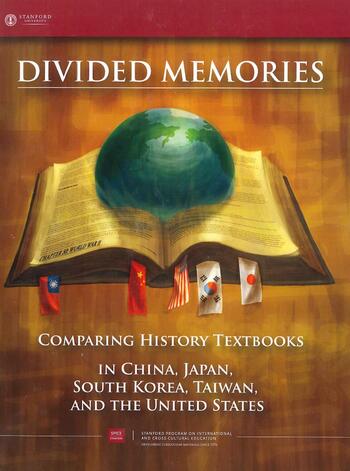
The outcome was the project's first book in 2011, History Textbooks and the Wars in Asia: Divided Memories, which suggests that an "introspective effort" to understand national narratives about WWII has the potential to bring about historical reconciliation in the region. Sneider describes it as the first comparative study of textbooks in the countries involved; it soon evolved into a classroom supplemental textbook published by the Stanford Program on International and Cross-Cultural Education.

"Formal education is a powerful force in shaping our historical understandings," Sneider noted. "We wanted to look at the textbooks that have the most impact and usage."

A 2014 book, Confronting Memories of World War II: European and Asian Legacies, which was co-edited by Shin, Sneider and Daniel Chirot, a sociologist with the University of Washington, compared successful European WWII reconciliations with lagging Asian efforts. Another book, Divided Lenses, published earlier this year, examined the impact of dramatic film and other forms of popular culture on wartime memory. A new book is due out this summer, Divergent Memories: Opinion Leaders and the Asia-Pacific War, which focuses on leaders in politics, the media and academia in Japan, China, South Korea and the U.S.

The Divided Memories project aims to generate discussions and collaborations among those who create "historical memories" – educators, policymakers and government leaders. One report that grew out of such dialogues included suggestions for reconciliation:

  • Create supplementary teaching materials on the issue. 
  • Launch dialogues among Asian, American and European historians. 
  • Offer educational forums for journalists, policymakers and students. 
  • Conduct museum exchanges and create new museums, such as one wholly dedicated to WWII reconciliation in Asia. 
  • Increase student exchanges among all the countries involved. 

History is reflected in today's geopolitics, as noted in the revived disputes by these nations over rival claims to islands in the South China Sea and elsewhere. Without resolution, these disagreements can flare up into military conflicts, Sneider wrote.

"The question of history taps into sensitive and deeply rooted issues of national identity," he noted.

Whether recounting Japanese atrocities in China, China's exaggerated account of its Communist fighters' role in World War II, or the U.S. decision to drop atomic bombs on Japan, no nation is immune to re-creating the past to further its own interests today, Sneider wrote.

For example, Divided Memories research on Chinese textbooks shows how the Chinese government in recent decades embarked on a "patriotic education" campaign to indoctrinate young people by exaggerating its role in Japan's WWII defeat. This narrative suits the nationalistic desires of a Chinese government no longer exclusively motivated by communist ideology, Sneider said.

One project of APARC and its Japan Program that was also an outgrowth of Divided Memories involved Stanford scholars urging Japanese Prime Minister Shinzo Abe to show "clear, heartfelt remorse" in a 2015 speech on the 70th anniversary of the end of WWII. A 15-page report featured hypothetical statements suggesting what Abe might say to make amends for Japanese actions in China and Korea.

"While we cannot claim to have directly influenced the prime minister, his statement did go further in the direction of an expression of remorse over the war and the need to continue to look clearly and honestly at the past than many expected," said Sneider.


Image
divided memories 2

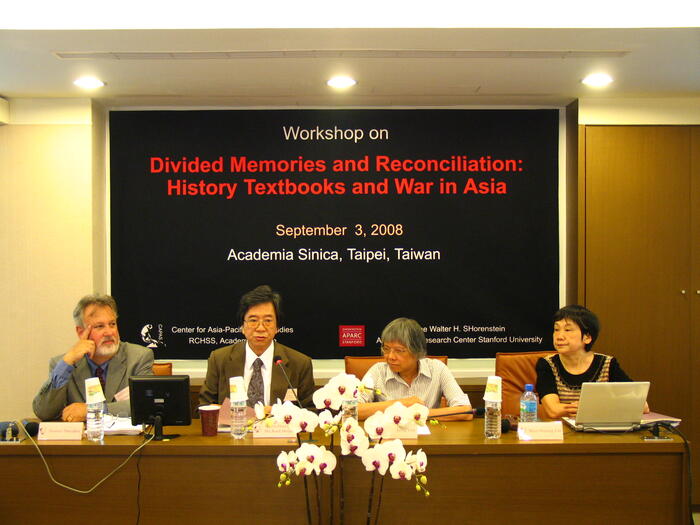
A workshop on history textbooks co-hosted by Shorenstein APARC and Academia Sinica's Center for Asia-Pacific Area Studies takes places in Taipei, Sept. 3, 2008.


Generations and grievances

Consciousness-raising on other fronts, however, is getting results, thanks to Stanford's Divided Memories project. A 2015 landmark agreement between Japan and South Korea over the WWII "comfort women" dispute was reached due to extensive U.S. involvement. Comfort women were women and girls who were forced into sexual slavery by the Imperial Japanese Army in occupied territories before and during World War II.

In an article, Sneider explained how the U.S. perceived that the dysfunctional relationship between South Korea and Japan over this issue, among others, threatened to undermine American strategic interests in Asia. 

Shin highlights the importance of U.S. involvement. "The U.S. is not just an outsider to historical and territorial disputes in the region," he said. "From a geopolitical perspective, the U.S. has done a wonderful job in reviving the devastated region into a prosperous one after 1945, but from a historical reconciliation perspective, the U.S. has done a poor job."

He suggests that America should "play a constructive role in promoting historical reconciliation" among the countries involved. And so, the Divided Memories project has included the United States in its efforts.

According to Sneider, Divided Memories is unique among all reconciliation projects for its emphasis on the inclusion of the U.S.; comparative analyses across countries; and real-world policy impacts. As part of the Shorenstein research center, it is housed within Stanford's Freeman Spogli Institute for International Studies.

"This project reflects what Stanford, our center and the Freeman Spogli Institute are all about – true interdisciplinary research and engagement," Sneider said.

Clifton Parker is a writer for the Stanford News Service.

Hero Image
divided memories reconciliation headline
Japanese soldiers in Shanghai, March 23, 1927 | A Stanford project encourages World War II reconciliation and historical accuracy about the conflict and its consequences in Japan, China, Korea, Taiwan and the United States. Progress has been made on classroom textbooks and scholarly discussions and exchanges.
Getty Images
All News button
1
Authors
News Type
News
Date
Paragraphs

Thirty U.S. secondary school teachers, representing 11 states and multiple subject areas, came to Stanford for a three-day professional development conference that seeks to help teachers better incorporate Korean studies in the classroom.

Korea is arguably one of the most stable democracies in the world and its economic model often praised. Yet Korea-focused curriculum in the United States rarely covers much outside of the Korean War context, leaving a potential gap in students’ understanding of the Pacific nation. The Hana–Stanford Conference on Korea seeks to change that reality.

In its fourth year, the conference offers a venue for specialists on Korea to share knowledge with secondary school educators and creates an opportunity for educators to form a cross-cultural professional network toward the vision of enhancing their curriculum with Korean studies. 

For three days, scholars from Stanford and peer institutions taught the U.S. teachers about Korean history, economy, culture and the nation's regional and global relations. Speakers included economist Yong Lee and career diplomat David Straub, both scholars at the Walter H. Shorenstein Asia-Pacific Research Center (APARC), as well as Middlebury professor Rachael Miyung Joo, also a Stanford alum. Teachers and students from Hana Academy Seoul, a private high school in Korea, also shared perspectives with the American teachers. The full agenda is viewable here.

Supported by the Hana Financial Group, the conference is organized by Shorenstein APARC and the Stanford Program on International and Cross-Cultural Education (SPICE), a program that makes globally focused Stanford research accessible to K–12 grade levels.

SPICE’s Jonas Edman and Rylan Sekiguchi followed the lectures with curriculum demonstrations. Each teacher left the conference with a set of comprehensive lesson plans and strategies for putting the curriculum into practice.

Shorenstein APARC caught up with a few of the teachers (pictured below from right to left): Anne Schaefer from San Jose Middle School (Novato, CA), Orah Bilmes from Alvarez High School (Providence, RI), and Jeffrey Scharfen and Graham Rutherford from Cardinal Newman High School (Santa Rosa, CA). An abridged version of the conversation is below.

What has surprised you about Korea?

Anne: The process it took for Korea to have such strong economic growth—so quickly—and to understand all of the components that led to that growth really surprised me. Moving from an autocratic regime through many stages to where it is today, and the interesting role that education played in its development. Education really became a motivating factor for everybody. I found that a very unique, complex phenomenon.

Jeffrey: Hearing from scholars from both Korea and the United States about the Korean experience has given me a better sense of history. For instance, the Korean-American experience in Los Angeles during the 1992 Rodney King riots. I remember being there during those riots. For me, they were defining moments, but on the other hand, I never truly had a sense of the powerful impact it had on the Korean community.

What Korean cultural themes can U.S. students most relate to? Do your students consume Korean culture?

Orah: I teach many students from the Dominican Republic. One of the presentations gave me ideas for putting together activities for students to compare baseball in the Dominican Republic with baseball in Korea. When comparing cultures, starting with something that’s accessible allows students to develop the vocabulary needed to jump into higher-level discussions.

Jeffrey: My students are very connected to Korean pop themes. My own awareness actually comes from my own children and a student that I’ve taught who was adopted from Korea. For that student, Korean pop culture gave her a sense of identity and her interests emanated, so there was a multiplying factor and her friends became interested too.

Kimchi…you learned how to make the dish and sampled it, too. How’d it go?

Graham: I enjoyed watching and seeing how kimchi is made. It’s more than a name, it has this place in society. I’ve had kimchi before but it was neat to see and hear about its background. The variety of styles was surprising. And it was really good with rice.

Jeffrey: I love kimchi. I think I was first introduced to kimchi in 1973 and I’ve been eating it regularly since then. It’s one of those culinary pleasures that breaks down barriers and gives you an entrée into other relationships. In a way, it’s a kind of diplomacy.

Anne: The culture of kimchi as a family thing – having one’s own set of tastes and different ingredients depending on family history was fun to learn about. The conference made apparent that culinary history is important and creates an understanding of a culture.

What’s one lesson from the conference you’d share with other teachers?

Orah: I teach many immigrant and refugee students. For some, they left behind very poor countries. The information on Korea’s economic policies and history has my head spinning to have students try to “apply” the Korean economic approach to their home countries, analyze its strengths and weaknesses, and decide if one country’s approach can also work for another.

Anne: One of the tangential themes was that, despite all the talk of globalization, culture continues to exist in Korea and other countries. The Internet connects everyone, but I go to “this place” and it’s still “this place.” Culture—and the fact that we can still retain it even in today’s globalized world—is truly beautiful.

Graham: I try to get my students to not just look back at the problems they are studying but to also put themselves back into the time period—to realize that the decisions made then have to be understood in that moment in time. North Korea can be examined through that lens. And while it’s easy to look back and see the problems, it’s also worth encouraging students to look ahead and consider how the Korean divide could be solved.

Image
teaching resources korea 50pt
Hero Image
img 5009
Students from Hana Academy Seoul perform traditional Korean percussion at the Hana-Stanford Conference, July 28, 2015. Watch their performance here: https://youtu.be/iS_2owfT6iA.
Heather Ahn
All News button
1
Submitted by fsid9admin on

This unit explores Korean culture, i.e., the beliefs, customs, arts, and ways of life shared by—and often unique to—people living on the Korean peninsula. How did this culture develop? How has it changed over time? How has it stayed the same? By examining these essential questions, students will come to learn that a country’s culture is both anchored in its past—in historical events that have gained special meaning and in customary beliefs and practices that have lingered and survived—and a result of adaptation to changing times.

Authors
News Type
News
Date
Paragraphs

Standing upright, then slowly clasping both hands and drawing them up to shoulder height, Kevin Won next kneeled on the floor. Bending forward, he bowed his head toward his silent audience.

Won’s demonstration of the Sebae, a traditional bow performed for elders during South Korea’s lunar new year, may have seemed out of place during a warm, sunny day on Stanford’s campus. But the intricate display was in perfect context during a cross-cultural conference for secondary school teachers from the United States to learn about Korean society, as well as providing a forum to directly engage with Korean teachers and students.

Despite Korea’s growing relevance worldwide, there has been little development of Korean studies below university-level, leaving a vacuum for misunderstanding, including stereotypes, to form at an early age. The conference – now in its third year – aims to shift this reality.

For three days in late July, twenty-four teachers from across America participated in a variety of activities and seminars intended to give them new perspectives and teaching strategies.

Gary Mukai, director of SPICE, welcomes participants.

The conference was co-organized by the Korean Studies Program (KSP) at the Shorenstein Asia-Pacific Research Center (APARC) and the Stanford Program on International and Cross-Cultural Education (SPICE), both in the Freeman Spogli Institute for International Studies. The two groups work together to convert research on Asia into material that is suitable for younger students.

“Our mission is to make Stanford scholarship accessible to all,” said SPICE director Gary Mukai, who has been with SPICE for over 26 years. SPICE and Shorenstein APARC, under the direction of Gi-Wook Shin, a professor of sociology, have coordinated curriculum development for key projects on Korean history and perceptions of wartime history in Northeast Asia. 

A cadre of scholars and practitioners from Stanford and other universities and organizations offered talking points and actionable ideas for instruction. Among them was David Straub, the associate director of KSP, who lived in Korea for eight years as a senior U.S. diplomat. 

The United States and Korea have a very close relationship, but lack equal dialogue, explained Straub. America is still “number one” for Koreans, as such, Koreans know more about the United States than Americans know about Korea. This imbalance can lead to misunderstanding. Straub took the teachers through the recent history of U.S.-Korea relations, which is often narrowed to the context of the Korean War. 

Two teachers work together on a curriculum exercise comparing political cartoons.

Since 1945, South Korea overcame extreme poverty and effectively established a democratic society, a transition that was uncommonly quick and relatively smooth, and one that now supports a global powerhouse of trade and culture.

Throughout the conference, SPICE staff demonstrated ways for educators to bring Korea, and greater Northeast Asia, into their classrooms. They gave the teachers a chance to practice student lessons. In one exercise, the teachers deciphered sets of political cartoons and compared news headlines from Japan, China and Korea, using material from SPICE instructional materials. 

Each activity was carefully prepared to guide teachers to examine their own preconceptions. Greater cultural awareness can come when both teachers and students are “more critical consumers of information,” said Rylan Sekiguchi, a SPICE curriculum specialist, in his presentation.

While curriculum is important, establishing rapport seemed an essential part of the conference. A key component to a successful cross-cultural workshop is creating a community, “and looking around the room, I think we’ve done that here,” said Mukai, in an address to participants at a reception.

Also in attendance was a delegation of 11 Korean teachers and students from Hana Academy Seoul, a private high school in Korea with a unique structure and curriculum. The school’s name comes from the Hana Financial Group, which established the school in 2010, and is also the supporter of the Stanford conference. The Korean students gave presentations that covered a wide range of topics, including an analysis of teenage life and the public education system in Korea.

(Left to right): Students Nayoon Kim, Kevin Won, Seung-hyun Kim and Sarah Chey presented on Korean culture and society.

Six students from Hana Academy Seoul performed Samulnori, one of Korea’s most popular genres of music. The musical group, known as Da-Seu-Reum, showcased their talents while wearing traditional, brightly colored outfits. Afterward, the students became the teachers – when they invited the American teachers to come up and play the instruments. 

Three students were also honored for their research and participation in the Sejong Korean Scholars Program (SKSP), a distance-learning opportunity for 25 high school students across the United States to engage in an intensive study of Korea for a semester. SKSP is dually led by SPICE and Shorenstein APARC, and sponsored by the Korea Foundation.

“I feel very honored to attend, and have learned a lot about U.S.-Korea relations,” said Won, who is from Korea and attends The Taft School in Connecticut. “But mostly, I am just glad my presentation went well.” 

Won, a relative newcomer to public speaking, explained Korean holidays and how to perform a traditional bow. After demonstrating the correct posture and sequence to the audience, he asked for, and easily received, teacher participation. 

Kelly McKee, a teacher from Illinois, tries playing the Buk, a drum used in Samulnori, with direction from a Hana Academy Seoul student.

“From the impeccably credentialed presenters to the wonderful pacing of the presentations, I thoroughly enjoyed my three days here,” said Eladio “Lalo” Martin, a humanities teacher at Cesar Chavez Middle School in Watsonville.

“This conference, by far, is the best I’ve ever attended,” he added. Martin has been teaching for more than 18 years, and says he looks forward to returning to Stanford.

“The speakers have been fantastic,” said Kelly McKee, a social studies teacher. “They’ve shared in-depth expertise on topics like Korea’s special economic zones and North Korea – areas you can’t find in professional development workshops elsewhere.”

McKee, who works at Lake Forest High School in Illinois and is a leader of a student exchange program to Shanghai, says she plans to supplement her Korea unit with what she has learned. As the availability of Asian studies curriculum continues to grow, she says the future certainly looks bright.

Hero Image
Hana Activity Logo
All News button
1
Subscribe to North Korea