


Uncovering North Korea
North Korea remains one of the most misunderstood and misrepresented countries in
the United States. Uncovering North Korea seeks to fill this gap and strives to bring more accurate information and objectivity to the study of North Korea.
Divided Memories: Comparing History Textbooks
We study history, many say, to learn from history's mistakes. But what happens when our memories of history differ? Students analyze, compare, and contrast history textbooks from five societies and compare their coverage of six sensitive historical episodes.
Teacher's Guide for Wings of Defeat
In Wings of Defeat, Kamikaze survivors in their eighties tell us about their training, their mindsets, and what it means to survive when thousands of their fellow pilots died. Wings of Defeat helps us consider what responsibilities a government at war has to its soldiers and to its people. A recent meeting of American veterans and Kamikaze survivors of World War II is captured in the sequel, Another Journey.
SPICE launches 'The Road to Beijing'
News Type
News
Date
Paragraphs
The Stanford Program on International and Cross-cultural Education (SPICE) has just announced a major new interdisciplinary, interactive initiative for middle school and high school students on the road to the 2008 Summer Olympics in Beijing. “The Road to Beijing” initiative includes a new documentary featuring world-renowned cellist Yo-Yo Ma and the Silk Road Ensemble, a new documentary developed by NBC that features Olympians who will participate in the Beijing Olympics, curriculum materials addressing Beijing and issues raised by the Olympics, an interactive website, and teacher professional development. SPICE serves as a bridge between the interdisciplinary work of Stanford’s Freeman Spogli Institute for International Studies and K–14 schools in the United States and independent schools abroad by developing multidisciplinary curriculum materials on important international themes.
“Learning about other cultures and about the migration of ideas among communities is vital in today’s world. In presenting a full range of perspectives, SPICE curricula broaden students’ views of the world and deepen their understanding of their own lives.” Yo-Yo Ma
The Road to Beijing initiative has four major educational components. First is a four-lesson curriculum unit, geared to middle and high school students, that (1) introduces students to the modern city of Beijing through its history, geography, and major attractions and sights; (2) explores some economic, environmental, political, and social issues of modern China and the challenges of hosting the Olympics; (3) introduces some of the Olympians participating in the 2008 Beijing Olympics through a documentary by NBC; and (4) examines musicians’ reflections on Beijing and China through a documentary produced by Yo-Yo Ma and the Silk Road Ensemble. Stanford scholars, such as Andrew G. Walder, the Denise O’Leary and Kent Thiry Professor of Sociology, served as advisors of the curriculum unit.

A second component focuses on two documentaries that are available through the SPICE website. The documentary, The Road to Beijing, produced by the Silk Road Project and narrated by Yo-Yo Ma and featuring music of the Silk Road Ensemble, is available with the Road to Beijing curriculum unit as well as through the SPICE and Silk Road Project websites. An accompanying teacher’s guide is available as well. Olympics broadcaster NBC joined the collaboration with SPICE and has produced a short documentary that features U.S. and Chinese Olympians. The first interview features Stanford alumnus and U.S. gymnast David Durante. The NBC documentary and an accompanying teacher’s guide is also available on the SPICE website.
Third, a new Road to Beijing website showcases many of SPICE’s curriculum units on China, along with new interactive features on the modern city of Beijing and the historic Silk Road. In 2007, SPICE completed a curriculum unit called Along the Silk Road in collaboration with Yo-Yo Ma and the Silk Road Project. A new Silk Road game, designed by David Cohn, Cammy Huang, Gary Mukai, and Johanna Wee, will now allow students to walk and explore the historic Silk Road. Yo-Yo Ma commented, “The wonderful work SPICE is doing to educate young people about the historic Silk Road trading route is significant on many levels. Learning about other cultures and about the migration of ideas among communities is vital in today’s world. In presenting a full range of perspectives, SPICE curricula broaden students’ views of the world and deepen their understanding of their own lives.” Other China-focused curriculum units that have been produced by SPICE include Chinese Dynasties Part One: The Shang Dynasty through the Tang Dynasty, 1600 BCE to 907 CE; Chinese Dynasties Part Two: The Song Dynasty through the Qing Dynasty, 960 to 1911 CE; China's Cultural Revolution; Ethnic Minority Groups in China; Hong Kong in Transition: A Look at Economic Interdependence; Religions and Philosophies in China: Confucianism, Daoism, and Buddhism; and 10,000 Shovels: China's Urbanization and Economic Development.

As a fourth component, the Road to Beijing initiative offers teacher professional development seminars, another hallmark of SPICE’s work over the past three decades. Many seminars have already been held at Stanford and for the East Asia Regional Council of Overseas Schools, the European Council of Independent Schools, and the Chicago Public Schools. Most recently, the SPICE staff and Albert Dien, professor emeritus of Asian Languages, gave four seminars for the Chicago Public Schools in May 2008. Each seminar featured a lecture by Albert Dien and interactive demonstrations of SPICE curricula by the SPICE staff. In October 2008, SPICE and the Silk Road Project will work with the New York City Public Schools.
In collaboration with organizations such as NBC and the Silk Road Project, SPICE will continue to channel its interdisciplinary work on key international issues (and their historical and cultural underpinnings) — political economy, security, the environment, and health — to schools in our nation and the world. SPICE invites interested teachers to visit its new website, show their students the new documentaries, and engage their students in a study of historic topics concerning China, such as the Silk Road, as well as contemporary topics concerning China, such as the 2008 Beijing Olympics.

“We are delighted that SPICE is once again sending the university’s path-breaking, interdisciplinary scholarship and research out into the world, educating a new generation of students and scholars about contemporary issues occasioned by the 2008 Olympic Games in Beijing and China’s historic rise,” said FSI Director Coit D. Blacker.
Gary Mukai personally introduced the new Road to Beijing initiative to Stanford alumni in Chicago on June 16, 2008, at a Leadership Circle Event.
Hero Image

All News button
1
New offering from Stanford education program puts students on 'Road to Beijing'
Date
Paragraphs
The Stanford Program on International and Cross-Cultural Education has taken on world religions, Russian leaders and Aztec history. Now it's boiling down the glory and controversy of China's history, culture and politics in time for the Summer Olympics in Beijing.
Helping to make the scholarship and research at Stanford's Freeman Spogli Institute for International Studies accessible to younger learners, the program, known by its acronym "SPICE," has developed a multimedia curriculum for middle and high school students that introduces them to the sights and sounds of China through the prism of the upcoming Olympics.
"The Road to Beijing" includes a documentary featuring cellist Yo-Yo Ma and musicians from the Silk Road Ensemble discussing how they blend traditional Chinese and classical music, and a documentary developed by NBC that showcases Olympians planning to compete in the August games. The package also offers an interactive website and professional development material for teachers.
The curriculum can be tailored for use in a single day or during several classes.
"We want to make Stanford faculty's scholarship accessible to a younger and broader audience," said Gary Mukai, director of SPICE. "We have a number of China specialists on campus, and we want to spread the knowledge of Stanford to other schools."
SPICE has been offering curriculum packages to middle and high school students for the past three decades, covering topics such as Islam, the span of Soviet and Russian leaders from Lenin to Putin and the political geography of Europe.
While "The Road to Beijing" uses the Olympics to hook student interest, it also offers lessons on the political, social and environmental criticism facing China.
"That's one of the richest parts of the curriculum," Mukai said. "It engages students and gets them to think about critical issues."
The teacher guides and documentaries are free on the SPICE website, http://spice.stanford.edu. More written materials, CD-ROM PowerPoints and DVDs of the documentaries cost $34.95.
All News button
1
Educating the Next Generation: SPICE Perspectives on China and Japan
News Type
News
Date
Paragraphs
TheStanford Program on International and Cross-Cultural Education (SPICE) develops innovative materials on key issues in international affairs for K-14 students in the United States and independent schools abroad. Multidisciplinary SPICE materials serve as a bridge between classrooms of receptive students and teachers and FSI scholars and collaborative partners. SPICE offered a number of important new publications for an emerging generation of scholars this year.
Image
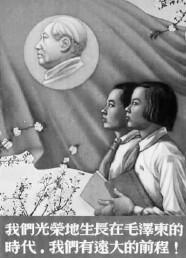
As with all SPICE projects, collaboration with scholars and other experts on the Cultural Revolution was essential to the development of this unit. Andrew G. Walder, former director of the Shorenstein Asia-Pacific Research Center, served as principal advisor and was instrumental in the conceptualization of the curriculum. Connie Chin of Stanford’s Center for East Asian Studies translated entries from a Chinese textbook that students compare with textbooks of Taiwan and the United States. Jiang, a local author and survivor of the Cultural Revolution, oversaw the development of a lesson that features her book, Red Scarf Girl. Jiang worked with many Chinese who provided their own memoirs of the Cultural Revolution for the curriculum, exposing students to first-hand experiences of Chinese youth during this time.
Another new SPICE unit, titled Tea and the Japanese Tradition of Chanoyu, results from a collaboration with the Urasenke Foundation of Kyoto, Japan. This unit traces the history of tea from its origins in China 5,000 years ago to modern times, with an emphasis on its prominent role in Japan. By the 16th century, Japan’s tea practice had become formalized by Sen Rikyu, who integrated art, religion, social interaction, and economics into his tea practice. He so revolutionized chanoyu that he is universally recognized as the most important tea master who ever lived. The Urasenke School of Tea was established by one of his descendants some 400 years ago, and the Sen family has continued to pass on its way of tea for 16 generations.
SPICE worked with two of Sen Rikyu’s descendants, Great Grand Master Sen Soshitsu XV and Grand Master Sen Soshitsu XVI Iemoto, to develop this unit. Each wrote a personal letter, expressing their excitement about introducing American students to a cherished Japanese tradition. Grand Master Sen Soshitsu XVI Iemoto says, “In the age of globalization, there is a great need for truly international people, that is, those who understand and appreciate their own culture as well as that of others, and those who value both the diversity of mankind and the universality of the human spirit. These are the people who will enrich and reinvigorate our global society in the future.” His father, Great Grand Master Sen Soshitsu XV, adds, “I am very happy to have been involved with this project which, I pray, will help to contribute to world peace and goodwill through my motto ‘Peacefulness through a Bowl of Tea.’”
Hero Image

All News button
1
SPICE and The Stanford Challenge: 30 Years of Educating New Generations of Leaders
News Type
News
Date
Paragraphs
“Preparing the next generation of leaders and creating more informed elementary and secondary students means changing and improving curricula, setting higher standards, and ensuring that content is based on current research relevant to the world’s critical problems and urgent issues.” Coit “Chip” Blacker, FSI Director and Co-Chair, International Initiative
SPICE was established more than 30 years ago and serves as a bridge between FSI and elementary and secondary schools in the United States and independent schools abroad. SPICE’s original mission in 1976 was to help students understand that we live in an increasingly interdependent world that faces problems on a global scale. For 30 years, SPICE has continued to address this original mission and currently focuses its efforts primarily in three areas:
- curriculum development for elementary and secondary schools;
- teacher professional development; and
- distance-learning education.
SPICE hopes to continue to educate new generations of leaders by addressing five key initiatives of The Stanford Challenge, announced by President Hennessy last fall.
Initiative on Human Health / 1
SPICE is working with the School of Medicine and the Center for Health Policy on a high school curriculum unit that focuses on HIV/AIDS. SPICE is collaborating with Drs. Seble Kassaye, David Katzenstein, and Lucy Thairu of the School of Medicine’s Division of Infectious Diseases & Geographic Medicine. Using an epidemiological framework, students will be encouraged to consider the many issues involved in the pandemic, including but not limited to poverty, gender inequality, and biomedical research and development. Two Stanford undergraduates, Jessica Zhang and Chenxing Han, are working with the physicians on this unit.
Initiative on the Environment and Sustainability / 2
SPICE recently completed a curriculum unit called 10,000 Shovels: China's Urbanization and Economic Development. 10,000 Shovels examines China’s breakneck growth through a short documentary that integrates statistics, video footage, and satellite images. The documentary, developed by Professor Karen Seto of the Center for Environmental Science and Policy, focuses on China’s Pearl River Delta region while the accompanying teacher’s guide takes a broader perspective, exploring many current environmental issues facing China. Stanford’s School of Earth Sciences is helping to promote this unit and documentary.
The International Initiative / 3
All of SPICE’s curriculum units focus on international topics. Two of SPICE’s most popular units are Inside the Kremlin: Soviet and Russian Leaders from Lenin to Putin and Democracy-Building in Afghanistan. Inside the Kremlin introduces students to key elements of Soviet and Russian history through the philosophies and legacies of six of its leaders—Lenin, Stalin, Khrushchev, Gorbachev, Yeltsin, and Putin. The unit includes (on DVD) six lectures by six FSI faculty members, including FSI director Coit D. Blacker; professors David Holloway and Gail W. Lapidus, CISAC; professor and deputy FSI director Michael A. McFaul; history professor Norman M. Naimark; and history professor Amir Eshel, Forum on Contemporary Europe.
Democracy-Building in Afghanistan is a teacher’s guide for a film called Hell of a Nation. The film’s lead advisor and SPICE’s key advisor was former CDDRL fellow J. Alexander Thier. Hell of a Nation documents the lives of two Afghans participating in the political process to develop a new constitution for Afghanistan—illustrating the “human face” of democracy-building and elucidating the complexities and difficulties of democratic construction in a divided and historically conflict-ridden nation.
Arts and Creativity Initiative / 4
Following 9/11, SPICE decided to develop a unit called Islamic Civilization and the Arts, which introduces students to various elements of Islamic civilization through a humanities approach. Lessons on art, the mosque, Arabic language and calligraphy, poetry, and music provide students with experience analyzing myriad primary source materials, such as images, audio clips, sayings of Muhammad, and excerpts from the Quran. In each lesson, students learn about the history, principles, and culture of Islam as they pertain to particular forms of art.
SPICE recently completed a new unit called Along the Silk Road, which explores the vast ancient network of cultural, economic, and technological exchange that connected East Asia to the Mediterranean. Students learn how goods, belief systems, art, music, and people traveled across such vast distances to create interdependence among disparate cultures. This was a collaboration with the Silk Road Project, the Art Institute of Chicago, Stanford’s Cantor Arts Center and Center for East Asian Studies, and the Shorenstein Asia-Pacific Research Center.
The K-12 Initiative / 5
SPICE develops curriculum based on FSI scholarship, conducts teacher professional development seminars locally, nationally, and internationally, and also offers a distance-learning course called the Reischauer Scholars Program to U.S. high school students. At seminars at Stanford, FSI faculty members offer lectures to the teachers and SPICE curriculum writers give curriculum demonstrations that draw upon the content presented in the lectures. Last summer, Stanford professor Al Dien (Asian Languages) and the SPICE staff gave a workshop for 80 teachers in the Chicago Public Schools. World-renowned cellist Yo-Yo Ma performed at the workshop.
The Reischauer Scholars Program is a distance-learning course sponsored by SPICE. Named in honor of former ambassador to Japan Edwin O. Reischauer, a leading educator and noted scholar on Japanese history and culture, the RSP annually selects 25 exceptional high school juniors and seniors from throughout the United States to engage in an intensive study of Japan. This course provides students with a broad overview of Japanese history, literature, religion, art, politics, and economics, with a special focus on the U.S.-Japan relationship. Top scholars affiliated with the Shorenstein Asia-Pacific Research Center (including Ambassador Michael H. Armacost, Professor Daniel I. Okimoto, and Professor Gi-Wook Shin), leading diplomats, and young professionals provide web-based lectures as well as engage students in online dialogue. These lectures and discussions are woven into an overall curriculum that provides students with reading materials and assignments.
SPICE has for many years focused on the initiatives that have been identified by President Hennessy to be at the core of The Stanford Challenge. By continuing to focus on these initiatives, the SPICE staff hopes to continue to make FSI scholarship accessible to a national and international audience of educators and students, with the ultimate goal of empowering a new generation of leaders with the tools needed to deal with complex problems on a global scale.
Hero Image

All News button
1