Authors
Gary Mukai
News Type
News
Date
Paragraphs

“Preparing the next generation of leaders and creating more informed elementary and secondary students means changing and improving curricula, setting higher standards, and ensuring that content is based on current research relevant to the world’s critical problems and urgent issues.” Coit “Chip” Blacker, FSI Director and Co-Chair, International Initiative

SPICE was established more than 30 years ago and serves as a bridge between FSI and elementary and secondary schools in the United States and independent schools abroad. SPICE’s original mission in 1976 was to help students understand that we live in an increasingly interdependent world that faces problems on a global scale. For 30 years, SPICE has continued to address this original mission and currently focuses its efforts primarily in three areas:

  1. curriculum development for elementary and secondary schools;
  2. teacher professional development; and
  3. distance-learning education.

SPICE hopes to continue to educate new generations of leaders by addressing five key initiatives of The Stanford Challenge, announced by President Hennessy last fall.

Initiative on Human Health / 1

SPICE is working with the School of Medicine and the Center for Health Policy on a high school curriculum unit that focuses on HIV/AIDS. SPICE is collaborating with Drs. Seble Kassaye, David Katzenstein, and Lucy Thairu of the School of Medicine’s Division of Infectious Diseases & Geographic Medicine. Using an epidemiological framework, students will be encouraged to consider the many issues involved in the pandemic, including but not limited to poverty, gender inequality, and biomedical research and development. Two Stanford undergraduates, Jessica Zhang and Chenxing Han, are working with the physicians on this unit.

Initiative on the Environment and Sustainability / 2

SPICE recently completed a curriculum unit called 10,000 Shovels: China's Urbanization and Economic Development. 10,000 Shovels examines China’s breakneck growth through a short documentary that integrates statistics, video footage, and satellite images. The documentary, developed by Professor Karen Seto of the Center for Environmental Science and Policy, focuses on China’s Pearl River Delta region while the accompanying teacher’s guide takes a broader perspective, exploring many current environmental issues facing China. Stanford’s School of Earth Sciences is helping to promote this unit and documentary.

The International Initiative / 3

All of SPICE’s curriculum units focus on international topics. Two of SPICE’s most popular units are Inside the Kremlin: Soviet and Russian Leaders from Lenin to Putin and Democracy-Building in Afghanistan. Inside the Kremlin introduces students to key elements of Soviet and Russian history through the philosophies and legacies of six of its leaders—Lenin, Stalin, Khrushchev, Gorbachev, Yeltsin, and Putin. The unit includes (on DVD) six lectures by six FSI faculty members, including FSI director Coit D. Blacker; professors David Holloway and Gail W. Lapidus, CISAC; professor and deputy FSI director Michael A. McFaul; history professor Norman M. Naimark; and history professor Amir Eshel, Forum on Contemporary Europe.

Democracy-Building in Afghanistan is a teacher’s guide for a film called Hell of a Nation. The film’s lead advisor and SPICE’s key advisor was former CDDRL fellow J. Alexander Thier. Hell of a Nation documents the lives of two Afghans participating in the political process to develop a new constitution for Afghanistan—illustrating the “human face” of democracy-building and elucidating the complexities and difficulties of democratic construction in a divided and historically conflict-ridden nation.

Arts and Creativity Initiative / 4

Following 9/11, SPICE decided to develop a unit called Islamic Civilization and the Arts, which introduces students to various elements of Islamic civilization through a humanities approach. Lessons on art, the mosque, Arabic language and calligraphy, poetry, and music provide students with experience analyzing myriad primary source materials, such as images, audio clips, sayings of Muhammad, and excerpts from the Quran. In each lesson, students learn about the history, principles, and culture of Islam as they pertain to particular forms of art.

SPICE recently completed a new unit called Along the Silk Road, which explores the vast ancient network of cultural, economic, and technological exchange that connected East Asia to the Mediterranean. Students learn how goods, belief systems, art, music, and people traveled across such vast distances to create interdependence among disparate cultures. This was a collaboration with the Silk Road Project, the Art Institute of Chicago, Stanford’s Cantor Arts Center and Center for East Asian Studies, and the Shorenstein Asia-Pacific Research Center.

The K-12 Initiative / 5

SPICE develops curriculum based on FSI scholarship, conducts teacher professional development seminars locally, nationally, and internationally, and also offers a distance-learning course called the Reischauer Scholars Program to U.S. high school students. At seminars at Stanford, FSI faculty members offer lectures to the teachers and SPICE curriculum writers give curriculum demonstrations that draw upon the content presented in the lectures. Last summer, Stanford professor Al Dien (Asian Languages) and the SPICE staff gave a workshop for 80 teachers in the Chicago Public Schools. World-renowned cellist Yo-Yo Ma performed at the workshop.

The Reischauer Scholars Program is a distance-learning course sponsored by SPICE. Named in honor of former ambassador to Japan Edwin O. Reischauer, a leading educator and noted scholar on Japanese history and culture, the RSP annually selects 25 exceptional high school juniors and seniors from throughout the United States to engage in an intensive study of Japan. This course provides students with a broad overview of Japanese history, literature, religion, art, politics, and economics, with a special focus on the U.S.-Japan relationship. Top scholars affiliated with the Shorenstein Asia-Pacific Research Center (including Ambassador Michael H. Armacost, Professor Daniel I. Okimoto, and Professor Gi-Wook Shin), leading diplomats, and young professionals provide web-based lectures as well as engage students in online dialogue. These lectures and discussions are woven into an overall curriculum that provides students with reading materials and assignments.

SPICE has for many years focused on the initiatives that have been identified by President Hennessy to be at the core of The Stanford Challenge. By continuing to focus on these initiatives, the SPICE staff hopes to continue to make FSI scholarship accessible to a national and international audience of educators and students, with the ultimate goal of empowering a new generation of leaders with the tools needed to deal with complex problems on a global scale.

Hero Image
1588 small SPICElogo
All News button
1
Authors
Rylan Sekiguchi
News Type
News
Date
Paragraphs

The Stanford Program on International and Cross-cultural Education (SPICE) serves as a bridge between FSI’s research centers and elementary and secondary schools throughout the United States. Over the past year, SPICE curriculum writer Rylan Sekiguchi and Joon Seok Hong (MA, East Asian Studies, 2007) have been developing a curriculum unit for secondary schools called “U.S.–South Korean Relations” in consultation with Professor Gi-Wook Shin, director of the Korean Studies Program (KSP). The KSP was formally established in 2001 at the Shorenstein Asia-Pacific Research Center with the appointment of Professor Shin as the founding director. “U.S.–South Korean Relations” is the result of SPICE’s first formal collaboration with the KSP.

For more than half a century, the United States and South Korea have been close and strong allies, a relationship nurtured under war and the pursuit of common interests. Despite this long and established alliance, U.S.–South Korean relations and Korean history are not adequately taught in American secondary schools. “U.S.–South Korean Relations” seeks to fill the gap by exposing students to the four core pillars of the alliance: democracy, economic prosperity, security, and sociocultural interaction. Each pillar supports the U.S.–South Korean relationship in a different and important way.

Lesson One examines South Korea’s maturing democracy, providing students an overview of South Korean democratization and engaging them on the concept of democracy. Students also study how the U.S.–South Korean relationship affected South Korea’s democratization and vice versa. Ultimately, students consider how common political and social values serve to strengthen relations between two countries and societies.

Lesson Two introduces students to the economic aspect of the U.S.–South Korean relationship and encourages them to recognize how economic interdependence between the two countries has served to draw them closer together. Students examine modern-day trade,such as the recently concluded U.S.–South Korean Free Trade Agreement (KORUS FTA), and also learn about the historical role the United States played in helping South Korea industrialize after the Korean War.

Lesson Three outlines the security concerns that South Korea and the United States have shared since the Korean War and the signing of the Mutual Defense Treaty in 1953 to the recent nuclear weapons issue with North Korea. Students study the history of the U.S.–South Korean security alliance and evaluate why both Seoul and Washington have considered the alliance so important and beneficial.

Lesson Four complements the broad country-tocountry perspective of the first three lessons and encourages students to consider how the U.S.–South Korean relationship has influenced the individual lives of Koreans and Americans. Students contemplate how the cultural interactions between the two countries have influenced both societies and changed the lives of their people.

The U.S.–South Korean relationship is one of the most successful bilateral relationships in the world. SPICE hopes that the curriculum unit, “U.S.–South Korean Relations,” not only offers U.S. secondary students a broad overview of this relationship but also inspires students to enroll in college courses on Korea through programs such as the KSP.

Hero Image
1571 small 9
All News button
1
Authors
Johanna Wee
News Type
News
Date
Paragraphs

On April 4 SPICE formally received the 2008 Franklin Buchanan Prize at the Association for Asian Studies conference in Atlanta. The Buchanan Prize, which is awarded annually to an outstanding curriculum publication on Asia designed for any educational level, elementary through university, this year recognized Waka Takahashi Brown and Selena Lai for Bundled Set: Chinese Dynasties Part One and Two.

Together the units cover each dynastic period beginning with the Shang through the fall of the Qing, providing more than 12 weeks of material for middle- and high-school history and social science courses. The units provide an accessible synthesis of an enormous span of Chinese history, introducing students and their teachers to key questions and sources for understanding Chinese civilization at different moments in time. Through primary sources and age-appropriate readings, the units engage students in standards-based lessons that address an impressive array of institutions and ideas, including political and social developments, ritual, philosophy and religion, technological innovations, arts and literature, education and the economy.

This is the fourth time that SPICE has won the prestigious Buchanan Prize since it was established in 1995. The Association for Asian Studies publishes the Journal of Asian Studies and is the largest scholarly association on Asian countries, cultures, and regions in the world.

Hero Image
dynastiescover2
All News button
1
Authors
Date
Paragraphs

The Asia Society last week awarded the 2007 Goldman Sachs Foundation Media and Technology Prize to the Reischauer Scholars Program, a college-level, distance-learning course about Japan for American high school students developed at Stanford.

Gary Mukai, SPICE director, and Naomi Funahashi, the primary instructor for the scholars program, accepted the prize, a plaque and a check for $25,000, at a March 10 luncheon in New York City.

Mukai said he would use the money to fund the 2008-09 scholars program, which is named in honor of Edwin O. Reischauer, a former U.S. ambassador to Japan.

Currently, the program receives funding from the Center for Global Partnership of the Japan Foundation, a nonprofit organization that promotes international cultural exchange and mutual understanding between Japan and other countries.

Stanford was one of four winners of the 2007 Goldman Sachs Foundation Prizes for Excellence in International Education awarded by the Asia Society, an international organization whose goal is to strengthen relationships and promote understanding among the people, leaders and institutions of Asia and the United States. The prizes were created to identify and recognize the most promising and successful examples of international education in the United States.

In addition to Stanford, the society also awarded prizes to a Florida elementary school, an Oregon high school and the Ohio State Board of Education.

Every year, the Reischauer Scholars Program selects 25 exceptional high school juniors and seniors throughout the United States to take part in the course, which offers a broad overview of Japanese history, literature, religion, arts, politics, economics and contemporary society, with a special emphasis on U.S.-Japan relations.

The course is offered through 10 "virtual classes" via the Internet over four months, and includes lectures, readings and online discussions, as well as videos and presentations that creatively display maps, statistics, images and digitized primary resources. Senior scholars, diplomats and other experts from the United States and Japan teach the classes. Students who successfully complete the course earn credit from the Stanford Continuing Studies Program.

The Stanford Program on International and Cross-Cultural Education is a K-12 education outreach program at the Freeman Spogli Institute for International Studies.

The advisers to the Reischauer Scholars Program are Michael Armacost, a former ambassador to Japan and now a distinguished fellow at the Freeman Spogli Institute; Daniel Okimoto, a professor emeritus of political science at Stanford; Consul General Yasumasa Nagamine of the Consulate General of Japan in San Francisco; and Nisuke Ando, a professor emeritus of law at Doshisha University in Japan.

Hero Image
spicegoldman2
All News button
1
Submitted by fsid9admin on
This unit explores the long-term effects of radiation through the examination of issues surrounding the atomic bombs dropped on Japan in 1945; and the 1986 explosion at the Chernobyl power plant. We hope the unit provides teachers with the tools and background information necessary to more confidently discuss recent events in Japan with their students.
Submitted by fsid9admin on
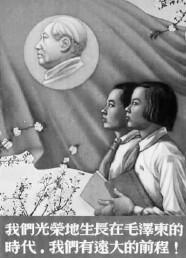
This unit takes students through Chinese history from the end of the Qing Dynasty, through the Republican Era, and up to the Communist Era, and presents historical events against the backdrop of an ever-changing world. Students explore this era through a variety of individual and small-group activities featuring political posters, literature, personal stories, and primary sources.
News Type
News
Date
Paragraphs

For 2009, SPICE has developed four new curriculum units: Examining Long-term Radiation Effects, Interactive Teaching AIDS: A Comprehensive HIV/AIDS Prevention Curriculum, China's Republican Era, 1911 to 1949, and Teacher's Guide to Wings of Defeat.

Hero Image
2009cover
All News button
1

616 Jane Stanford Way
Encina Hall, E005
Stanford, CA 94305-6060

(650) 723-6784
0
wakabrownhs_2.jpeg

Waka Brown is a Curriculum Specialist for the Stanford Program on International and Cross-Cultural Education (SPICE). She has also served as the Coordinator and Instructor of the Reischauer Scholars Program from 2003 to 2005. Prior to joining SPICE in 2000, she was a Japanese language teacher at Silver Creek High School in San Jose, CA, and a Coordinator for International Relations for the Japan Exchange and Teaching Program.

Waka’s academic interests lie in curriculum and instruction. She received a B.A. in International Relations from Stanford University as well as teaching credentials and M.Ed. through the Stanford Teacher Education Program. 

In addition to curricular publications for SPICE, Waka has also produced teacher guides for films such as A Whisper to a Roar, a film about democracy activists in Egypt, Malaysia, Ukraine, Venezuela and Zimbabwe, and Can’t Go Native?, a film that chronicles Professor Emeritus Keith Brown’s relationship with the community in Mizusawa, an area in Japan largely bypassed by world media. 

She has presented teacher seminars nationally for the National Council for the Social Studies in Seattle; the National Consortium for Teaching about Asia in both Denver and Los Angeles; the National Council for the Social Studies, Phoenix; Symposium on Asia in the Curriculum, Lexington; Japan Information Center, Embassy of Japan, Washington. D.C., and the Hawaii International Conference on the Humanities. She has also presented teacher seminars internationally for the East Asia Regional Council of Overseas Schools in Tokyo, Japan, and for the European Council of International Schools in Amsterdam, Netherlands.

In 2004 and 2008, Waka received the Franklin Buchanan Prize, which is awarded annually to honor an outstanding curriculum publication on Asia at any educational level, elementary through university. In 2019, Waka received the U.S.-Japan Foundation and EngageAsia’s national Elgin Heinz Outstanding Teacher Award, Humanities category.

Instructor and Manager, Stanford e-Japan
Curriculum Specialist
Authors
Johanna Wee
News Type
News
Date
Paragraphs

Gary Mukai, director of the Stanford Program on International and Cross-Cultural Education (SPICE), was awarded the Foreign Minister's Commendation at the official residence of the Consul General of Japan in San Francisco on Oct. 5. The commendation recognizes Mukai for "greatly contribut[ing] to the promotion of mutual understanding between Japan and the United States, especially in the field of education...[and] lend[ing] his energy and expertise to actively supporting and implementing the goals and objectives of the Japan Exchange and Teaching Program (JET Program) and the activities of the JET Alumni Association of Northern California."

Mukai has been developing curricula on Japan and U.S.-Japan relations for secondary school students since he joined SPICE in 1988. As part of his leadership of SPICE, he helps oversee the Reischauer Scholars Program, a distance-learning course co-sponsored by SPICE and the Center for Global Partnership at the Japan Foundation. Each year the program selects 25 exceptional high school juniors and seniors from the United States to engage in an intensive study of Japan. Though his own experience teaching English in Japan, from 1977 to 1980, predated JET, Mukai has been closely involved with the 20-year-old program. He has been an interviewer since 1989 and has also spoken at JET orientations and panel discussions.

In bestowing the commendation, Consul General Yasumasa Nagamine called Mukai a "bridge between our two countries."

Mukai accepted the commendation with characteristic graciousness, thanking the foreign minister and crediting his SPICE and FSI colleagues for the honor. "I am very humbled by this honor from the Japanese Foreign Minister," said Mukai. "I would like to say that none of my work at SPICE would be possible without my SPICE colleagues. Also, I truly feel indebted to my colleagues at FSI. Without them, SPICE wouldn't be what it is today and SPICE wouldn't have such an embracing home."

With regards to promoting cross-cultural understanding, Mukai said, "Since joining SPICE nearly 20 years ago, one of the highlights of my work has been working with Stanford faculty and the Consulate General of Japan, San Francisco, on helping young American and Japanese students better understand one another and appreciate the importance of U.S.-Japan relations."

Retired Stanford professor Daniel I. Okimoto, who recently received a medal of honor from the Japanese government for his role in U.S.-Japan relations, praised Mukai in a short speech. "No one deserves this honor more than Gary Mukai," Okimoto said. "I think Gary is a remarkable leader, mentor, entrepreneur, and friend."

Since 1976 SPICE has supported efforts to internationalize elementary and secondary school curricula by linking the research and teaching at Stanford University to the schools through the production of high-quality curriculum materials on international and cross-cultural topics. Housed in the Freeman Spogli Institute for International Studies at Stanford University, SPICE has produced over 100 supplementary curriculum units on Africa, Asia and the Pacific, Europe, Latin America, the global environment, and international political economy. SPICE draws upon the diverse faculty and programmatic interests of Stanford University to link knowledge, inquiry, and practice in exemplary curriculum materials.

Hero Image
gary ceremony cropped
All News button
1
Subscribe to Northeast Asia