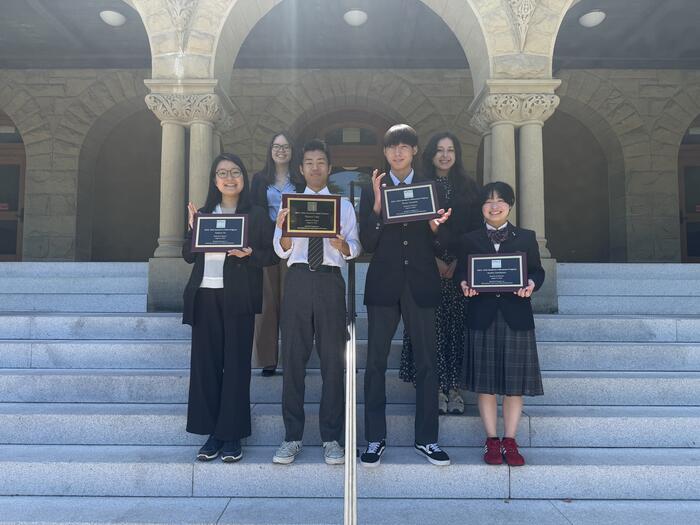
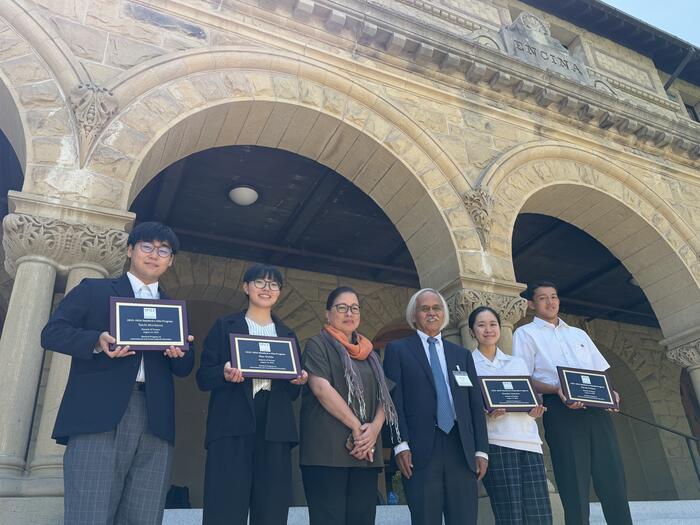
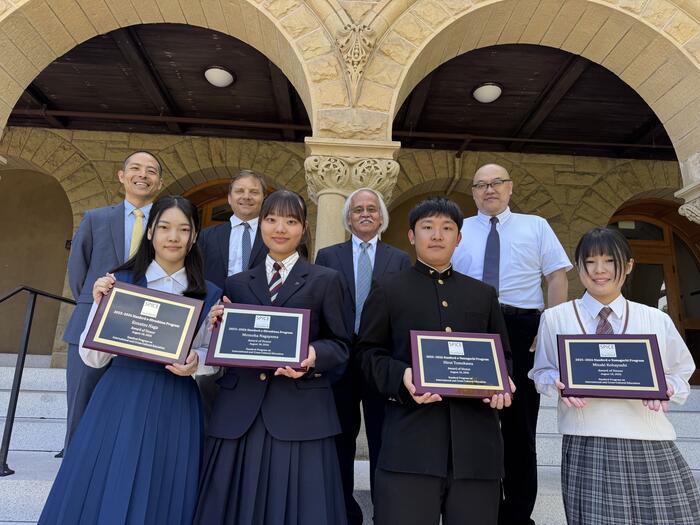
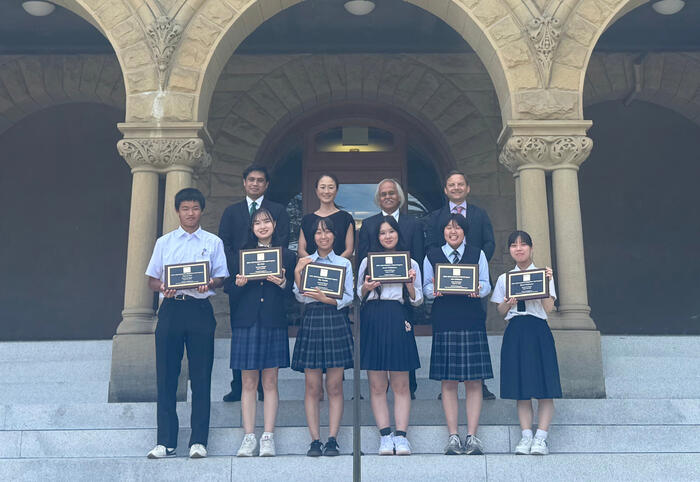
Applications are now open for the Fall 2026 session of the Stanford University Scholars Program for Japanese High School Students (also known as “Stanford e-Japan”). The course will run from the end of September 2026 through March 2027, with an application deadline of August 16, 2026.
Stanford e-Japan is offered by the Stanford Program on International and Cross-Cultural Education (SPICE), Stanford University. Stanford e-Japan is generously supported by the Yanai Tadashi Foundation, Tokyo, Japan.
Stanford e-Japan Fall 2026 session (September 2026 to March 2027) Application period: July 1 to August 16, 2026
All applications must be submitted at https://spicestanford.smapply.io/prog/stanford_e-japan/ via the SurveyMonkey Apply platform. Applicants and recommenders will need to create a SurveyMonkey Apply account to proceed. Students who are interested in applying to the online course are encouraged to begin their applications early.
Accepted applicants will engage in an intensive study of U.S. society and culture and U.S.–Japan relations. Leading scholars and experts from Stanford University and across the United States provide web-based lectures and engage students in live discussion sessions.
For more information about Stanford e-Japan, please visit stanfordejapan.org.
Why Stanford e-Japan Still Matters to Me after Five Years
Yuto Kimura, a 2021 Stanford e-Japan Award Winner and 2026 graduate of Waseda University, reflects on the enduring takeaways from his experience in Stanford e-Japan.
Eikei University of Hiroshima (EUH) is a liberal arts institution dedicated to fostering solutions- and impact-driven leaders who create social value in today’s world. Its goal is to cultivate practical skills for solving real-world issues through active learning, international perspectives, and interdisciplinary education. SPICE’s Social Entrepreneurship course, developed and taught by Dr. Mariko Yang-Yoshihara, is an intensive program that reflects the university’s objectives by helping students recognize and address social issues through a human-centred approach. Having taken the course twice, first as a student and later as a student assistant, I gained valuable skills, perspectives, and knowledge from both experiences.
The key learnings acquired this year placed greater emphasis on interdisciplinary exchange, sharing, and combining perspectives on social issues. The course instituted an exchange between liberal arts students at EUH and STEM students at Oslo Metropolitan University (Oslomet) in Norway. The EUH students identified human-centred social issues related to technology-based themes found within Hiroshima and shared with the Oslomet students, and the Oslomet students provided solutions or prototypes in response to these problems, with a discussion exchange that was held online toward the conclusion of the course.
I found this exchange to be very interesting and engaging, even with my role as a student assistant in this course. The difference in perspectives between liberal arts students and STEM students was quite evident during this discussion, especially through the concepts and factors emphasized in the assigned theme by both groups of students. Due to vast differences in class sizes, we, the Eikei students, were required to review multiple prototypes submitted by the Oslomet student groups. Initially, all of the prototypes provided for my group’s theme seemed similar, but my perspective significantly changed after communicating and discussing with the Oslomet student groups during the online exchange. Their overview of prototypes shared similarities from an external point of view, but their features, emphasis, and priorities were quite different. This differentiation only became evident during the interactive session through the exchange of viewpoints between students from both universities.
A cultural comparison between the two universities was also a key observation. The exchange of participants’ views on the feasibility of said prototypes within Norwegian and Japanese societies was intriguing to observe through a thorough comparison of social aspects in both countries, particularly governmental assistance, hierarchical structures, and the focus of the prototype. This further highlighted the contrasts in the same target demographics across both countries, leading to the realization that the same prototype may not have the same impact on both societies.
Another important note was the difference in priority and emphasis between the assigned theme and problem statement for the liberal arts students and the STEM students. There was a clear distinction in focus areas between the two universities. The EUH students solely prioritized the human-centred aspect of the provided theme, while the Oslomet students, on the other hand, targeted the technological aspect. It was quite intriguing to witness STEM students and liberal arts students trying to understand each other’s perspectives on the same situation.
Interestingly, rather than observing two major groups of students taking part in this course, I noticed three different groups. The first group is the Norwegian students who had never been to Japan, who viewed the problem statement based in Hiroshima from an external perspective. The second group consists of native Japanese students currently living in Hiroshima who viewed the problem statement from an internal perspective. The third group was international students (non-Japanese students studying at Eikei, including myself) who are also currently living in Hiroshima but viewed the problem statement from a pseudo internal-external perspective. All three groups had differing opinions and thought processes, which led to a significantly interactive and dynamic session. I was able to perceive the importance of having people with differing experiences and cultures participate in a discussion, as it progressively leads to a more adaptable and inclusive long-term approach towards achieving a common objective.
Additionally, my experiences in this course resonated with my own experience as the president of the international student organization club at our university. Oftentimes, while having meetings with Academic Affairs and International Affairs at our university regarding new initiatives, changes, or plans, I always aim to gather various opinions and concerns of my international peers, representing their needs and concerns as well. These concerns or opinions are quite varied, since the international student community has students who come from different regions of the world, resulting in a wide range of perspectives. When these varied concerns are addressed, it encourages developing solutions that aim at supporting a diverse community.
Chhavvi Anilkumar reflects on her experience in the course, Social Entrepreneurship | Photo courtesy of Chhavvi Anilkumar
This course has given me important insights and perspectives that I am sure will continue to shape my views in the short- as well as the long-term future. As a person interested in diversity and multiculturalism, this course’s experience considerably strengthened my understanding of how social structures and different experiences shape the perspectives of an individual. I believe this insight will assist me in interacting with a diverse range of people in a more inclusive manner, especially when creating solutions or strategies that can cater to various demographic groups.
Facilitating such interactive sessions, observing, and understanding the differences between the given prototypes reinforces more than just the value of collaborating with individuals coming from other backgrounds. Including different groups to participate in a situation or problem with their differing perspectives and skills increases the potential of having an adaptable solution idea that could further positively impact more than just the targeted audience. Hence, courses such as Social Entrepreneurship play a significant role in encouraging and fostering collaborative initiatives and approaches that lead to developing unique, adaptable, and successful solutions.
SPICE's course on Social Entrepreneurship with Eikei University of Hiroshima is one of SPICE’s local student programs in Japan.
Behind Every Action is a “Why”: A Journey of Academic and Personal Growth in Human-Centered Design
Renz Kayle Roble Arayan, an undergraduate student at Eikei University of Hiroshima, reflects on his experience in the SPICE course, Social Entrepreneurship.
Stanford Alumni Weekend (October 24–27, 2019) Feature: Hiroshima Governor Hidehiko Yuzaki & SPICE’s Dr. Mariko Yoshihara Yang and a New Online Course for MBA Students in Japan
Introduction to Issues in International Security is a collaboration between the Center for International Security and Cooperation (CISAC) and the Stanford Program on International and Cross-Cultural Education (SPICE). Five CISAC scholars are featured in accessible video lectures that aim to introduce high school students to issues in international security and increase awareness of career opportunities available in the field. These scholars are Dr. Kevin Bustamante, Professor Martha Crenshaw, the Honorable Rose Gottemoeller, Professor Norman Naimark, and Dr. Megan Palmer. Free discussion guides, developed by Irene Bryant and Greg Francis of SPICE, are available for each of the lectures in this series.
For the fifth year since 2022, Dr. Ignacio Ornelas Rodriguez introduced the lectures and lessons in the discussion guides to high school students. This year the students were from Los Gatos, San Jose, Salinas, and Watsonville. The course culminated in a symposium on May 21, 2026 that was organized by Sabrina Ishimatsu. Three student groups had the opportunity to present their research projects to CISAC scholars, Dr. Harold Trinkunas, Dr. Kevin Bustamante, and Dr. Xunchao Zhang.
The students’ research projects focused on the following topics:
What is Race?
Biosecurity
Analyzing Terrorist Incidents and Terrorism and Counterterrorism
The scholars provided extremely useful feedback on the students’ research projects and asked thought-provoking questions. Students from the 2022, 2023, 2024, and 2025 cohorts have commented on how the course taught by Ornelas Rodriguez and the feedback and questions from the CISAC scholars have helped them not only gain knowledge about international security but also to prepare for college.
During this year’s symposium, the students were also very fortunate to listen to words of encouragement from Harvard undergraduate Alexandra Arguello and Stanford undergraduate Brianna Jimenez, 2022 and 2025 alumni, respectively, of the course taught by Ornelas Rodriguez. They also offered the following reflections for this article:
Dr. Ornelas’s class helped prepare me for Harvard by giving me an early foundation in international security, global affairs, and the kind of critical analysis that college-level academia demands. The course taught me to engage complex issues with intellectual curiosity, connect global events to lived experiences, and ask stronger research questions. At Harvard, that preparation allowed me to approach courses in international law, comparative politics, global education, and Latin American studies with greater confidence and purpose. In many ways, the class was my first serious introduction to the academic interests that continue to shape my studies and my goal of becoming an attorney working with international populations.—Alexandra Arguello
Dr. Ornelas’s class prepared me as a first-generation student for the academic rigor and fast-paced environment at Stanford by giving me the opportunity to learn about complex topics, develop potential solutions, and explore research-based questions. Through this experience, I gained fundamental skills and knowledge that continues to help me succeed both academically and personally. As a future physician, this class provided me with critical insight on how international security impacts health, access, and care. The class has greatly impacted my journey at Stanford, and my purpose as I pursue higher education.—Brianna Jimenez
Ornelas Rodriguez closed the symposium by extending his praise for the 2026 cohort which exceeded his expectations and commended them for adding his class to their already busy academic lives.
Local High School Students Connect with CISAC Security Experts—the Honorable Rose Gottemoeller, Professor Norman Naimark, Dr. Harold Trinkunas, and Visiting Research Scholar Xunchao Zhang—and former Secretary of Defense Leon Panetta
Students from San Jose and Salinas Valley—taught by Dr. Ignacio Ornelas Rodriguez—met on May 22, 2025 for the fourth annual International Security Symposium.
Local High School Students Meet with Scholars from Stanford’s Center for International Security and Cooperation
Willow Glen High School students from San Jose—enrolled in a course taught by Dr. Ignacio Ornelas Rodriguez—participated in the second annual International Security Symposium.
SPICE alum Alexandra Arguello reflects on her educational journey from Salinas, California, to Harvard University and on discovering her passion for international relations.
Top row, left to right: Ignacio Ornelas Rodriguez, Gary Mukai, Harold Trinkunas, Xunchao Zhang; second row, left to right: Kevin Bustamante, Sabrina Ishimatsu, Irene Bryant, Alexandra Arguello; third row, left to right: Brianna Aaliyah Jimenez, Ethan Zheng, Anna Espinoza-Vargas, Christopher Delgado Rodriguez; fourth row, left to right: Clara Cohen, Giselle Mercado, Yitzel Moreno Santos, Valeria Gonzalez, Emma Estrada, Ty Settle
All News button
1
Subtitle
Students from Los Gatos, San Jose, Salinas, and Watsonville—taught by Dr. Ignacio Ornelas Rodriguez—met on May 21, 2026 for the fifth annual International Security Symposium.
This year marks the 10th anniversary of the Stanford e-Tottori Program, a milestone that provides an opportunity to reflect on a decade of learning, cross-cultural exchange, and partnership between Stanford University and Tottori Prefecture.
Launched in 2016, Stanford e-Tottori was the first regional program in Japan developed by SPICE. The program was created through a partnership between SPICE and the Tottori Prefectural Board of Education with the goal of helping high school students in Tottori engage in global issues, deepen their understanding of the United States and U.S.–Japan relations, and strengthen their English communication skills.
When the program began, none of us could have imagined that it would still be thriving 10 years later. Over the past decade, approximately 250 students from across Tottori Prefecture have participated in the program. Through weekly assignments, online discussions, virtual classroom sessions, guest lectures, and independent research projects, students have explored topics ranging from education and entrepreneurship to sustainability, diversity, leadership, and U.S.–Japan relations.
Having taught every cohort since the program’s founding, I have had the privilege of working with an extraordinary group of students. Each year, I am impressed by their curiosity, thoughtfulness, and willingness to engage with complex issues. Although students enter the program with varying levels of English proficiency and different academic interests, they consistently demonstrate a desire to learn, challenge themselves, and better understand perspectives beyond their own.
One of the defining features of the program has been the students’ final research projects. At the end of each course, students select a topic of personal interest, conduct independent research, and present their findings in English. Over the years, they have investigated subjects as diverse as artificial intelligence, environmental sustainability, education systems, cultural identity, social welfare, entrepreneurship, history, and international relations. These presentations have provided students with opportunities not only to strengthen their research and communication skills but also to share their passions and interests with others.
The success of Stanford e-Tottori also helped to lay the foundation for SPICE’s broader expansion of regional programs throughout Japan. What began as SPICE’s first regional program has grown into a network of educational partnerships that now serve students in prefectures and cities across the country. Today, SPICE offers regional programs in Fukuoka, Hiroshima, Oita, Tottori, and Yamaguchi prefectures, as well as in the cities of Kagoshima, Kawasaki, and Kobe.
Education is ultimately about people, and one of the greatest rewards of teaching Stanford e-Tottori has been the opportunity to learn from and work with so many talented students, teachers, and colleagues in both Japan and the United States.
One of the greatest joys of the program has been seeing students experience California and Stanford University firsthand. Each year, two top-performing students are invited to Stanford as honorees in recognition of their outstanding achievement in the course. During their visits, students participate in award ceremonies, tour the Stanford campus, meet Stanford faculty and staff, and connect with fellow students from other SPICE regional programs.
These visits have also provided opportunities for students to glimpse into American high school life firsthand. Over the years, I have had the pleasure of accompanying students to local schools, where they have attended classes and met with American students. I am especially grateful to local educators, including Yoko Sase of The Nueva School in Hillsborough and Matt Hall of Gunn High School in Palo Alto, who have generously welcomed our students into their classrooms and school communities.
The Stanford e-Tottori Program would not exist without the vision, dedication, and support of many individuals and organizations. I am especially grateful to Takeshi Homma, whose passion for education, entrepreneurship, and international exchange helped inspire the creation of the program 10 years ago. Since its inception, Homma-san has remained a steadfast supporter, generously sharing his experiences and insights with students through annual guest lectures on entrepreneurship, innovation, and global citizenship.
I would also like to express my sincere appreciation to Governor Shinji Hirai for his longstanding commitment to international education and global engagement. His support of educational exchange between Tottori and Stanford has helped create opportunities for hundreds of students to broaden their horizons and develop a deeper understanding of the United States and U.S.–Japan relations.
I am deeply grateful to the Tottori Prefectural Board of Education for its partnership and commitment to providing meaningful international educational opportunities for students. Over the years, I have had the pleasure of working with many dedicated educators and teacher consultants whose efforts have been essential to the program’s success, including Koji Tsubaki, Takuya Fukushima, Tomoya Minohara, Shuichi Hata, Natsu Odahara, and Satoru Hamahashi. Their enthusiasm, professionalism, and unwavering support have helped make the Stanford e-Tottori Program a rewarding experience for students throughout Tottori Prefecture.
As I reflect on the past 10 years, what stands out most are not the individual lessons, assignments, or presentations, but the relationships that have developed through the program. Education is ultimately about people, and one of the greatest rewards of teaching Stanford e-Tottori has been the opportunity to learn from and work with so many talented students, teachers, and colleagues in both Japan and the United States.
As Stanford e-Tottori enters its second decade, I am excited to see what the future holds. I look forward to continuing to learn alongside future generations of students and to strengthening the bonds of friendship and understanding that have connected Stanford and Tottori over the past 10 years.
Congratulations to all of the students, educators, and partners who have been part of the Stanford e-Tottori story. Thank you for making the past 10 years such a remarkable journey.
This article was written by Dr. Larry Becker, Africa Project Coordinator at SPICE, 1982–1985, and Professor Emeritus of Geography at Oregon State University in Corvallis. This is the fourth of several articles—focusing on the 50-year history of SPICE—that will be posted this year. In its early years, SPICE comprised several separate area-focused projects.
Happy 50th birthday to SPICE! Those 50 years are a testament to the enduring value of the program and its ability to change with the times.
While enrolled in the Stanford Teacher Education Program (STEP) in 1982, I took David Grossman’s Global Education course and learned about the work of SPICE. It felt like a comfortable fit and welcome program following my upbringing in the integrated Berkeley public schools and undergraduate degree in geography. After the course, David approached me about the SPICE Africa Project Coordinator position. The coordinator at the time, Nebby Crawford, was leaving. Two years earlier, I had spent a summer in Mali with Operation Crossroads Africa. I gave a presentation at the Bay Area Global Education Program (BAGEP) Africa Summer Institute for teachers, plunging into the SPICE world of in-service teacher education at age 23.
Over the next three years, I had the privilege of working with the SPICE team, Stanford African Studies faculty and students, Bay Area K–12 teachers, and a network of African Studies outreach coordinators around the country. At the time, the Africa Project Coordinator position was partly funded by the Title VI Joint Center for African Studies at Stanford and U.C. Berkeley. I thus was exposed to rich academic African Studies educational resources while representing SPICE at annual conferences. I also established working relationships with members of the Stanford African Students Association. Graduate students from various countries contributed to the Summer Institute on Africa, visited precollegiate classrooms, and reviewed supplementary curriculum SPICE units that we developed with K–12 teachers.
In the summer of 1984, I co-led a U.S. Department of Education-funded summer education trip for teachers to Nigeria. Together with co-leader, Dr. Faye McNair-Knox—with a background in Hausa linguistics and community organizing in East Palo Alto—we navigated a country recently under military rule with an overvalued currency on a limited budget. As the group travelled from a festival in the Gumel Emirate near the Niger border south to the metropolis of Lagos on the Gulf of Guinea, we stayed at university campuses where Bay Area teachers were exposed to Nigeria’s rich culture through professors from a variety of fields, local leaders, and artists. (Photo below of the Emir of Gumel’s entourage at the end of Ramadan, June 1984, in what is now Jigawa State, Nigeria, as seen during a summer education trip for teachers; courtesy of Larry Becker.)
Image
By the time I left SPICE, the Africa Project had five curriculum units: Analyzing the Press (1985), Development Decisions: Ghana’s Volta River Project (1985), What Is a Resource? (1985), Two Voices from Nigeria: Nigeria through the Literature of Chinua Achebe and Buchi Emecheta by Nigeria trip participants Lyn Reese and Rick Clarke (1985), and Voici l’Afrique Francophone with Foster City French teacher Joan Henley (1986).
Image
Enriched by the work at SPICE, I completed a PhD in geography with research on agrarian change in Mali at the University of London’s School of Oriental and African Studies (SOAS) and a postdoc at the Africa Rice Center in Cote d’Ivoire. I had a university career teaching geography, notably large enrollment world regional geography courses, that greatly benefited from what I learned while at SPICE.
Over the years of teaching about Africa in the U.S., I saw how attention to the context, identity, and positionality of the instructor and students contributes to successful classroom strategies and curriculum development. My SPICE experience provided a base for understanding this evolving pedagogy. In touch with SPICE colleagues years later, former colleague Steve Thorpe contributed to a seminar series that I led at Oregon State University aimed at globalizing courses throughout the campus. The ideas of SPICE carry on in familiar ways in new teaching settings!
Laurie Yokoyama Becker, Larry Becker, and SPICE Founding Director David Grossman in Kaneohe, Hawaii, in May 2026. | Photo courtesy of Larry Becker
All News button
1
Subtitle
Professor Emeritus Larry Becker reflects on the early years of SPICE’s Africa Project and how his experience with SPICE enriched and informed his academic journey and teaching practice.
The Stanford Program on International and Cross-Cultural Education (SPICE) is pleased to announce that applications are now being accepted for the Fall 2026 session of Introduction to Contemporary China, an intensive online course offered by the China Scholars Program (CSP). Designed for motivated U.S. high school students, this course introduces students to contemporary China through an interdisciplinary and discussion-based approach. The course is open to rising 10th, 11th, and 12th graders nationwide.
As China’s global stature continues to rise, as it takes on leading roles in the clean energy transition and AI development, international trade, international security, and much more, it becomes more vital than ever to understand it. Through CSP, students explore the historical developments, domestic challenges, and global relationships that shape contemporary China and its interactions with the United States.
Throughout the semester, students participate in weekly Zoom sessions featuring leading experts from Stanford University and beyond as guest speakers. Coursework includes college-level readings, analytical discussions, and written assignments that encourage students to engage critically with current issues affecting China and the broader international community.
A central component of the program is an independent research project in which students investigate a topic of their choice related to contemporary China. Past research topics have included environmental policy, education, artificial intelligence, demographics, popular culture, public health, economic reform, and media. Students conclude the course by producing a substantive academic paper based on their research.
In addition to learning from experts and peers across the United States, CSP students will also have the opportunity to connect online with Chinese students in the Stanford e-China Program, fostering meaningful cross-cultural dialogue and exchange.
The course also offers students an opportunity to explore potential interests in fields such as international relations, political science, business, journalism, public policy, and Asian studies before entering college.
CSP provides students with the knowledge, diverse perspectives, and analytical skills needed to better understand one of the world’s most consequential countries and its evolving relationship with the United States.
How SPICE’s China Scholars Program Accelerated My Love for International Relations
The following reflection is a guest post written by Santiago Calderon, an alumnus of the China Scholars Program, which is currently accepting applications for the Fall 2021 course.
China Scholars Program: East Asia Through a STEM Lens
The following reflection is a guest post written by Mallika Pajjuri, an alumna of the China Scholars Program and the Reischauer Scholars Program. She is now a student at MIT.
The following reflection is a guest post written by Minami Ohno, an alum of the Fall 2025 Stanford e-Entrepreneurship Japan (SeEJ) Program. SeEJ’s next application period will open July 31, 2026.
The Stanford e-Entrepreneurship Japan program is a powerful platform for the next generation of social entrepreneurs looking to address future social issues.
From the day of our first virtual meeting, the Sunday blues became a happy Friday-equivalent—an electric and thrilling day. Something I looked forward to.
The fall 2025 SeEJ program lasted approximately four months, with virtual meetings on Sunday every two weeks. Each session was very memorable, covering areas from public health to environmental sustainability. While there were only a total of 10 remote classes, each session was truly an educational journey that transformed my views on entrepreneurship. The program attracted students with diverse multicultural backgrounds, and students had a wide range of views and experiences. Our group projects and individual research papers covered topics from advocacy for financial literacy to animal therapy. I was fortunate to learn about these various ideas and proposals alongside students who had direct experience and knowledge in those fields.
Some of the most powerful experiences in the program were our sessions interacting with guest speakers, successful social entrepreneurs. SeEJ has a strong network of successful social entrepreneurs across the globe. These entrepreneurs were truly visionaries with a strong sense of social responsibility, aiming to drive change for a better world. They shared their inspirational stories in building businesses to tackle serious societal problems. I was truly grateful for their advice. At first, I felt a little intimidated engaging with experienced entrepreneurs and scholars, but they were very approachable, and our interactions with them were extremely productive, with time always running short due to active participation from all students. Besides inspiring us with their personal stories, they also provided us with practical suggestions, from business development strategies to presentation techniques when pitching to an investor audience.
Thanks to my experience in SeEJ, I not only feel knowledgeable about entrepreneurship—I also feel more confident, inspired, and equipped to put it into practice in my future.
One session on sustainability and biodiversity left a particularly strong impression on me. Our guest speaker that day was Mr. Robin Takashi Lewis, the founder of mymizu, an app that aims to reduce the use of plastic water bottles and promote the use of free refill spots. Water supply is scarce in many countries, and water scarcity is becoming a growing problem, but mymizu is working to make water more accessible and sustainable. At the end of the session, Mr. Lewis introduced us to the “3.5% rule”—a research-backed rule that suggests that when at least 3.5% of the population takes action, major social and political change is not only achievable but highly likely. This observation highlights how even seemingly small-scale efforts can lead to major change. As aspiring young entrepreneurs, my classmates and I found this insight incredibly exciting. It made me want to take action for societal change.
My experience in SeEJ was truly invaluable. I was able to be part of a special community of top scholars and entrepreneurs, as well as fantastic peers who shared their innovative ideas and opinions. The instructor, Ms. Irene Bryant, and TA Naho Ohara were very supportive in kindly guiding us throughout the program. They consistently encouraged us to think critically and take full advantage of the program. Thanks to my experience in SeEJ, I not only feel knowledgeable about entrepreneurship—I also feel more confident, inspired, and equipped to put it into practice in my future.
Stanford e-Entrepreneurship Japan: Empowering Young Visionaries to Reimagine Global Challenges for Social Good
High school student Erin Tsutsui, an alumna of Stanford e-Entrepreneurship Japan, reflects on forging friendships across Japan, embracing new world perspectives through thoughtful discussion, and transforming family heritage into a youth-led peace initiative via empathy and social innovation.
Let’s Be the Strikers: Thoughts on the 2025 Teenage Business Contest Japan
Millie Gan, an alum of Stanford e-Entrepreneurship Japan and founder of Teenage Business Contest Japan (TBCJ), reflects on building a platform that empowers teens to use entrepreneurship and innovation to revitalize Japan’s communities.
Minami Ohno in front of Memorial Church during a summer program at Stanford University in 2025. | Photo courtesy of Minami Ohno
All News button
1
Subtitle
High school student Minami Ohno, an alumna of Stanford e-Entrepreneurship Japan, reflects on her experience throughout the program and how it expanded her perspective. Minami is currently a student at the International School of the Sacred Heart in Tokyo, Japan.
This article was written by Dr. Steve Thorpe, former China Project Coordinator at SPICE in the 1980s and Professor Emeritus of Education at Southern Oregon University. This is the third of several articles—focusing on the 50-year history of SPICE—that will be posted this year.
Congratulations to Gary Mukai and his SPICE team upon the 50th anniversary of the SPICE program! Congratulations also to David Grossman and his colleagues who created the SPICE program in 1976!
Throughout my career in education, I have benefited from my connections to the SPICE program. I first met David Grossman and his SPICE group in 1976 when they made presentations at the Association for Asian Studies and the National Council for the Social Studies annual meetings. I was dazzled by the East Asian Studies curriculum units the SPICE team demonstrated. Their curriculum units were infused with high quality Asian Studies content and interactive instructional strategies that stimulated the interest of K–12 students. This indirect connection to SPICE gave me great curriculum resources for my Asian Studies outreach work in Texas, where I lived and taught at the time.
On a short-term basis, I joined David and the SPICE team in August 1978 for an East Asian Studies teacher in-service workshop in Utah. The joy and excitement among the SPICE group was inspiring to the workshop participants and to me. I gained new insights into the strengths of the SPICE curriculum units from the presentations. I also joined David for a live radio interview about historical and contemporary events in East Asia. I had just been in the People’s Republic of China (PRC) for a three-week project in April 1978, and I was able to contribute my recent in-country China experience to the workshop sessions.
After I completed a two-year teaching stint in the PRC, David Grossman hired me in early 1981 for a half-time position as the China Project Coordinator at SPICE. I also enrolled in a graduate program in the Stanford School of Education. It was an exciting time at SPICE as we joined the newly formed Bay Area Global Education Program (BAGEP). In June 1981, Kay Sandberg, the Japan Project Coordinator, and I worked with David and the BAGEP leadership to coordinate the BAGEP East Asia summer institute for teachers and administrators. The results of the summer institute were stellar, and BAGEP continued on as a superior international and cross-cultural K–12 staff development program. I helped our China Project staff develop new curriculum units as well as the “Discovering Marco Polo” teacher guidebook that went along with the Marco Polo TV mini-series, which aired on NBC in 1982. (Photo below of Steve Thorpe, Penny Thorpe, and Paddy Booz at the 1982 Marco Polo TV mini-series reception at the Consulate General of Italy in San Francisco; courtesy of Steve Thorpe.)
Image
Image
In 1985, I participated in a research team that evaluated the results of the BAGEP program work. Our research verified that the BAGEP staff development projects were beneficial for K–12 teachers and their students. I graduated from Stanford and moved on to a university career in teacher education. Thanks to my work with the SPICE and BAGEP programs, I was well prepared to teach good curriculum and instruction strategies for both pre-service and in-service teachers.
I have maintained connections with my SPICE colleagues. The SPICE team has always been a tight-knit group, and we have all helped one another in our professional careers. I am forever grateful for that. Indeed, SPICE continues to be the leading light for international and cross-cultural outreach education across the USA and the Asia-Pacific region. Viva, SPICE!
Steve Thorpe and his family in the Japanese Tea Garden in Golden Gate Park following a SPICE workshop in San Francisco in the 1980s. | Photo courtesy of Steve Thorpe
All News button
1
Subtitle
Professor Emeritus Steve Thorpe reflects on his years at SPICE from the late 1970s to the 1980s.
The following is a guest article written by Naoya Kobayashi, who traveled to the San Francisco Bay Area with other graduate students from the University of Tokyo in January 2026, under the leadership of Professor Hideto Fukudome. Naoya is also a Guest Researcher at the Keio University Global Research Institute. SPICE/Stanford collaborates closely with the Graduate School of Education at the University of Tokyo and met with the students during their visit to the Bay Area.
Guided by Roger L. Geiger’s remark—“Historians should approach the present with trepidation” (Geiger, 2019, 313)—I have conducted archival research primarily along the East Coast and in the Midwest as a doctoral student specializing in the history of American higher education. Working with historical manuscripts often feels like having conversations with people from the past, drawing me away from the pressing educational issues of the present. However, during my first visit to the Bay Area through a SPICE-supported program, I came to realize that Geiger’s statement is not merely a call for professional restraint. It also points to the significant role historians can and should play in contextualizing the present and actively shaping the future.
This program brought together students and alumni from the University of Tokyo, who had been trained across a wide range of disciplines, including sociology, psychology, policy studies, and comparative education. To reflect these diverse interests, Professor Hideto Fukudome invited guest speakers from various fields. Consequently, we were able to engage in candid discussions on topics such as undergraduate curricula, academic advising, international student support, and public service.
Among these experiences, one particularly memorable moment came during a lecture by Professor Londa Schiebinger, an internationally distinguished historian of science and a leading authority on gender in science and technology. She introduced us to Gendered Innovations, an interdisciplinary initiative that integrates sex, gender, and intersectional analysis into scientific research and technological development. After her talk, my colleague Yuki Kihara asked how her work in the history of science connects to this initiative. In response, she stated without hesitation: “I want to create the future, so I use the same techniques as a historian to push and pull on culture. We need to make human knowledge whole again. That is one of my key challenges.” Her response was deeply thought-provoking, speaking to my long-held interest in how historians might meaningfully engage with contemporary issues. (Photo below of Professor Schiebinger courtesy of Naoya Kobayashi.)
Image
Our learning also extended beyond the university. On the final morning, we visited Japantown in San Jose with SPICE Director Dr. Gary Mukai as our guide. Drawing on his personal memories, he explained the history embedded in local monuments. Through this, we came to appreciate how diverse communities have long been integral to the region’s social fabric, shaped by both hardship and resilience. From the perspective of contemporary Japan, where public discourse has increasingly focused on how diversity might be “accepted,” this experience revealed a simple but profound truth: diversity is not a possibility to be realized but a reality to be recognized. As a historian, I hope to carry this insight forward by using the past not only to understand the present, but also to imagine more inclusive ways of living together in the future. (Photo below taken in Japantown in San Jose courtesy of Naoya Kobayashi.)
Image
Finally, I would like to express my sincere gratitude to Dr. Mukai and all the members of SPICE who so warmly welcomed us. It is my sincere hope that exchanges between the University of Tokyo and SPICE will continue to grow in the years to come.
An Unexpected Encounter That Led Me to Rethink History and Education
Yuki Kihara, a Japanese PhD student at the University of Tokyo’s Graduate School of Education, reflects on her experience during a SPICE-supported intensive seminar in the San Francisco Bay Area.
Collaboration between the Graduate School of Education, the University of Tokyo and SPICE/Stanford offers opportunities to discuss education and diversity.
Naoya Kobayashi on the Stanford campus | Photo courtesy of Naoya Kobayashi
All News button
1
Subtitle
Naoya Kobayashi, a Japanese PhD student at the University of Tokyo’s Graduate School of Education, reflects on his experience during a SPICE-supported intensive seminar in the San Francisco Bay Area.
Stanford e-Japan is an online course that teaches Japanese high school students about U.S. society and culture and U.S.–Japan relations. The course introduces students to both U.S. and Japanese perspectives on many historical and contemporary issues. It is offered biannually by the Stanford Program on International and Cross-Cultural Education (SPICE). Stanford e-Japan is currently supported by the Yanai Tadashi Foundation.
In August 2026, the top honorees of the Spring 2025 and the Fall 2025 Stanford e-Japan courses will be honored through an event at Stanford University. SPICE is most grateful to Mr. Tadashi Yanai and the Yanai Foundation for making Stanford e-Japan, including the ceremony in August 2026, possible.
The three Spring 2025 honorees—Mahono Fuji (Seinan High School), Nagi Matsuyama (Doshisha International High School), and Jinichiro Taguchi (Kaijo High School)—will be recognized for their coursework and exceptional research essays that focused respectively on “From White Flight to Gentrification: Rethinking Urban Spatial Inequality,” “Reconsidering U.S.–Japan Food Trade,” and “Trump’s Policies and the Monroe Doctrine.”
Dion Munasingha (Yaizu Chuo High School) and Natsuka Yamamoto (Keio Girls Senior High School) each received an Honorable Mention for their coursework and research papers that respectively focused on “Language Support for Children of Immigrants in Japan and the United States” and “Future of Natural Disaster Response Management in Japan and the United States.”
The three Fall 2025 honorees—Sawa Ito (Iida High School), Yurino Ohara (Okayama Prefectural Okayama Asahi High School), and Amy Yanai (The British School in Tokyo)—will be recognized for their coursework and exceptional research essays that focused respectively on “A Comparison of Mental Health in the United States and Japan: What Japan Can Learn from the United States,” “Redesigning Japan’s OTC Policy: A Digital Strategy for Fiscal Sustainability and Patient Protection,” and “Community Resilience and Soft Power: Disaster Recovery in the United States and Japan.”
Aiko Nakano (Shizuoka Futaba Senior High School) and Takaki Okada (Musashi High School) each received an Honorable Mention for their coursework and research papers that respectively focused on “A Comparison of Refugee Recognition Systems in Japan and the United States: The Role of Public Awareness” and “‘Anti-Globalism’ Sentiment in the United States: Its Causes and Effects.”
In the Spring 2025 session of Stanford e-Japan, students from the following schools completed the course: Azabu High School (Tokyo); Chiba Prefectural Higashi Katsushika High School (Chiba); Doshisha International High School (Kyoto); Ehime Prefectural Matsuyama Chuo High School (Ehime); Fuji Sacred Heart School (Shizuoka); Gunma Kokusai Academy Secondary School (Gunma); Hiroshima Prefectural Ogaki High School (Hiroshima); International Christian University High School (Tokyo); Kaijo High School (Tokyo); Kanazawa Izumigaoka High School (Ishikawa); Keio Girls Senior High School (Tokyo); Keio Shonan Fujisawa Senior High School (Tokyo); Kyoto Rakuhoku High School (Kyoto); Meijigakuen Senior High School (Fukuoka); Meikei Gakuen High School (Ibaraki); Nagasaki Nishi High School (Nagasaki); Saitama Municipal Urawa High School (Saitama); Saku Chosei Senior High School (Nagano); Sapporo Kaisei Secondary School (Hokkaido); Seinan High School (Fukuoka); Shibuya Makuhari High School (Tokyo); Suwa Seiryo High School (Nagano); Toin Gakuen Secondary Education School (Kanagawa); Tokyo Gakugei University International Secondary School (Tokyo); Tokyo Metropolitan Kokusai High School (Tokyo); Waseda University Senior High School (Tokyo); Yaizu Chuo High School (Shizuoka); and Yatsushiro High School (Kumamoto).
In the Fall 2025 session of Stanford e-Japan, students from the following schools completed the course: AICJ High School (Hiroshima), Akita Minami Senior High School (Akita), Caritas Senior High School (Kanagawa), Higashiyama High School (Kyoto), Iida High School (Nagano), International Christian University High School (Tokyo), Kaetsu Ariake High School (Tokyo), Katayama Gakuen High School (Toyama), Keio Girls Senior High School (Tokyo), Kindai Toyooka High School (Hyogo), Koshigaya Kita High School (Saitama), Makuhari Senior High School (Chiba), Mita International School of Science (Tokyo), Musashi High School (Tokyo), Nagoya University Affiliated Upper Secondary School (Aichi), Nishiyamato Gakuen High School (Nara), Okayama Prefectural Okayama Asahi High School (Okayama), Okinawa Prefectural Kaiho Senior High School (Okinawa), Ritsumeikan Keisho High School (Hokkaido), Seigakuin High School (Tokyo), Senior High School at Otsuka, University of Tsukuba (Tokyo), Shizuoka Futaba Senior High School (Shizuoka), Shuyukan High School (Fukuoka), Suwa Seiryo High School (Nagano), The British School in Tokyo (Tokyo), Tokyo Metropolitan Hibiya High School (Tokyo), Tokyo Metropolitan Koshikawa Secondary School (Tokyo), and Tsurumaru High School (Kagoshima).
Why Stanford e-Japan Still Matters to Me after Five Years
Yuto Kimura, a 2021 Stanford e-Japan Award Winner and 2026 graduate of Waseda University, reflects on the enduring takeaways from his experience in Stanford e-Japan.