Applications are now open for Stanford e-Entrepreneurship Japan (SeEJ), a free online course conducted in English to foster Japanese students’ creative thinking and innovative problem-solving skills to address social issues. SeEJ is offered twice a year in the fall and spring through a collaboration between SPICE and the non-profit organization e-Entrepreneurship in Japan. It is open to Japanese-speaking students, in or from Japan, in their first and second years of high school. The fall 2026 course will be taught by Irene Bryant and will run from late October 2026 through February 2027.
The application form is now available at https://forms.gle/5gkHrhm3X4sycZGG8. The submission deadline is September 6, 2026, at 11:59 PM Japan Time.
This program embodies something deeply aligned with the spirit of Stanford — the belief that learning should be accessible to everyone.
Taiga Miyashita, fall 2025 participant
Stanford e-Entrepreneurship Japan offers students an opportunity to engage with scholars and entrepreneurs from Stanford University and beyond through live virtual classes, which are held twice a month on Sundays. The course will culminate in an individual research paper and a final group project. Students who successfully complete the course will receive a Certificate of Completion from SPICE and NPO e-Entrepreneurship.
Former students describe SeEJ as both an accessible and transformative learning experience. As Taiga Miyashita shares, “When I first joined, I quietly wondered, ‘Do I really belong here?’ Yet by the end, I had researched a field I genuinely cared about, articulated my own solutions, and contributed meaningfully to our group work. This program showed me that I didn’t have to let concerns about my English stand in my way.” Toma Ihara similarly reflects on the program’s lasting impact, describing Stanford e-Entrepreneurship Japan as “not just another course, but a life-changing experience.” Toma adds, “The program equipped me not only with the tools of an entrepreneur, but also with a mindset that I now apply to my NPO and startup ventures.” These reflections illustrate how SeEJ combines a supportive learning environment with hands-on opportunities that help students build confidence and apply what they learn beyond the program.
For more information about Stanford e-Entrepreneurship Japan, visit the program webpage. Interested high school students should apply online by September 6, 2026.
Stanford e-Entrepreneurship Japan is one of several online courses offered by SPICE.
Stanford e-Entrepreneurship Japan: A Powerful Platform for the Next Generation of Social Entrepreneurs
High school student Minami Ohno, an alumna of Stanford e-Entrepreneurship Japan, reflects on her experience throughout the program and how it expanded her perspective. Minami is currently a student at the International School of the Sacred Heart in Tokyo, Japan.
Stanford e-Entrepreneurship Japan: Empowering Young Visionaries to Reimagine Global Challenges for Social Good
High school student Erin Tsutsui, an alumna of Stanford e-Entrepreneurship Japan, reflects on forging friendships across Japan, embracing new world perspectives through thoughtful discussion, and transforming family heritage into a youth-led peace initiative via empathy and social innovation.
Let’s Be the Strikers: Thoughts on the 2025 Teenage Business Contest Japan
Millie Gan, an alum of Stanford e-Entrepreneurship Japan and founder of Teenage Business Contest Japan (TBCJ), reflects on building a platform that empowers teens to use entrepreneurship and innovation to revitalize Japan’s communities.
A fleeting moment of color and light—nature’s brilliance arches over Stanford’s historic campus, a reminder of beauty in the unexpected. | Photo Credit: Andrew Broadhead
All News button
1
Subtitle
Applications are now being accepted for the fall 2026 session. Interested high school students in Japan should apply by September 6, 2026.
SPICE offers several local programs for students in Japan, including regional programs at the city and prefectural levels. Developed through collaborations between SPICE and local governments across Japan, these online programs encourage students to engage with complex global issues while deepening their understanding of U.S. society, culture, and U.S.–Japan relations through critical thinking and research.
With the 2025–2026 session now finished, each participating program has recognized two outstanding students for their exceptional achievements throughout the course, including the quality of their final research projects. These student honorees will travel to Stanford University in August 2026, where they will present their research during a series of recognition ceremonies. The events will welcome distinguished guests from the Stanford community, the Consulate General of Japan in San Francisco, and members of the Japanese community throughout the Bay Area.
SPICE proudly congratulates the following students for their outstanding academic accomplishments.
Stanford e-Fukuoka (Instructor: Kasumi Yamashita)
Student Honoree: Konoha Inoyusu School: Fukuoka Daichi High School
Student Honoree: Haruki Kenyon School: Kurume High School
Student Honoree: Mio Suzuki School: Kawasaki High School
Student Honoree: Rio Hojo School: Tachibana High School
Stanford e-Kobe (Instructor: Alison Harsch)
Student Honoree: Sakura Oe School: Kobe Municipal Fukiai High School
Student Honoree: Shotaro Take School: Kobe Municipal Fukiai High School
Stanford e-Oita (Instructor: Kasumi Yamashita)
Student Honoree: Mao Hieida School: Nakatsu Minami High School
Student Honoree: Taichi Morikawa School: Takada High School
Stanford e-Tottori (Instructor: Jonas Edman)
Student Honoree: Una Ishikawa School: National Institute of Technology, Yonago College
Student Honoree: Asumi Nishimura School: Tottori Nishi High School
Stanford e-Yamaguchi (Instructor: Jonas Edman)
Student Honoree: Misaki Kobayashi School: Keishin Senior High School
Student Honoree: Hiroi Tomokawa School: Iwakuni Senior High School
SPICE commends these students for their intellectual curiosity, academic excellence, and commitment to developing a global perspective. We look forward to recognizing their accomplishments at Stanford University next month.
Meyer Green, Stanford University | Photo Credit: Meiko Kotani
All News button
1
Subtitle
Congratulations to the 16 student honorees from Fukuoka Prefecture, Hiroshima Prefecture, Kagoshima City, Kawasaki City, Kobe City, Oita Prefecture, Tottori Prefecture, and Yamaguchi Prefecture.
The Stanford e-Yamaguchi Program recently concluded its second year, continuing a successful partnership between SPICE and the Yamaguchi Prefectural Board of Education. Designed to provide high school students in Yamaguchi Prefecture with opportunities to strengthen their English communication skills, explore global issues, and engage with Stanford educators and guest speakers, the program offers participants a unique opportunity to develop their global perspectives while interacting with experts from a variety of fields.
This year marked my first year teaching the Stanford e-Yamaguchi course, and it has been a truly rewarding experience. Throughout the program, I was consistently impressed by the students’ intellectual curiosity, thoughtful participation, and willingness to engage with complex global topics in English. Their enthusiasm for learning and openness to new perspectives made every virtual classroom session meaningful and enjoyable.
I would like to express my sincere appreciation to Mia Kimura, who taught the inaugural year of the program and helped establish a strong foundation for its continued success. Her efforts during the program’s first year played an important role in creating a welcoming and engaging learning environment, one that I have sought to emulate in my own teaching.
The course featured a series of outstanding guest speakers who shared their expertise and experiences with students. I would like to thank Dr. Stephen Murphy-Shigematsu, Dr. Elizabeth Baham, Dr. Gary Mukai, and Dr. Mariko Yoshihara Yang for their generous contributions to the program. Through their presentations and discussions, students explored a wide range of topics, including mindfulness in leadership, diversity in leadership, global citizenship, and design thinking. These sessions provided students with opportunities to connect classroom learning to real-world challenges and encouraged them to think critically about the qualities needed to lead in an increasingly interconnected world.
The success of the Stanford e-Yamaguchi course is the result of the efforts of many individuals and organizations. I am especially grateful to Professor Yuko Hayashi, Yamaguchi University, for introducing SPICE to Tsugumasa Muraoka, Governor of Yamaguchi Prefecture. That introduction helped establish the connections and support necessary to make this partnership possible.
I would also like to extend my deepest thanks to Akinobu Tomonari of the Yamaguchi Prefectural Board of Education. Tomonari-sensei has been instrumental in planning, coordinating, and facilitating the program. His dedication and commitment have been essential to the program’s success.
As we conclude another successful year, we celebrate not only the accomplishments of the students but also the strong partnership between SPICE and Yamaguchi Prefecture. We look forward to continuing this collaboration and providing future cohorts of students with opportunities to develop the knowledge, skills, and global perspectives needed to become thoughtful leaders in their communities and beyond.
Announcing the Honorees of SPICE’s 2024–25 Regional Programs in Japan
Congratulations to the 16 student honorees from Hiroshima Prefecture, Kagoshima City, Kawasaki City, Kobe City, Oita Prefecture, Tottori Prefecture, Wakayama Prefecture, and Yamaguchi Prefecture.
On March 27, 2026, 16 undergraduate students in Japan joined 50 graduate students in Norway for a virtual exchange focused on local sustainability challenges. The session was part of the SPICE Social Entrepreneurship course offered at Eikei University of Hiroshima (Eikei) and co-organized with the Faculty of Technology, Art and Design at the Oslo Metropolitan University (OsloMet).
The exchange served as the culminating activity of a course that SPICE has offered at Eikei since 2022, made possible in large part by the vision of Hiroshima’s former Governor Hidehiko Yuzaki. The course guides students through community engagement, local sustainability challenges, and problem-solving using design thinking methods. This year, students tackled topics including rural transportation, migrant worker conditions, seniors' access to AI, and cybersecurity. What distinguished this iteration was the opportunity for students to test their ideas with an international audience whose academic background differed significantly from their own.
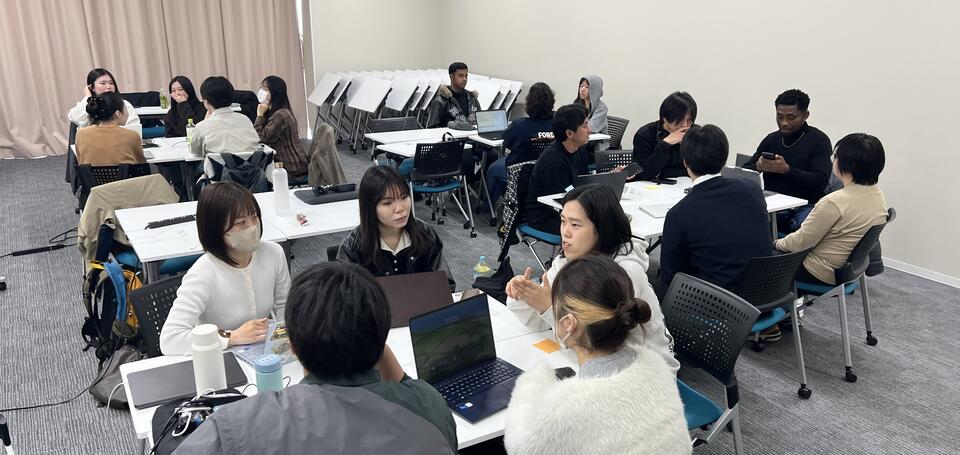
To create that opportunity, SPICE partnered with OsloMet’s master’s program in Applied Computer and Information Technology. Though the two programs differ in size, location, and disciplinary focus – one rooted in liberal arts, the other in STEM – they share a common goal: helping students explore complex social problems through interdisciplinary and cross-cultural collaboration. To prepare for the virtual session, Eikei students created short video presentations introducing the sustainability challenges they had identified in Hiroshima. OsloMet students then reframed those challenges in their own local content and developed technical solutions in response. During the live session, students from both sides met in breakout discussions facilitated by Eikei student assistants, where Oslo teams proposed solutions and Hiroshima teams asked questions and explored implementation.
For Eikei students, the most significant learning emerged from the reflective activities that followed. Students’ responses centered on two pillars the SPICE course had set from the beginning: intercultural competence and interdisciplinary thinking.
Eikei students reflecting on Japan-Norway student exchange | Photo Credit: SPICE
On the intercultural side, the exchange made clear how deeply local context shapes the way problems are understood and solved. A group working on AI and senior citizens, for instance, found that differing attitudes toward aging in Japan and Norway influenced both how the problem was defined and which solutions seemed viable. One student wrote:
"The most memorable moment was when the very first prototype shown — from Group 9 — was an AI-generated image of a pizza with wheels, with an elderly person smiling next to it. I felt that our perspectives on social welfare and the public good were fundamentally different. Our conception of government's mission is something close to protecting the vulnerable. Their view, by contrast, were rooted in a focus on individual flourishing and self-actualization. It really took me by surprise."
Another student recalled a similarly unexpected moment:
“I received a lot of basic questions about everyday life in Japan — things like 'Isn't it normal for people in Japanese suburbs to ride electric scooters?' or 'How much do elderly people in Japan actually use smartphones?' I had expected questions about complex solutions, but I realized that even things I take for granted carry invisible assumptions and biases. In a cross-cultural setting, you have to align on the basics before you can go deeper."
These moments pushed students to examine their own assumptions and recognize how context shapes both problems and solutions.
The interdisciplinary dimension was equally revealing. Eikei students admired how their Norwegian peers translated broad social concerns into concrete, technically grounded proposals. At the same time, the exchange helped them see the value of their own liberal arts education. One student reflected:
“Since the Oslo students each specialize in one field, it seemed like every group felt compelled to apply that expertise — which meant their solutions often ended up looking similar. We, on the other hand, are trained to approach problems from multiple disciplines and to include not just what’s immediately feasible but also future possibilities. Seeing that difference made so concrete was what left the strongest impression.”
Rather than viewing technical expertise as inherently superior, Eikei students came to see stakeholder engagement and contextual sensitivity as equally essential for addressing complex challenges, and concluded that effective solutions require both. This shift in perspective reflects a central aim of STEAM education: integrating a human-centered perspective into the traditional STEM framework (link to a related article).
This experience reinforced the value of designing courses that connect students across institutions, disciplines, and cultures. The impact, it turns out, extended beyond the participants themselves. One of the Eikei student assistants who helped facilitate the session also reflected on what the experience meant to her (link). Many Eikei students expressed a desire for more sustained collaboration with their Norwegian peers, suggesting that future iterations of such a course could benefit from extending the exchange beyond a single session. More time and more exchanges would create greater space for mutual understanding and deeper engagement with complex "wicked" social problems.
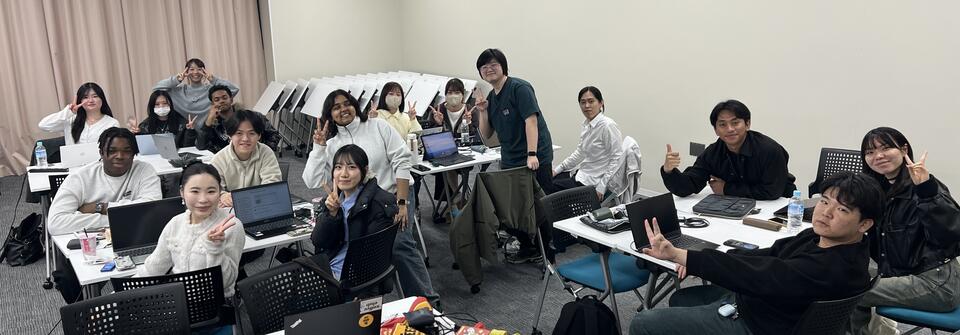
Eikei students in SPICE Social Entrepreneurship course | Photo Credit: SPICE
Acknowledgement: I am deeply grateful to Professor Tulpesh Patel at OsloMet for making this partnership both possible and genuinely rewarding. Since we began working together in August 2025, it has been a true collaboration, the one built on regular conversation, mutual trust, and a shared belief in the value of human-centered, context-sensitive learning, an approach that lies at the heart of STEAM education. Working with Professor Patel has been a personal reminder of why cross-cultural and interdisciplinary collaboration matters.
SPICE's course on Social Entrepreneurship with Eikei University of Hiroshima is one of SPICE’s local student programs in Japan.
Behind Every Action is a “Why”: A Journey of Academic and Personal Growth in Human-Centered Design
Renz Kayle Roble Arayan, an undergraduate student at Eikei University of Hiroshima, reflects on his experience in the SPICE course, Social Entrepreneurship.
Virtual exchange between Eikei and OsloMet students | Photo courtesy of: Tulpesh Patel
All News button
1
Subtitle
Eikei University of Hiroshima and Oslo Metropolitan University students share perspectives on local sustainability challenges through human-centered problem solving.
This article was written by Dr. Bert Bower, Curriculum Developer for the SPICE Latin America Project and later Founder and CEO of Teachers’ Curriculum Institute, the nation’s preeminent provider of K–12 experiential social studies materials.This is the fifth of several articles—focusing on the 50-year history of SPICE—that will be posted this year. In its early years, SPICE comprised several separate area-focused projects.
Congratulations to SPICE on 50 years of providing the nation’s schools with the most global-minded, engaging curriculum ever created. I had the pleasure of working as a curriculum developer with SPICE for 12 years, from 1976 to 1998. It was for me, as it has been for countless other educators, a truly life-changing experience.
At age 19, I transferred to Stanford and soon found myself attached to the Latin America Project of SPICE. Dr. David Grossman, Founding Director of SPICE, encouraged me to create a curriculum unit centered around a village in highland Guatemala where I had served as an Amigos de las Americas volunteer. David guided me in creating my first piece of curriculum and then encouraged me to present it at the California Council for the Social Studies. It proved to be wildly popular.
I soon discovered that teachers were hungry for materials that engaged their students and challenged them to take a global perspective. That was exactly what SPICE offered. Working with Dr. Grossman and the SPICE staff, I learned to create curriculum unlike anything offered by other companies or organizations. SPICE staff created lessons that taught students to write in Chinese, to simulate entering and interacting with others in a global village, and to travel down the Nile River. I was amazed at how lessons like these delighted and challenged students.
My years with SPICE taught me to embrace innovation in everything I developed. Imagine teaching the conquest of Mexico from multiple perspectives. Or using in-person interviews with villagers in a small Mexican town to drive home a heartfelt lesson on the hows and whys of out-migration. Or teaching about Latin America by analyzing and “stepping into” modern art from throughout the region. These lessons were as impactful in the classroom as they were exciting to teach.
Really, the most important thing I learned from Dr. Grossman and the SPICE staff was a true joie de vivre when it came to curriculum development. We had so much fun creating curriculum. Staff meetings were always insightful and filled with laughter. Close friendships were the norm at our workshops. Deep learning and global enlightenment were the celebrated outcomes of our work.
This sense of learning, wonderment, and lively esprit de corps has stayed with me ever since I left SPICE—and, as a result, has touched tens of thousands of others. Happy Birthday, SPICE!
Celebrating SPICE’s 50th: SPICE’s Africa Project, 1982–1985
Professor Emeritus Larry Becker reflects on the early years of SPICE’s Africa Project and how his experience with SPICE enriched and informed his academic journey and teaching practice.
Applications are now open for the Fall 2026 session of the Stanford University Scholars Program for Japanese High School Students (also known as “Stanford e-Japan”). The course will run from the end of September 2026 through March 2027, with an application deadline of August 16, 2026.
Stanford e-Japan is offered by the Stanford Program on International and Cross-Cultural Education (SPICE), Stanford University. Stanford e-Japan is generously supported by the Yanai Tadashi Foundation, Tokyo, Japan.
Stanford e-Japan Fall 2026 session (September 2026 to March 2027) Application period: July 1 to August 16, 2026
All applications must be submitted at https://spicestanford.smapply.io/prog/stanford_e-japan/ via the SurveyMonkey Apply platform. Applicants and recommenders will need to create a SurveyMonkey Apply account to proceed. Students who are interested in applying to the online course are encouraged to begin their applications early.
Accepted applicants will engage in an intensive study of U.S. society and culture and U.S.–Japan relations. Leading scholars and experts from Stanford University and across the United States provide web-based lectures and engage students in live discussion sessions.
For more information about Stanford e-Japan, please visit stanfordejapan.org.
Why Stanford e-Japan Still Matters to Me after Five Years
Yuto Kimura, a 2021 Stanford e-Japan Award Winner and 2026 graduate of Waseda University, reflects on the enduring takeaways from his experience in Stanford e-Japan.
Eikei University of Hiroshima (EUH) is a liberal arts institution dedicated to fostering solutions- and impact-driven leaders who create social value in today’s world. Its goal is to cultivate practical skills for solving real-world issues through active learning, international perspectives, and interdisciplinary education. SPICE’s Social Entrepreneurship course, developed and taught by Dr. Mariko Yang-Yoshihara, is an intensive program that reflects the university’s objectives by helping students recognize and address social issues through a human-centred approach. Having taken the course twice, first as a student and later as a student assistant, I gained valuable skills, perspectives, and knowledge from both experiences.
The key learnings acquired this year placed greater emphasis on interdisciplinary exchange, sharing, and combining perspectives on social issues. The course instituted an exchange between liberal arts students at EUH and STEM students at Oslo Metropolitan University (Oslomet) in Norway. The EUH students identified human-centred social issues related to technology-based themes found within Hiroshima and shared with the Oslomet students, and the Oslomet students provided solutions or prototypes in response to these problems, with a discussion exchange that was held online toward the conclusion of the course.
I found this exchange to be very interesting and engaging, even with my role as a student assistant in this course. The difference in perspectives between liberal arts students and STEM students was quite evident during this discussion, especially through the concepts and factors emphasized in the assigned theme by both groups of students. Due to vast differences in class sizes, we, the Eikei students, were required to review multiple prototypes submitted by the Oslomet student groups. Initially, all of the prototypes provided for my group’s theme seemed similar, but my perspective significantly changed after communicating and discussing with the Oslomet student groups during the online exchange. Their overview of prototypes shared similarities from an external point of view, but their features, emphasis, and priorities were quite different. This differentiation only became evident during the interactive session through the exchange of viewpoints between students from both universities.
A cultural comparison between the two universities was also a key observation. The exchange of participants’ views on the feasibility of said prototypes within Norwegian and Japanese societies was intriguing to observe through a thorough comparison of social aspects in both countries, particularly governmental assistance, hierarchical structures, and the focus of the prototype. This further highlighted the contrasts in the same target demographics across both countries, leading to the realization that the same prototype may not have the same impact on both societies.
Another important note was the difference in priority and emphasis between the assigned theme and problem statement for the liberal arts students and the STEM students. There was a clear distinction in focus areas between the two universities. The EUH students solely prioritized the human-centred aspect of the provided theme, while the Oslomet students, on the other hand, targeted the technological aspect. It was quite intriguing to witness STEM students and liberal arts students trying to understand each other’s perspectives on the same situation.
Interestingly, rather than observing two major groups of students taking part in this course, I noticed three different groups. The first group is the Norwegian students who had never been to Japan, who viewed the problem statement based in Hiroshima from an external perspective. The second group consists of native Japanese students currently living in Hiroshima who viewed the problem statement from an internal perspective. The third group was international students (non-Japanese students studying at Eikei, including myself) who are also currently living in Hiroshima but viewed the problem statement from a pseudo internal-external perspective. All three groups had differing opinions and thought processes, which led to a significantly interactive and dynamic session. I was able to perceive the importance of having people with differing experiences and cultures participate in a discussion, as it progressively leads to a more adaptable and inclusive long-term approach towards achieving a common objective.
Additionally, my experiences in this course resonated with my own experience as the president of the international student organization club at our university. Oftentimes, while having meetings with Academic Affairs and International Affairs at our university regarding new initiatives, changes, or plans, I always aim to gather various opinions and concerns of my international peers, representing their needs and concerns as well. These concerns or opinions are quite varied, since the international student community has students who come from different regions of the world, resulting in a wide range of perspectives. When these varied concerns are addressed, it encourages developing solutions that aim at supporting a diverse community.
Chhavvi Anilkumar reflects on her experience in the course, Social Entrepreneurship | Photo courtesy of Chhavvi Anilkumar
This course has given me important insights and perspectives that I am sure will continue to shape my views in the short- as well as the long-term future. As a person interested in diversity and multiculturalism, this course’s experience considerably strengthened my understanding of how social structures and different experiences shape the perspectives of an individual. I believe this insight will assist me in interacting with a diverse range of people in a more inclusive manner, especially when creating solutions or strategies that can cater to various demographic groups.
Facilitating such interactive sessions, observing, and understanding the differences between the given prototypes reinforces more than just the value of collaborating with individuals coming from other backgrounds. Including different groups to participate in a situation or problem with their differing perspectives and skills increases the potential of having an adaptable solution idea that could further positively impact more than just the targeted audience. Hence, courses such as Social Entrepreneurship play a significant role in encouraging and fostering collaborative initiatives and approaches that lead to developing unique, adaptable, and successful solutions.
SPICE's course on Social Entrepreneurship with Eikei University of Hiroshima is one of SPICE’s local student programs in Japan.
Behind Every Action is a “Why”: A Journey of Academic and Personal Growth in Human-Centered Design
Renz Kayle Roble Arayan, an undergraduate student at Eikei University of Hiroshima, reflects on his experience in the SPICE course, Social Entrepreneurship.
Stanford Alumni Weekend (October 24–27, 2019) Feature: Hiroshima Governor Hidehiko Yuzaki & SPICE’s Dr. Mariko Yoshihara Yang and a New Online Course for MBA Students in Japan
Introduction to Issues in International Security is a collaboration between the Center for International Security and Cooperation (CISAC) and the Stanford Program on International and Cross-Cultural Education (SPICE). Five CISAC scholars are featured in accessible video lectures that aim to introduce high school students to issues in international security and increase awareness of career opportunities available in the field. These scholars are Dr. Kevin Bustamante, Professor Martha Crenshaw, the Honorable Rose Gottemoeller, Professor Norman Naimark, and Dr. Megan Palmer. Free discussion guides, developed by Irene Bryant and Greg Francis of SPICE, are available for each of the lectures in this series.
For the fifth year since 2022, Dr. Ignacio Ornelas Rodriguez introduced the lectures and lessons in the discussion guides to high school students. This year the students were from Los Gatos, San Jose, Salinas, and Watsonville. The course culminated in a symposium on May 21, 2026 that was organized by Sabrina Ishimatsu. Three student groups had the opportunity to present their research projects to CISAC scholars, Dr. Harold Trinkunas, Dr. Kevin Bustamante, and Dr. Xunchao Zhang.
The students’ research projects focused on the following topics:
What is Race?
Biosecurity
Analyzing Terrorist Incidents and Terrorism and Counterterrorism
The scholars provided extremely useful feedback on the students’ research projects and asked thought-provoking questions. Students from the 2022, 2023, 2024, and 2025 cohorts have commented on how the course taught by Ornelas Rodriguez and the feedback and questions from the CISAC scholars have helped them not only gain knowledge about international security but also to prepare for college.
During this year’s symposium, the students were also very fortunate to listen to words of encouragement from Harvard undergraduate Alexandra Arguello and Stanford undergraduate Brianna Jimenez, 2022 and 2025 alumni, respectively, of the course taught by Ornelas Rodriguez. They also offered the following reflections for this article:
Dr. Ornelas’s class helped prepare me for Harvard by giving me an early foundation in international security, global affairs, and the kind of critical analysis that college-level academia demands. The course taught me to engage complex issues with intellectual curiosity, connect global events to lived experiences, and ask stronger research questions. At Harvard, that preparation allowed me to approach courses in international law, comparative politics, global education, and Latin American studies with greater confidence and purpose. In many ways, the class was my first serious introduction to the academic interests that continue to shape my studies and my goal of becoming an attorney working with international populations.—Alexandra Arguello
Dr. Ornelas’s class prepared me as a first-generation student for the academic rigor and fast-paced environment at Stanford by giving me the opportunity to learn about complex topics, develop potential solutions, and explore research-based questions. Through this experience, I gained fundamental skills and knowledge that continues to help me succeed both academically and personally. As a future physician, this class provided me with critical insight on how international security impacts health, access, and care. The class has greatly impacted my journey at Stanford, and my purpose as I pursue higher education.—Brianna Jimenez
Ornelas Rodriguez closed the symposium by extending his praise for the 2026 cohort which exceeded his expectations and commended them for adding his class to their already busy academic lives.
Local High School Students Connect with CISAC Security Experts—the Honorable Rose Gottemoeller, Professor Norman Naimark, Dr. Harold Trinkunas, and Visiting Research Scholar Xunchao Zhang—and former Secretary of Defense Leon Panetta
Students from San Jose and Salinas Valley—taught by Dr. Ignacio Ornelas Rodriguez—met on May 22, 2025 for the fourth annual International Security Symposium.
Local High School Students Meet with Scholars from Stanford’s Center for International Security and Cooperation
Willow Glen High School students from San Jose—enrolled in a course taught by Dr. Ignacio Ornelas Rodriguez—participated in the second annual International Security Symposium.
SPICE alum Alexandra Arguello reflects on her educational journey from Salinas, California, to Harvard University and on discovering her passion for international relations.
Top row, left to right: Ignacio Ornelas Rodriguez, Gary Mukai, Harold Trinkunas, Xunchao Zhang; second row, left to right: Kevin Bustamante, Sabrina Ishimatsu, Irene Bryant, Alexandra Arguello; third row, left to right: Brianna Aaliyah Jimenez, Ethan Zheng, Anna Espinoza-Vargas, Christopher Delgado Rodriguez; fourth row, left to right: Clara Cohen, Giselle Mercado, Yitzel Moreno Santos, Valeria Gonzalez, Emma Estrada, Ty Settle
All News button
1
Subtitle
Students from Los Gatos, San Jose, Salinas, and Watsonville—taught by Dr. Ignacio Ornelas Rodriguez—met on May 21, 2026 for the fifth annual International Security Symposium.
This year marks the 10th anniversary of the Stanford e-Tottori Program, a milestone that provides an opportunity to reflect on a decade of learning, cross-cultural exchange, and partnership between Stanford University and Tottori Prefecture.
Launched in 2016, Stanford e-Tottori was the first regional program in Japan developed by SPICE. The program was created through a partnership between SPICE and the Tottori Prefectural Board of Education with the goal of helping high school students in Tottori engage in global issues, deepen their understanding of the United States and U.S.–Japan relations, and strengthen their English communication skills.
When the program began, none of us could have imagined that it would still be thriving 10 years later. Over the past decade, approximately 250 students from across Tottori Prefecture have participated in the program. Through weekly assignments, online discussions, virtual classroom sessions, guest lectures, and independent research projects, students have explored topics ranging from education and entrepreneurship to sustainability, diversity, leadership, and U.S.–Japan relations.
Having taught every cohort since the program’s founding, I have had the privilege of working with an extraordinary group of students. Each year, I am impressed by their curiosity, thoughtfulness, and willingness to engage with complex issues. Although students enter the program with varying levels of English proficiency and different academic interests, they consistently demonstrate a desire to learn, challenge themselves, and better understand perspectives beyond their own.
One of the defining features of the program has been the students’ final research projects. At the end of each course, students select a topic of personal interest, conduct independent research, and present their findings in English. Over the years, they have investigated subjects as diverse as artificial intelligence, environmental sustainability, education systems, cultural identity, social welfare, entrepreneurship, history, and international relations. These presentations have provided students with opportunities not only to strengthen their research and communication skills but also to share their passions and interests with others.
The success of Stanford e-Tottori also helped to lay the foundation for SPICE’s broader expansion of regional programs throughout Japan. What began as SPICE’s first regional program has grown into a network of educational partnerships that now serve students in prefectures and cities across the country. Today, SPICE offers regional programs in Fukuoka, Hiroshima, Oita, Tottori, and Yamaguchi prefectures, as well as in the cities of Kagoshima, Kawasaki, and Kobe.
Education is ultimately about people, and one of the greatest rewards of teaching Stanford e-Tottori has been the opportunity to learn from and work with so many talented students, teachers, and colleagues in both Japan and the United States.
One of the greatest joys of the program has been seeing students experience California and Stanford University firsthand. Each year, two top-performing students are invited to Stanford as honorees in recognition of their outstanding achievement in the course. During their visits, students participate in award ceremonies, tour the Stanford campus, meet Stanford faculty and staff, and connect with fellow students from other SPICE regional programs.
These visits have also provided opportunities for students to glimpse into American high school life firsthand. Over the years, I have had the pleasure of accompanying students to local schools, where they have attended classes and met with American students. I am especially grateful to local educators, including Yoko Sase of The Nueva School in Hillsborough and Matt Hall of Gunn High School in Palo Alto, who have generously welcomed our students into their classrooms and school communities.
The Stanford e-Tottori Program would not exist without the vision, dedication, and support of many individuals and organizations. I am especially grateful to Takeshi Homma, whose passion for education, entrepreneurship, and international exchange helped inspire the creation of the program 10 years ago. Since its inception, Homma-san has remained a steadfast supporter, generously sharing his experiences and insights with students through annual guest lectures on entrepreneurship, innovation, and global citizenship.
I would also like to express my sincere appreciation to Governor Shinji Hirai for his longstanding commitment to international education and global engagement. His support of educational exchange between Tottori and Stanford has helped create opportunities for hundreds of students to broaden their horizons and develop a deeper understanding of the United States and U.S.–Japan relations.
I am deeply grateful to the Tottori Prefectural Board of Education for its partnership and commitment to providing meaningful international educational opportunities for students. Over the years, I have had the pleasure of working with many dedicated educators and teacher consultants whose efforts have been essential to the program’s success, including Koji Tsubaki, Takuya Fukushima, Tomoya Minohara, Shuichi Hata, Natsu Odahara, and Satoru Hamahashi. Their enthusiasm, professionalism, and unwavering support have helped make the Stanford e-Tottori Program a rewarding experience for students throughout Tottori Prefecture.
As I reflect on the past 10 years, what stands out most are not the individual lessons, assignments, or presentations, but the relationships that have developed through the program. Education is ultimately about people, and one of the greatest rewards of teaching Stanford e-Tottori has been the opportunity to learn from and work with so many talented students, teachers, and colleagues in both Japan and the United States.
As Stanford e-Tottori enters its second decade, I am excited to see what the future holds. I look forward to continuing to learn alongside future generations of students and to strengthening the bonds of friendship and understanding that have connected Stanford and Tottori over the past 10 years.
Congratulations to all of the students, educators, and partners who have been part of the Stanford e-Tottori story. Thank you for making the past 10 years such a remarkable journey.
This article was written by Dr. Larry Becker, Africa Project Coordinator at SPICE, 1982–1985, and Professor Emeritus of Geography at Oregon State University in Corvallis. This is the fourth of several articles—focusing on the 50-year history of SPICE—that will be posted this year. In its early years, SPICE comprised several separate area-focused projects.
Happy 50th birthday to SPICE! Those 50 years are a testament to the enduring value of the program and its ability to change with the times.
While enrolled in the Stanford Teacher Education Program (STEP) in 1982, I took David Grossman’s Global Education course and learned about the work of SPICE. It felt like a comfortable fit and welcome program following my upbringing in the integrated Berkeley public schools and undergraduate degree in geography. After the course, David approached me about the SPICE Africa Project Coordinator position. The coordinator at the time, Nebby Crawford, was leaving. Two years earlier, I had spent a summer in Mali with Operation Crossroads Africa. I gave a presentation at the Bay Area Global Education Program (BAGEP) Africa Summer Institute for teachers, plunging into the SPICE world of in-service teacher education at age 23.
Over the next three years, I had the privilege of working with the SPICE team, Stanford African Studies faculty and students, Bay Area K–12 teachers, and a network of African Studies outreach coordinators around the country. At the time, the Africa Project Coordinator position was partly funded by the Title VI Joint Center for African Studies at Stanford and U.C. Berkeley. I thus was exposed to rich academic African Studies educational resources while representing SPICE at annual conferences. I also established working relationships with members of the Stanford African Students Association. Graduate students from various countries contributed to the Summer Institute on Africa, visited precollegiate classrooms, and reviewed supplementary curriculum SPICE units that we developed with K–12 teachers.
In the summer of 1984, I co-led a U.S. Department of Education-funded summer education trip for teachers to Nigeria. Together with co-leader, Dr. Faye McNair-Knox—with a background in Hausa linguistics and community organizing in East Palo Alto—we navigated a country recently under military rule with an overvalued currency on a limited budget. As the group travelled from a festival in the Gumel Emirate near the Niger border south to the metropolis of Lagos on the Gulf of Guinea, we stayed at university campuses where Bay Area teachers were exposed to Nigeria’s rich culture through professors from a variety of fields, local leaders, and artists. (Photo below of the Emir of Gumel’s entourage at the end of Ramadan, June 1984, in what is now Jigawa State, Nigeria, as seen during a summer education trip for teachers; courtesy of Larry Becker.)
Image
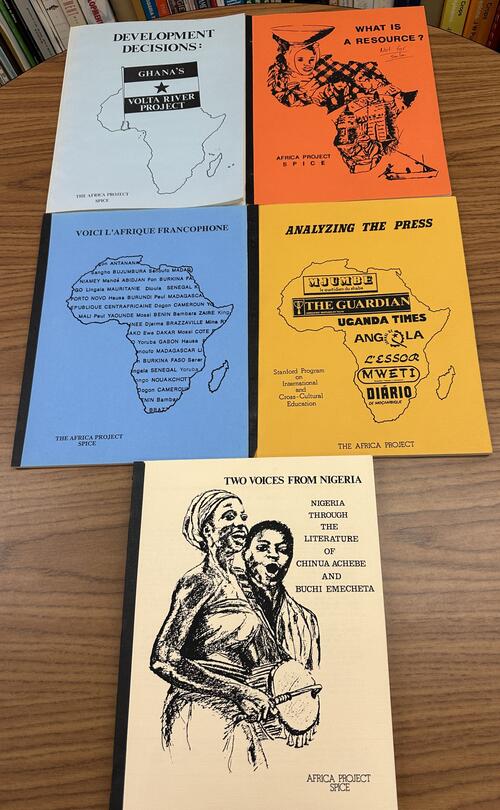
By the time I left SPICE, the Africa Project had five curriculum units: Analyzing the Press (1985), Development Decisions: Ghana’s Volta River Project (1985), What Is a Resource? (1985), Two Voices from Nigeria: Nigeria through the Literature of Chinua Achebe and Buchi Emecheta by Nigeria trip participants Lyn Reese and Rick Clarke (1985), and Voici l’Afrique Francophone with Foster City French teacher Joan Henley (1986).
Image
Enriched by the work at SPICE, I completed a PhD in geography with research on agrarian change in Mali at the University of London’s School of Oriental and African Studies (SOAS) and a postdoc at the Africa Rice Center in Cote d’Ivoire. I had a university career teaching geography, notably large enrollment world regional geography courses, that greatly benefited from what I learned while at SPICE.
Over the years of teaching about Africa in the U.S., I saw how attention to the context, identity, and positionality of the instructor and students contributes to successful classroom strategies and curriculum development. My SPICE experience provided a base for understanding this evolving pedagogy. In touch with SPICE colleagues years later, former colleague Steve Thorpe contributed to a seminar series that I led at Oregon State University aimed at globalizing courses throughout the campus. The ideas of SPICE carry on in familiar ways in new teaching settings!
Laurie Yokoyama Becker, Larry Becker, and SPICE Founding Director David Grossman in Kaneohe, Hawaii, in May 2026. | Photo courtesy of Larry Becker
All News button
1
Subtitle
Professor Emeritus Larry Becker reflects on the early years of SPICE’s Africa Project and how his experience with SPICE enriched and informed his academic journey and teaching practice.


 Eikei students reflecting on Japan-Norway student exchange | Photo Credit: SPICE
 Eikei students in SPICE Social Entrepreneurship course | Photo Credit: SPICE