Celebrating SPICE’s 50th: Congratulations on Improving Cultural Understanding and Global Education for 50 years!
This article was written by Dr. Nancy Sato, former Japan Project Associate at SPICE, from 1982 to 1991. In its early years, SPICE comprised several separate area-focused projects. This is the ninth of several articles—focusing on the 50-year history of SPICE—that will be posted this year.
My standout memory of SPICE from 1982–1991 is that our colleagues were the most expert, dedicated, community-minded, and heartwarming educators, devoted to international and cross-cultural education and understanding. Their most laudable and effective approach was amplifying teachers’ voices in developing and implementing curricula to best teach, learn from, and reach the rich diversity of students in their classrooms.
The unique combination of the top university experts in each geographic and content area, working together with experienced educators with exquisite teacher professional development and curriculum development skills, while also bringing teachers, students and families into the process, created the most meaningful ways to expand all of our perspectives of the world and global understanding.
I feel so fortunate to have been a part of this marvelous group of colleagues and mentors who transformed my personal and professional life, even gaining my “big brother” Steve Thorpe, fellow Social Studies educator. My early career at the Boston Children’s Museum, first as their school desegregation coordinator and then as their multicultural education specialist, set the stage. The museum’s reputation as a leader in advancing experiential education and hands-on learning was a natural match for highlighting the importance of engaging, interactive learning that characterizes SPICE materials.
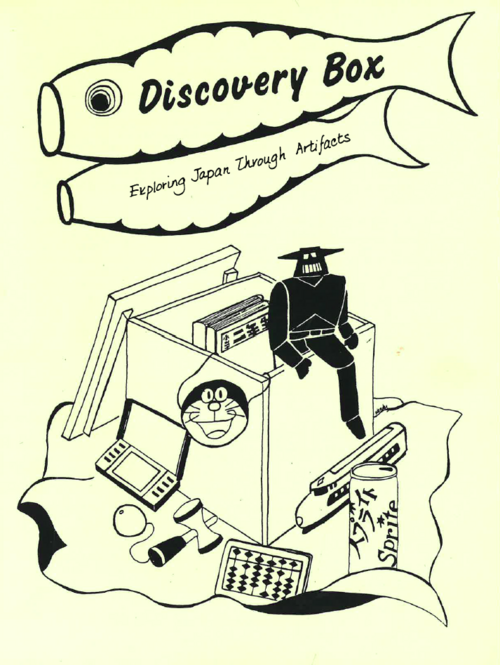
My SPICE journey had a serendipitous beginning—since the Boston Children’s Museum housed Harvard’s Outreach program, a sister Outreach program to Stanford’s SPICE, David Grossman became a frequent, annual visitor. His consummate knowledge of teaching, working in the schools, and making learning authentic, comprehensive and enjoyable, was apparent. I knew that working in SPICE as I pursued a PhD in education would be a perfect match, so when David introduced me to that idea, and to Kay Sandberg Abe, the Japan Project director, I was blessed to enter the wondrous world of SPICE, with their excellent mentorship. The Discovery Box unit, about how to use artifacts to enhance classroom learning, was a highlight, along with Wendy Wong’s fabulous curriculum unit cover designs.
David’s leadership and engaging personality brought together an amazing group of educators, whose spirit, camaraderie, laughter, and expertise created a global, multicultural family that not only provided mutual support while working together, but spans generations, as we still keep in touch, share ideas, and gather at reunions. And all this was enabled through the strength, compassion, and wisdom of Ron Herring, Director of CISP (California International Studies Project), our umbrella organization at that time.
I’ll always remember the key features of our message for international education, that serve us all even more today: multiple perspectives, interdependence, context, change, authenticity, empathy, and genuine caring for people all over the world—with special attention to those voices and perspectives not typically represented. And those key principles mirror our SPICE family, the most caring, curious, close-knit family and community of scholars who continue to expand global understanding by promoting empathy, hope, and activism to improve the world around us. The SPICE family inspires us to continue our friendship and collective lifelong learning and action.
Read More


Stanford alum and former SPICE Japan Project Associate Dr. Nancy Sato shares memories of her years with SPICE.








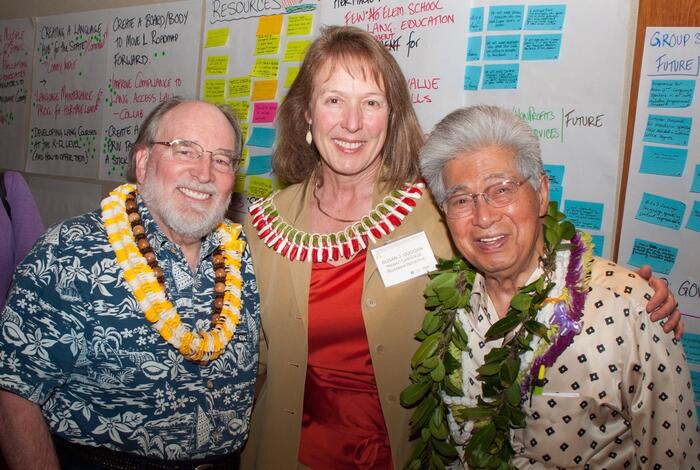 Photo above: Governor Neil Abercrombie of Hawai‘i, Dr. Susan Duggan, Executive Director of the Hawai‘i Language Roadmap Initiative, and Senator Daniel Akaka, 2013 | courtesy of Susan Duggan.